


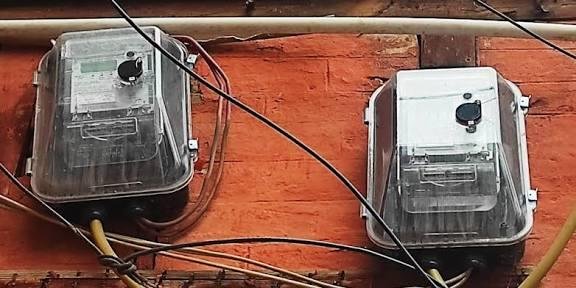
Srinagar, February 5, 2026 : The installation of smart meters and technology-led reforms have significantly improved revenue realisation and reduced power losses across Jammu and Kashmir, according to the Economic Survey Report 2025–26.
The survey said 6.46 lakh smart meters have been installed under the Prime Minister’s Development Package (PMDP) against a revised target of 6.86 lakh. Under the Revamped Distribution Sector Scheme (RDSS), 5.25 lakh smart meters were installed as of January 14, 2026, against a sanctioned target of 14.07 lakh consumers.
Overall, 11.71 lakh smart meters have been installed in the Union Territory so far, against a cumulative target of 20.93 lakh, the report said.
The survey highlighted a sharp improvement in power sector revenues due to strategic IT interventions and enforcement measures. Revenue realisation increased by 16.34 per cent, rising from ₹3,616.63 crore in 2022–23 to ₹4,207.61 crore in 2023–24. In 2025–26, revenue stood at ₹3,472.20 crore up to November 2025 and is expected to exceed last year’s figures by the end of the financial year.
The report also noted that the Amnesty Scheme, launched in October 2022, helped settle long-pending dues of domestic consumers. About 3.32 lakh consumers benefited under the scheme, with ₹411.40 crore recovered between October 2022 and November 2025 through structured instalment plans without late payment surcharges.
A study conducted across 367 nearly fully smart-metered feeders assessed the impact on power input and Aggregate Technical and Commercial (AT&C) losses. In Jammu, AT&C losses declined from 30.79% in 2022–23 to 23.44% in 2024–25, while in Kashmir, losses dropped sharply from 55.41% to 35.26% during the same period.
The study also recorded an increase in units billed and revenue realised, along with reduced transformer damage rates and shorter average daily power outages in both regions.
Looking ahead, the survey said further measures are planned to cut power input and AT&C losses in smart-metered areas, alongside construction of new grid substations, expansion of transmission lines and upgradation of grid infrastructure to meet future energy demand.