

Jammu, November 1, 2025 : The announcement by Jammu and Kashmir Chief Minister Omar Abdullah on October 16, marking the return of the historic Darbar Move, has generated widespread enthusiasm in Jammu. The decision fulfills a key National Conference (NC) election promise and restores a 150-year-old practice deeply rooted in the region’s political and socio-economic fabric.

Historic Tradition Reinstated
The Darbar Move was first introduced in 1872 by Dogra ruler Maharaja Ranbir Singh to ensure administrative efficiency and equal presence of governance in both regions — Jammu and Kashmir — while also mitigating the harsh weather conditions in either capital.
Traditionally, government offices functioned from Srinagar during summer and shifted to Jammu in winter. The exercise was more than a ceremonial tradition — it represented the unity and inclusivity of the erstwhile state’s governance structure.
However, in 2021, the Lieutenant Governor-led administration scrapped the practice, citing cost and administrative efficiency as reasons. It claimed that the advent of e-office systems and digitised record management made the biannual shift redundant. The move was projected as a cost-cutting measure, saving approximately ₹200 crore annually.
Economic Impact of the 2021 Decision
The discontinuation of the Darbar Move, while administratively justified, had far-reaching economic consequences for Jammu’s local businesses.
The city, which used to witness a surge in activity during winter due to the arrival of thousands of officials, employees, and their families, saw a sharp decline in trade and services.
-
The bustling lanes of Raghunath Bazaar and Residency Road, once teeming with visitors and government staff, wore a deserted look.
-
Hotels, restaurants, transporters, and property owners faced steep losses.
-
The Chamber of Commerce and Industry (CCI) repeatedly urged the government to restore the tradition, arguing it was vital to the region’s financial ecosystem.
Darbar Move Returns: Economic and Social Reawakening
With the Darbar now set to reopen in Jammu on November 3, the mood in the winter capital has turned optimistic. Traders, hoteliers, and transport operators are preparing for a surge in activity reminiscent of pre-2021 times.
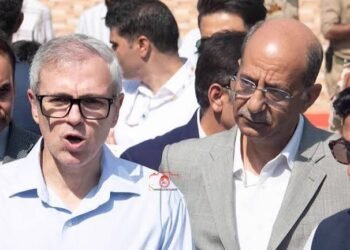
CCI President Arun Gupta hailed the decision, saying it would not only rejuvenate Jammu’s economy but also strengthen inter-regional goodwill. “The Darbar Move ensures a sense of shared governance and keeps Jammu’s economy vibrant during the winter months,” he said.
Kashmir Chamber of Commerce and Industry (KCCI) Secretary-General Faiz Ahmad Bakshi echoed similar sentiments, highlighting the move’s symbolic importance. “Beyond business, the Darbar fosters cultural exchange and builds bridges between the two regions,” he said.
Logistics and Administrative Readiness
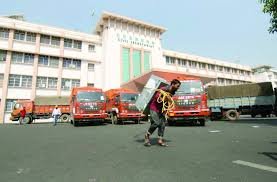
To ensure a smooth transition, the J&K Road Transportation Corporation and Traffic Department have been directed to deploy additional buses and convoys on November 1 and 2 to facilitate the movement of employees, files, and equipment.
The Estates and Housing & Urban Development Departments have also been tasked with ensuring accommodation readiness for officials and staff relocating to Jammu.
Political Undercurrents and Strategic Significance
The revival of the Darbar Move also carries significant political weight. For the National Conference, often perceived as a Kashmir-centric party, this decision projects Omar Abdullah as a leader attuned to Jammu’s aspirations.
Political analysts believe the move could reshape perceptions ahead of the Nagrota bypoll on November 11, where the BJP aims to retain its foothold.
“The timing of this decision is politically astute,” said a senior political observer in Jammu. “It allows NC to connect with the business community and urban middle class, both of whom suffered economically after the Darbar was scrapped.”
Balancing Sentiment and Pragmatism
While the restoration has been widely welcomed, some administrative voices have urged caution over costs and logistics. However, supporters argue that the socio-economic and symbolic dividends outweigh financial concerns.
A senior government employee, speaking anonymously, said, “Though the move disturbs family life for a few months, it restores a sense of connection and balance between the two regions.”
A Legacy Revived
As Jammu prepares to welcome back the Darbar offices after four years, the city’s streets and markets are buzzing with anticipation. The decision represents not just the return of files and officials, but the revival of a shared cultural rhythm that binds Jammu and Kashmir’s two major regions.
In the words of a local trader at Raghunath Bazaar, “The Darbar Move is not just about offices — it’s about life returning to Jammu in winter.”