

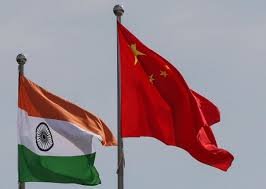
New Delhi, May 28, 2026 : India and China held “constructive” and “forward-looking” discussions on the situation along the Line of Actual Control (LAC) in eastern Ladakh during the latest meeting of the Working Mechanism for Consultation and Coordination (WMCC) held in Beijing, with both sides agreeing that maintaining peace and tranquillity along the border remains essential for the gradual normalisation of bilateral relations.

According to the Ministry of External Affairs (MEA), the two sides reviewed multiple aspects of the border situation and expressed satisfaction over the progress made in maintaining stability in sensitive border areas following sustained diplomatic and military engagement over the past year.
“The discussions were constructive and forward looking,” the MEA stated a day after the talks.
India and China have undertaken several confidence-building and diplomatic measures in recent months aimed at restoring ties that had severely deteriorated after the deadly Galwan Valley clashes in 2020 and the prolonged military standoff that continued for more than four years.
“The two sides reviewed the situation in the India-China border areas. They expressed satisfaction with the progress made in maintaining peace and tranquillity in the border areas, which has enabled progress towards gradual normalization of bilateral relations,” the MEA said in its statement.
During the WMCC meeting, both countries also agreed to work together to make “substantive preparation” for the next round of the Special Representatives (SR) dialogue, which is scheduled to be held in China.
The Special Representatives mechanism remains a key diplomatic channel for addressing complex border-related issues and improving bilateral coordination between the two Asian neighbours.
In August last year, National Security Advisor Ajit Doval and Chinese Foreign Minister Wang Yi had held the Special Representatives dialogue in New Delhi, which resulted in several decisions aimed at preserving peace and strengthening border management mechanisms.
The MEA stated that the latest WMCC discussions focused on issues related to border delimitation, border management systems, institutional mechanism building and cross-border cooperation initiatives.
India also stressed the need for an early meeting of the expert-level mechanism dealing with trans-border rivers and related water-sharing concerns.
“Both sides agreed to maintain regular exchanges and contacts at the diplomatic and military levels through mechanisms including those that were agreed as part of outcomes of 24th Special Representative talks,” the MEA added.
The Indian delegation at the WMCC meeting was led by Sujit Ghosh, Joint Secretary (East Asia) in the MEA, while the Chinese delegation was headed by Hou Yanqi, Director General of the Boundary and Oceanic Affairs Department of the Chinese Foreign Ministry.
During his visit, Ghosh also met Liu Jinsong, Director of the Department of Asian Affairs in the Chinese Foreign Ministry, and paid a courtesy call on Chinese Assistant Foreign Minister Hong Lei.
The latest diplomatic engagement comes as both countries continue efforts to reset relations following the military disengagement process at several friction points along the LAC in eastern Ladakh.
In October 2024, India and China finalised a disengagement agreement for Depsang and Demchok, the last remaining friction points in eastern Ladakh, marking a major breakthrough in the border standoff.
Shortly after the agreement, Prime Minister Narendra Modi and Chinese President Xi Jinping held bilateral talks in Kazan, where several initiatives aimed at improving ties were discussed.
In August last year, Prime Minister Modi also travelled to Tianjin, China, to attend the Shanghai Cooperation Organisation (SCO) summit, where he held extensive discussions with President Xi Jinping on the sidelines of the event.
During the meeting, Modi reiterated that India remains committed to advancing ties with China based on mutual trust, mutual respect and mutual sensitivity.