

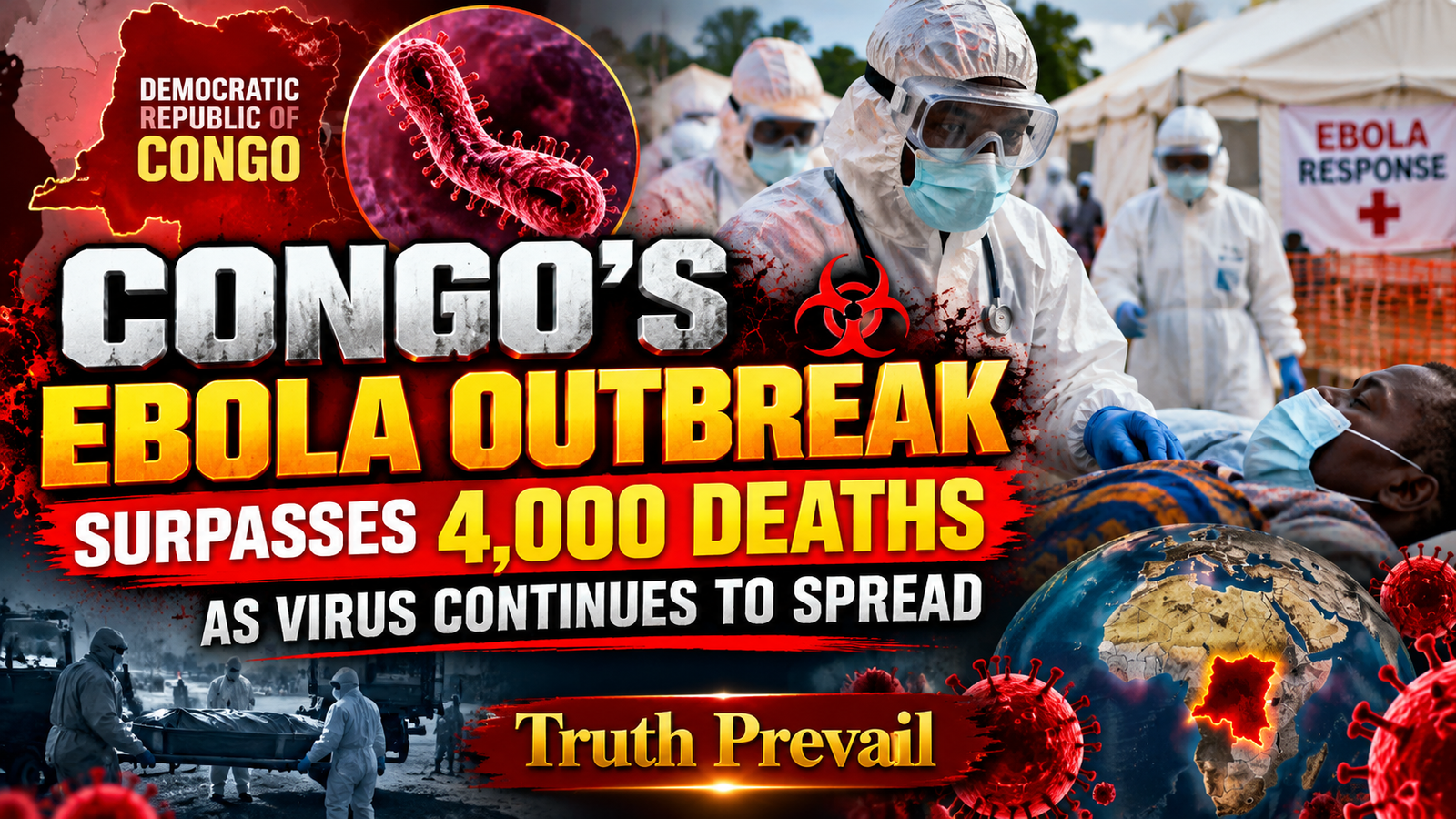
BUNIA, Democratic Republic of Congo, OCTOBER 02, 2026 ; The Ebola outbreak in the Democratic Republic of Congo has now claimed 4,018 lives among 8,300 confirmed cases, according to the latest figures released by the country’s health authorities. The toll represents nearly half of all confirmed cases and makes the outbreak the largest Ebola disease outbreak ever recorded in the Democratic Republic of Congo. Reuters

The outbreak was officially declared on May 15, 2026, after laboratory testing identified the Bundibugyo virus, a species of Ebola that has no licensed vaccine or specific approved treatment. WHO says the outbreak has expanded geographically and continues to present major challenges for health authorities. World Health Organization
Rapid Geographic Expansion
The outbreak began in Ituri Province but has since spread across multiple regions. WHO reported that, by September 23, the virus had reached 63 health zones across seven provinces, including Bas-Uélé, Haut-Uélé, Ituri, North Kivu, South Kivu, Sud Ubangi and Tshopo. World Health Organization
The expansion into Sud Ubangi and Haut-Uélé, including an affected zone near the South Sudan border, has increased concerns about further cross-border transmission.
WHO has warned that continued geographical expansion is placing additional pressure on already limited health resources and complicating surveillance, contact tracing and patient care. World Health Organization
High Fatality Rate
The latest figures indicate that approximately 48.4% of confirmed cases have resulted in death. Earlier WHO reporting also showed a consistently high case-fatality ratio, with deaths occurring within communities as well as healthcare settings. World Health Organization
Bundibugyo virus disease can initially resemble other illnesses, making early identification difficult without laboratory testing. WHO says the disease can progress to gastrointestinal symptoms, organ dysfunction and, in some cases, haemorrhagic manifestations. World Health Organization
Health Response Under Pressure
Authorities and international health organisations are facing significant operational difficulties in containing the outbreak. The affected areas include remote and densely populated communities, while insecurity and population movement have complicated efforts to identify contacts and interrupt transmission.
WHO says its response includes surveillance, contact tracing, clinical preparedness, medical supplies, laboratory support and community engagement. World Health Organization
Recent reporting has also highlighted disruptions affecting frontline health workers and healthcare facilities, adding further pressure to the response. AP News
No Specific Vaccine or Treatment
Unlike some other Ebola virus species, Bundibugyo virus currently has no licensed vaccine or specific approved therapeutic treatment. WHO says supportive medical care remains important and that research and testing of potential candidates are continuing. World Health Organization
The WHO declared the outbreak a Public Health Emergency of International Concern (PHEIC) in May 2026, citing the rapid spread, uncertainty surrounding the extent of transmission and the potential for international spread. World Health Organization
Continuing International Concern
Although transmission has reportedly slowed in some locations, the overall situation remains serious because the virus continues to appear in new areas. The combination of high mortality, geographic expansion, insecurity and pressure on healthcare resources is making containment increasingly difficult.
As of October 2, 2026, authorities continue to focus on identifying infections, isolating patients, tracing contacts and strengthening community-level prevention measures as the outbreak enters a critical phase.
📌 Key Figures
- Confirmed cases: 8,300
- Deaths: 4,018
- Outbreak declared: May 15, 2026
- Virus: Bundibugyo virus
- Affected health zones: 63
- Affected provinces: 7
- Date: October 02, 2026