

DHAKA | NOVEMBER 10, 2026 : Fresh protests over minimum wages erupted across Bangladesh’s garment industry on Tuesday, leaving two workers injured in clashes with police in the Ashulia industrial area near Dhaka. Authorities have deployed additional security forces as labour unrest threatens operations in one of the country’s most important export sectors.

The demonstrations resumed after a break of several days, with workers at factories in multiple industrial areas stopping work to press for higher wages despite reporting for duty earlier in the morning.
🔴 CLASHES IN ASHULIA, TWO WORKERS INJURED
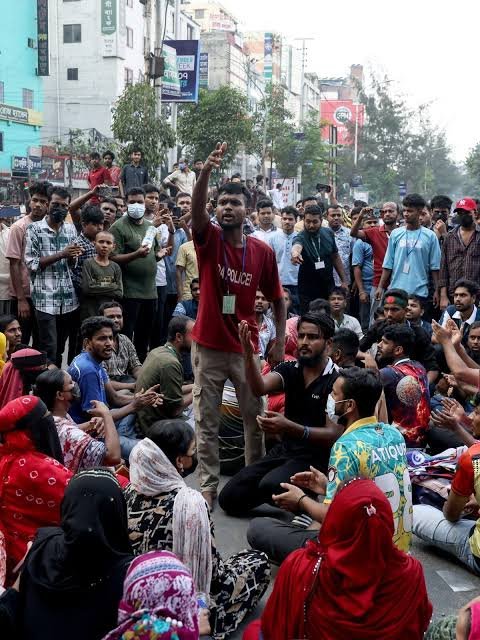
Tensions escalated when protesters blocked the Baipail–Abdullahpur Road in Ashulia, around 17 kilometres from Dhaka.
According to reports published by The Daily Star, police initially attempted to persuade demonstrators to clear the road. Clashes followed after protesters allegedly threw bricks and stones at personnel, triggering chases between the two sides.
Police used tear gas and sound grenades to disperse the crowd.
Two workers were taken to Ashulia Women and Children Hospital for treatment. The hospital’s operations manager, Harun-or-Rashid, said both had injuries reportedly caused by rubber bullets. One worker sustained a head injury and was referred to Dhaka Medical College Hospital, while the other received initial treatment and returned home.
However, Mohammad Mominul Islam Bhuiyan, superintendent of Ashulia Industrial Police-1, said the worker treated at Dhaka Medical College Hospital had been injured by a brickbat and was doing well.
💰 WORKERS DEMAND MINIMUM WAGE OF 30,000 TAKA
At the centre of the unrest is the demand for a substantial increase in monthly minimum wages.
Garment workers are seeking a rise from 12,500 taka to 30,000 taka, arguing that their existing earnings have failed to keep pace with the rising costs of essential goods and services.
Their concerns include increasing expenses for:
- Food and daily necessities
- Housing and rent
- Transportation
- Healthcare and other essential services
Workers say inflation and the rising cost of living have eroded their purchasing power, making it increasingly difficult to support their households on current wages.
A wage board has agreed to introduce a revised pay structure from December, with the first salaries under the new scale expected in January. However, the extent of the proposed increase has yet to be determined, leaving a key issue unresolved.
🚨 36 BORDER GUARD PLATOONS DEPLOYED
Amid growing concerns over further unrest, Border Guard Bangladesh (BGB) has deployed 36 platoons of personnel across major industrial areas in Dhaka, Gazipur and Narayanganj to maintain law and order.
According to the state-run BSS news agency, the deployment includes:
- 14 platoons: Savar and Ashulia
- 3 platoons: Mirpur
- 9 platoons: Narayanganj
- 10 platoons: Various industrial areas of Gazipur
Two special patrols are also operating in Narayanganj and adjoining areas.
BGB headquarters is monitoring the security situation using live footage from drones, body-worn cameras and other devices, while coordinating with local administration and police.
🏭 NEW AGE GROUP FACTORIES SHUT INDEFINITELY
The labour unrest has also prompted an immediate industrial response. Authorities have announced the indefinite closure, from Tuesday, of all factories operated by New Age Group in Ashulia, citing the ongoing situation.
The shutdown adds to concerns about production disruptions as Bangladesh’s garment manufacturers enter a critical period for fulfilling international orders.
🌍 BANGLADESH’S GARMENT INDUSTRY FACES GROWING PRESSURE
Bangladesh’s readymade garment sector employs approximately four million workers and contributes more than 80 per cent of the country’s export earnings. The country is the world’s second-largest garment exporter after China and supplies major international fashion brands, including H&M, Zara and Gap.
Manufacturers have warned that prolonged disruptions during the peak production season for spring and summer orders could delay shipments, undermine overseas buyers’ confidence and potentially result in cancelled orders.
The industry is already facing pressure from inflation, rising production costs and intense competition in international markets.
For workers, however, the central issue remains the widening gap between wages and living expenses. With inflation hovering around 8 per cent, labour representatives argue that a meaningful wage revision is essential to protect household purchasing power.
⚖️ WAGE DISPUTE PUTS INDUSTRY AND WORKERS AT A CROSSROADS
The latest clashes underline the challenge facing Bangladesh: balancing workers’ demands for better pay and living standards with manufacturers’ concerns about costs, production schedules and export competitiveness.
With security forces deployed across key industrial centres and the revised wage structure still undetermined, the coming weeks could prove crucial for negotiations between workers, factory owners and authorities.
The key question remains whether the proposed wage revision will meet workers’ expectations and prevent further protests in Bangladesh’s vital garment industry.