

By M S Nazki

The Seven Pillars of PRAHAAR: The Hindi word PRAHAAR (meaning “strike”) functions as an acronym representing its core pillars that include the following…
* P – Prevention: Proactive, intelligence-led measures—coordinated via the Multi Agency Centre (MAC)—to intercept and disrupt threats before they materialize.
* R – Responses: Swift, decisive, and proportionate counter-terror responses executed through a coordinated chain of command between state police and central forces like the National Security Guard (NSG).
* A – Aggregating Capacities: A “whole-of-government” approach that pools and synchronizes internal administrative, investigative, and security capabilities.
* H – Human Rights & Rule of Law: Ensuring that all counter-terrorism operations, investigations, and prosecutions strictly adhere to legal safeguards and human rights.
* A – Attenuating Conditions: Programs targeting radicalization, socio-economic vulnerabilities, and the broader ecosystems that enable terrorism.
* A – Aligning International Efforts: Collaborating globally through diplomacy, multilateral bodies (such as the Financial Action Task Force), and shared intelligence to combat transnational terror.
* R – Recovery & Resilience: A “whole-of-society” approach focused on community healing, critical infrastructure protection, and long-term stabilization after incidents.
-The story which we got weny something like this:
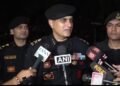
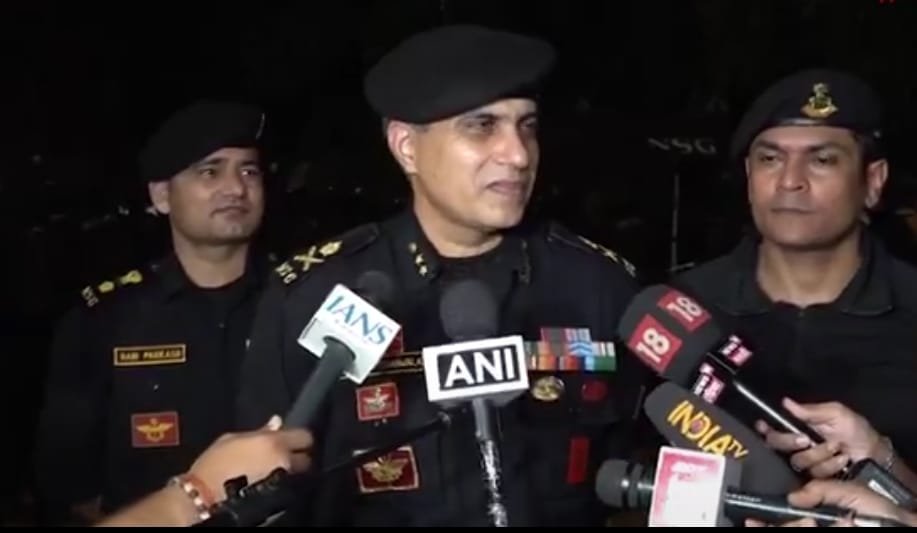
-Inspector General (Operations) of the National Security Guard (NSG), Major General Mukesh Kumar Bhanwala, says, “A key pillar of the Government of India’s ‘Prahar’ policy is ensuring a swift and proportionate response to any terrorist incident.
-The National Security Guard (NSG) is the primary agency responsible for carrying out kinetic operations in this regard. Furthermore, the policy focuses on enhancing the capabilities of police forces across various states and Union Territories.
The objective is to promote a ‘whole-of-nation’ approach, enabling state-level agencies and federal forces to work together to counter such incidents.
-The exercise we witnessed, titled ‘Sarvatra Pratighat’, represents an initial step towards achieving this approach. It involved a collaborative effort by all security stakeholders in Mumbai, including the NSG, the Army, the Air Force, the Navy’s MARCOS, the Mumbai Police, Force One, Mumbai Police Quick Response Teams (QRTs), the CISF and the Intelligence Bureau (IB).
-Through this exercise, we have successfully validated several key parameters related to counter-terrorism operations.”
-PRAHAAR (Policy for Response Against Hostile Activities and Radicalism) is India’s first comprehensive National Counter-Terrorism Policy and Strategy, unveiled by the Ministry of Home Affairs (MHA) on February 23, 2026.
-The policy formalizes a proactive, intelligence-led, zero-tolerance stance against terrorism, shifting the nation from a reactive security approach to a unified, multi-agency framework.
-Key Focus Areas
* Technology & Emerging Threats: Addresses modern security challenges, including the misuse of drones, cybercrime, and Information and Communication Technology (ICT).
* Critical Infrastructure: Enhances protection for sensitive sectors like power grids, railways, aviation, space, and atomic energy.
* Secular & Non-Religious Stance: Explicitly separates terrorism from any specific religion, nationality, or ethnicity.
-A ‘whole-of-nation’ approach is a collaborative strategy that unites state-level agencies, federal or national forces, local bodies, and non-state or private stakeholders to tackle complex threats, security crises, or large-scale public initiatives.
-Key Characteristics
* Cross-Agency Integration: Breaks down bureaucratic silos so civilian departments (such as health, finance, education, and home affairs) and law enforcement or military/federal forces operate under a shared mission.
* Multi-Tier Coordination: Connects grassroots or local entities with state and national authorities to streamline intelligence, resource allocation, and incident response.
* Comprehensive Scope: Goes beyond a “whole-of-government” framework by actively engaging civil society, communities, and private partners alongside official state machinery.
-For example, officials have applied this model in joint operations against organized crime, cross-border drug trafficking, national security incidents, and large-scale public safety or election resilience efforts.
-The National Security Guard (NSG)—commonly known as the Black Cats—is India’s federal elite counter-terrorism and special operations unit.
-Key Details of the NSG
* Motto: “Sarvatra Sarvottam Suraksha” (Best Security Everywhere).
* Founded: October 16, 1984, and formalised under the National Security Guard Act, 1986.
* Parent Agency: Ministry of Home Affairs (MHA), Government of India.
* Headquarters: New Delhi, with regional hubs in Mumbai, Chennai, Hyderabad, Kolkata, and Gandhinagar.
* Leadership: Headed by a Director-General (typically drawn from the Indian Police Service), currently B. Srinivasan.
* Composition: Personnel are drawn on deputation from the Indian Army and Central Armed Police Forces (CAPFs).
Primary Functions
* Counter-Terrorism & Hostage Rescue: Neutralizing high-risk terrorist threats and managing hostage crises (e.g., Operation Black Tornado during the 26/11 Mumbai attacks).
* Counter-Hijacking: Handling land, sea, and air hijacking interventions.
* Bomb Disposal: Search, detection, and neutralisation of improvised explosive devices (IEDs) along with post-blast investigations.
* Critical Infrastructure Protection: Securing vital installations and high-profile events.
-The Ministry of Home Affairs (MHA) National Counter-Terrorism Policy and Strategy PRAHAAR policy document provides clear, concise direction for India’s counter-terrorism campaign. It is a definite step forward in eliminating the threat posed by the amorphous, multi-vector nature of terrorism. It also epitomises the challenges of drafting a Counter-Terrorism policy for a vast, socio-culturally diverse country like India.
-PRAHAAR in the Backdrop of Operation Sindoor
-India has adopted a new, more assertive approach in fighting terrorism in recent years, which was on full display in the first burst of Operation Sindoor in May 2026, when several terror infrastructure sites across Pakistan and Pakistan-Occupied Jammu and Kashmir (PoJK) were targeted and taken out by Indian armed forces using precision weapons. The punitive strikes following the Pahalgam terror attacks sent a hard-hitting message to the Pakistani establishment and its terror proxies that India would employ both kinetic and non-kinetic actions to deliver a decisive blow to the recalcitrant neighbour.
-Subsequently, New Delhi launched a major international diplomatic offensive, dispatching seven all-party delegations to 33 countries to expose Pakistan globally as a state sponsor of terrorism and to block Islamabad’s traditional strategy of playing the victim card or turning the Kashmir dispute into a multilateral issue.
-On 23 February 2026, the Ministry of Home Affairs (MHA) unveiled ‘PRAHAAR’ as India’s first comprehensive National Counter Terrorism Policy and Strategy, comprising a ‘whole of government’ and ‘whole of society’ approach to combat the threat of terrorism. Several observers have hailed ‘PRAHAAR’ as marking the doctrinal consolidation of hitherto mostly decentralised Counter-Terrorism (CT) approaches, shaped by geo-spatially diverse and socio-culturally complex challenges, through years of evolving legislation, executive practices and gradual institutional coordination.
-In formulating this policy document, the Indian government has taken cognisance of the fact that ‘the nature of (terrorism-related) threats continues to change and present new challenges’. In fact, terrorism remains an amorphous threat that, like any intractable pathogen or virus, mutates its form and composition and adapts to the multi-dimensional complexities of India’s vast regional and socio-cultural landscape.
-The document correctly recognises that any rigidly detailed strategic approach would not provide the tactical freedom needed to combat terrorism’s volatile character effectively. Thus, the introductory paragraph of the policy paper also asserts that India consistently opposes terrorism in all its forms and manifestations, particularly state-sponsored terrorism.
-Although the document does not provide its own definition of terrorism, it implicitly refers to the Unlawful Activities (Prevention) Act (UAPA) of 1967 as ‘the principal legal regime to deal with terrorism in India’. By doing so, the UAPA becomes its primary legal reference, which defines a terrorist under Article 15 as whoever does any act with intent to threaten or likely to threaten the unity, integrity, security, [economic security,] or sovereignty of India or with intent to strike terror or likely to strike terror in the people or any section of the people in India or in any foreign country.
-While acknowledging that ‘ungoverned spaces’ have grown in India’s immediate neighbourhood over time, which often provide safe havens to terrorist organisations, the document points out that ‘a few countries in the region have used terrorism as an instrument of State Policy’.[viii] The PRAHAAR policy paper also reiterates India’s long-held principle that ‘India does not link terrorism to any specific religion, ethnicity, nationality or civilisation’…………………Indian defense studies
When it comes to the first pillar in the PRAHAAR strategy, which is ‘prevention of terror attacks’, that its strategy for prevention is mainly intelligence-guided. To operationalise this intelligence-guided strategy, it mentions the nodal platform of the Multi-Agency Centre (MAC), along with the Joint Task Force in Intelligence (JTFI) in the Intelligence Bureau (IB). It states that close partnerships have been formed for CT operations with central agencies and State Police Forces under the MAC/JTFI mechanism in the IB!.
-While discussing the ‘Prevention of Terror Attacks’ section, the text of the policy document reads ‘India faces terrorist threats on all three fronts viz. water, land and air’. Surprisingly, cyberspace is not listed as a front here, although a few passages in the text partially cover the cyber-related threat. Perhaps a dedicated section on the cyber terror threat and the policy approaches in place or planned, without being too specific, could have been useful here.
-The text also omits the now-recognised fifth Counter-Terrorism front: space. Violent extremists and terrorists have for decades used commercial satellite phones and terminals to coordinate attacks across wide geographical areas without detection. It is also well-known that terrorists today use cheap, black-market electronic jammers to block or degrade GPS positioning signals from space used by aviation, shipping and military vehicles. Even the attention given to this front in the document would have helped provide formal, effective policy impetus to this rapidly evolving tech domain.
-Beyond these physical and digital fronts, security agencies combating terrorism worldwide are also talking about two other emerging ‘fronts’. These include the cognitive domain, which the section on counter-radicalisation addresses to some extent, but the role of media and educational syllabi remains unstated.
-Another noticeable mission is the emerging front of bioterrorism, which, despite the ‘super-spreaders’ scare the nation faced during the COVID-19 crisis, does not feature here. It must be noted that the US Strategic Command has already drafted a 31-page contingency plan titled ‘CONPLAN 8888’ and the CDC Federal Select Agent Program 2025,[xi] which seek to address threats emanating from bioterrorism and the deliberate spreading of pathogens by terrorists and rogue elements.
-In fact, the policy paper mentions the full range of Chemical, Biological, Radiological, Nuclear, Explosive and Digital (CBRNED) threats only once (as a clause within a sentence). Their incorporation may be considered in a possible future version of the policy framework. It is important to note here that the Red Fort car blast of last year was caused by fertiliser-based explosives, specifically ammonium nitrate and fuel oil.[xii] As an improvised explosive, it falls under ‘E’ in the CBRNED abbreviation and is commonly used by terrorists. Thus, one cannot afford to understate the dangers posed by the full range of CBRNED terror threats.
-Similarly, the absence of illegal immigration as a causative or catalysing factor for spawning terrorism is ‘conspicuous by absence’. This is remarkable, as the government is currently conducting a drive to detect and remove non-citizens and illegal migrants from electoral rolls. In fact, only one sentence in the paper addresses the migration issue: ‘immigration authorities are equipped with state-of-the-art tools and technologies to secure Indian borders’. This claim sounds reassuring but seems out of tune with the government’s perception of the threat, particularly on the eastern front.
However, the policy guidelines highlight the Standard Operating Procedures (SOPs) issued by the Ministry of Home Affairs (MHA), as well as the importance of coordination at the apex level, including intelligence dissemination, analysis and follow-up action, through the MAC platform. The document also covers the regular deployment of Central Armed Police Forces (CAPFs) in states and their performance across a wide range of duties. The role of the National Investigation Agency (NIA) and State Police Agencies in conducting CT investigations within the country, as well as their high prosecution rates, find special mention. In the section on ‘Aggregating Capacities’, the stellar role of the Bureau of Police Research and Development (BPR&D) in training institutions of states and CAPFs, and in regularly conducting training courses for personnel of State Police and CAPFs, is given adequate space.
-Human Rights and Rule of Law:
In the subsequent section on Human Rights, the document effectively makes the point that ‘India adheres to the “Rule of Law”, where laws are just, applied evenly and protect fundamental rights’. In addition, it gives due attention to the Protection of Human Rights Act, 1993, which deals with human rights cases in the country. The document affirms India’s commitment to human rights by pointing out that it is a signatory to the Universal Declaration of Human Rights 1948 and has also ratified the International Covenant on Civil and Political Rights.
-Listing India’s laws to tackle terrorism-related crimes, the policy document mentions the Unlawful Activities (Prevention) Act, 1967, supplemented by the recently passed Bharatiya Nyaya Sanhita (2023), Bharatiya Nagarik Suraksha Sanhita (2023), and the Bharatiya Sakshya Adhiniyam (2023), which are noteworthy achievements. It highlights the multiple levels of legal redressal available to any accused through an elaborate justice-system infrastructure, from the Districts through States, up to the higher judiciary at the Central level. It discusses the wide scope accorded to the Supreme Court of India to protect citizens’ rights.
-In the section on Threat Profile, the plans of Jihadi terror outfits and their ‘frontal’ organisations engaging in cross-border terrorism are duly discussed. Still, the substantial success of the government agencies in eradicating Naxalite terror finds no mention, nor does the incipient revival of the Khalistan separatist movement or other fissiparous activities in the country’s northeast, etc.
-Counter-Radicalisation
-The section on counter-radicalisation is quite informative and perceptive and discusses the issue in depth. Thus, an important passage reads.
-Once identified, youths undergo a graded police response, aimed at comprehensively addressing the problem of radicalisation and violent extremism in a multi-stakeholder setting. Legal action is initiated against the individual based on their level of radicalisation. Community and religious leaders, moderate preachers and NGOs are engaged to spread awareness about the adverse consequences of radicalisation and extremist violence … Deradicalisation programmes are also undertaken.
-Perhaps the possibility of initiating government-driven counter-narrative campaigns could also be considered as a recommendation in a subsequent policy pronouncement. Again, the typical profile of the radical seems to have altered somewhat following the 2025 Red Fort blast. Investigations by the Delhi Police and counter-terror agencies reveal that the attack marks a transition towards highly educated, self-radicalised and urban operatives, which breaks the earlier pattern of the poor, madrassa-educated jihadi. The threat posed by Nihilistic Violent Extremism (NVE) is rising in Western countries, and some semblance of the threats can be equated to disruptive elements in the country as well. These issues could also have been flagged in the paper.
-On a broader level, government initiatives to address poverty and unemployment among vulnerable communities are carried out through various schemes and initiatives to prevent inimical elements from misusing these conditions to their advantage. A section in the policy document details access to quality education, affordable housing and stable jobs in vulnerable communities.
-However, the paper does not shed much light on the subject of terror financing, which is limited to short sentences like ‘denying access to funds, weapons and safe havens to the terrorists’ and unexplained references like ‘crypto-wallets’ and the Prevention of Money Laundering Act 2002.[xv] One would have also liked to read at least a word about narco-terrorism. However, the use of drones in facilitating terror-related activities and attacks in Punjab and J&K and their nexus with organised criminal networks is highlighted.
The paper does raise concerns about the exploitation of new technologies by terrorists, including unmanned aerial vehicles, social media platforms, ‘instant messaging applications’, the dark web and ‘encryption’, but it provides little detail of government initiatives to curtail the threats now or in the future. At a time when tech giants are themselves raising alarm over the AI threat to human existence, references to AI-backed hacking of vital financial and civil infrastructure websites or databases, AI-developed dangerous deepfake messages, use of autonomous weapons and AI-enhanced operational planning in a faster, cheaper, and more accessible form are not found in the paper.
-In the section titled ‘Way Forward’, the policy paper makes several recommendations. It states there remains scope for further cooperation and collaboration among various agencies for intelligence collection and investigation. It makes a convincing case for amending the domestic counter-terrorism legal regime from time to time in response to emerging terrorism-related challenges. In addition, it highlights the continual need for capacity-building of the Counter Terrorism units/Anti-Terror Squads of States/UTs and for uniformity in their structure, resources, training and investigation methodologies. The clause ‘denying weapons to terrorists’ also appears only once in this final section of the Counter-Terrorism document. Barring a few oversights, the PRAHAAR policy document provides clear, concise direction for India’s counter-terrorism campaign. It is a definite step forward in eliminating the threat posed by terrorism’s amorphous, multi-vector nature.
-Under India’s PRAHAAR counter-terrorism policy, the National Security Guard (NSG) is designated as a primary stakeholder and the key specialized federal force responsible for undertaking swift and proportionate kinetic operations during high-risk terrorist incidents.
-Key Details of NSG’s Role in PRAHAAR:
* Kinetic Operations & Response: According to NSG Inspector General (Operations) Major General Mukesh Kumar Bhanwala, the policy establishes a proactive, multi-layered response framework where the NSG acts as the main federal stakeholder for high-stakes kinetic missions (such as hostage rescues and neutralizing active terror threats).
* Capacity Building: Beyond direct tactical interventions, the NSG is tasked with enhancing the training and operational capabilities of state and union territory police forces.
* Whole-of-Nation Approach: The strategy coordinates local police as first responders, state/central anti-terror units as secondary support, and the federal NSG for severe or exceptional situations, integrating real-time intelligence via the Multi Agency Centre (MAC).
Would you like to know more about:
* The seven pillars that make up the PRAHAAR framework?
* How the NSG coordinates with State Police and CAPFs during an active incident?
-The final few lines:
-Exercise Sarvatra Pratighat-I (also referred to as Operation Sarvatra Pratighat) is a major multi-agency counter-terrorism mock drill led by the National Security Guard (NSG).
-Key Details
* Date / Timeline: Conducted in early November 2026 (ahead of the anniversary of the 26/11 Mumbai terror attacks).
* Location: Spanned 12 locations across Mumbai and Navi Mumbai.
* Objective: To test, validate, and strengthen multi-agency response capabilities, tactical entry techniques, intelligence sharing, and coordination against complex, multi-target terror scenarios.
* Participating Agencies:
* National Security Guard (NSG)
* Indian Army, Indian Navy (including MARCOS), Indian Air Force (IAF), and Indian Coast Guard
* Mumbai Police, Maharashtra Police, and Maharashtra Anti-Terrorism Squad (ATS)
* Force One and Mumbai Police QRTs (Quick Response Teams)
* Central Industrial Security Force (CISF) and Intelligence Bureau (IB)
* Strategic Focus: Aligned with India’s “Prahar” policy, which emphasizes a whole-of-nation approach and swift, proportionate responses between state police and federal forces across land, water, and air domains