

By M S Nazki

Winston Churchill noted the evolution of armored combat, stating that tanks, originally meant to shield infantry from machine guns, eventually required infantry to clear paths for them!
-The story line on which we constructed this episode went some thing like this:
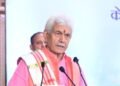
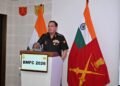
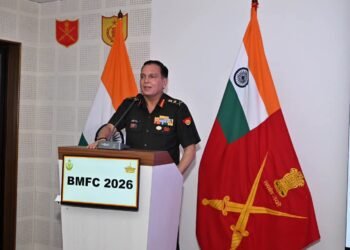
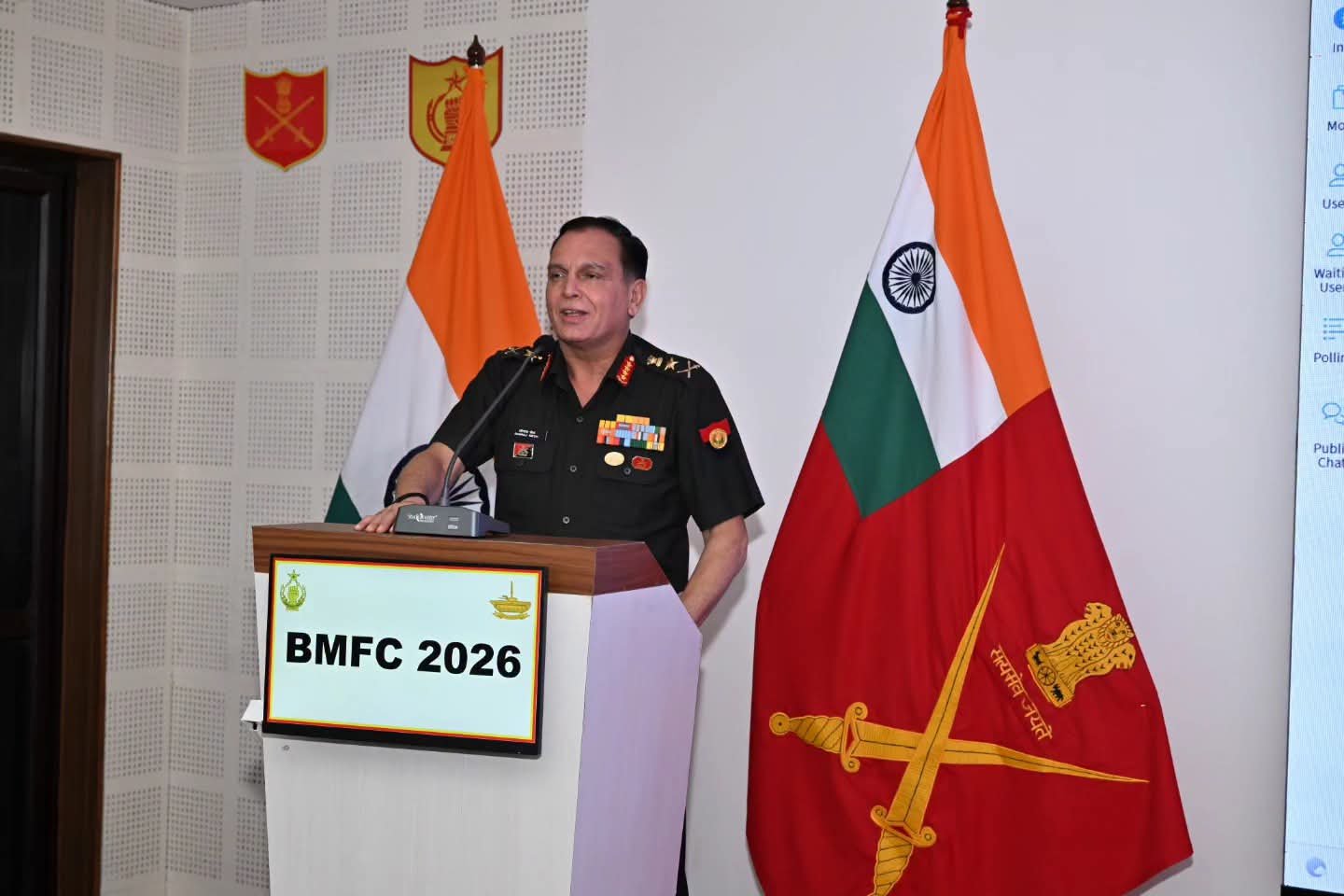
-Transforming Mech Forces. Sharpening Combat Edge. General Dhiraj Seth, COAS, attended the Biennial Mechanised Forces Conference 2026 at the Armoured Corps Centre & School, Ahilyanagar. The Conference deliberated on evolving operational requirements, future force employment, human resource optimisation and technology integration to enhance the combat effectiveness of Mechanised Forces. Aligned with the vision of JAIse VIJAY, the discussions reinforced the thrust towards agile, technology-enabled and future-ready Mechanised Forces, capable of delivering decisive results on tomorrow’s battlefield.
-On Mechanical Dread: All Quiet on the Western Front captures the terror of encountering unstoppable, smoke-belching armored beasts crushing the battlefield……………World War-II
* On Tanker Reality: while good tankers know tactics, great ones know the location of the recovery vehicle.
* On Crew Conditions: Musician and former soldier James Blunt described the claustrophobic and deafening environment of operating inside the tight confines of a tank……………By a crew man!
-The man exuded safety in the same way a tank promised protection. A tank might be dangerous, but only if you got in its way.!
-We do not see the guns that bombard us; the attacking lines of the enemy infantry are men like ourselves; but these tanks are machines, their caterpillars run on as endless as the war, they are annihilation, they roll without feeling into the craters, and climb up again without stopping, a fleet of roaring, smoke-belching armour-clads, invulnerable steel beasts squashing the dead and wounded—we shrivel up in our thin skin before them, against their colossal weight our arms are sticks of straw, and our hand-grenades matches.!
-“Of the 403,272 tank soldiers (including a small number of women) who were trained by the Red Army in the war, 310,000 would die. Even the most optimistic troops knew what would happen when a tank was shelled. The white-hot flash of the explosion would almost certainly ignite the tank crew’s fuel and ammunition. At best, the crew—or those at least who had not been decapitated or dismembered by the shell itself—would have no more than ninety seconds to climb out of their cabin. Much of that time would be swallowed up as they struggled to open the heavy, sometimes red-hot, hatch, which might have jammed after the impact anyway. The battlefield was no haven, but it was safer than the armored coffin that would now begin to blaze, its metal components to melt. This was not simply “boiling up.” The tank would also torch the atmosphere around it. By then, there could be no hope for the men inside. Not unusually, their bodies were so badly burned that the remains were inseparable. “Have you burned yet?” was a question tank men often asked each other when they met for the first time. A dark joke from this stage in the war has a politruk informing a young man that almost every tank man in his group has died that day. “I’m sorry,” the young man replies. I’ll make sure that I burn tomorrow…………….Unknown
-Global Origins of Mechanized Forces:
* World War I: The birth of mechanized warfare began with the introduction of early tanks (such as the British Mark I and the German A7V) and motor transport to break the lethal deadlock of trench warfare.
* Interwar Period & World War II: The German military pioneered Blitzkrieg (lightning war), utilizing combined-arms task forces where tanks and motorized or half-track-mounted infantry (Panzergrenadiers using vehicles like the Sd.Kfz. 251) moved at high speeds to outflank and paralyze the enemy. Concurrently, the U.S. developed M2/M3 half-tracks and the British relied on universal carriers.
* Post-1945 Era: Mechanized infantry evolved significantly with the introduction of dedicated Infantry Combat Vehicles (ICVs) such as the Soviet BMP-1 in the late 1960s, allowing troops to fight from inside armored vehicles while moving alongside main battle tanks.
-History of the Indian Mechanized Forces:
* Post-War Realizations: Following the Indo-Pakistani Wars of 1965 and 1971, the Indian Army realized that traditional infantry moving on foot or in unarmored soft-skinned lorries could not keep pace with fast-moving tank columns.
* Early Mechanization: During the 1971 war, select infantry battalions were paired with armored units using early Armoured Personnel Carriers (APCs).
* Introduction of BMPs: Between 1977 and 1978, the Indian Army began inducting the Soviet-designed BMP-1 infantry combat vehicle, which provided protected mobility, amphibious capability, and anti-tank firepower.
* Raising the Regiment: Conceived by General K.V. Krishna Rao in 1973 and formally established by General K. Sundarji, the Mechanised Infantry Regiment was officially raised on April 2, 1979, with 14 battalions transferred from select infantry regiments.
* Command Evolution: In 1986, the management of these forces shifted under the newly designated Directorate General Mechanised Forces (formerly the Armoured Corps Directorate).
* Key Operations: The Mechanised Infantry Regiment and Indian armored forces have seen active service in major milestones, including high-altitude tank deployments (such as the historic use of tanks at Zojila during the 1947–48 Kashmir War), Operation Pawan (Sri Lanka), Operation Rakshak, Operation Vijay (Kargil War in 1999), and UN peacekeeping missions. Today, the regiment has expanded to dozens of battalions equipped with modern ICVs and armored platforms.
-History of Indian Mech forces:
The history of the Indian Army’s mechanized forces traces its roots to post-independence operational lessons, particularly the realization that foot or lorry-borne infantry could not keep pace with tank columns during armored warfare.
-Origins and Early Mechanisation (1960s–1970s)
* Post-War Analysis (1965): The Indo-Pakistani War of 1965 highlighted a critical tactical gap: traditional infantry could not match the speed and maneuverability of armored units across the deserts and plains.
* Introduction of APCs: In 1969, the first infantry battalion (1 Madras) was mechanised using Polish-built OT-62 TOPAS tracked Armoured Personnel Carriers (APCs). By 1970, additional battalions were equipped with APCs like SKOT and BTR-60.
* Combat Debut (1971): During the Indo-Pakistani War of 1971, select mechanised infantry battalions fought in coordinated combat groupings alongside armor for the first time.
* BMP-1 Integration: Between 1977 and 1978, the APCs were upgraded and replaced with Soviet-designed BMP-1 Infantry Combat Vehicles (ICVs), offering amphibious capability, heavy section-carrying capacity, and anti-tank missile systems.
-Birth of the Mechanised Infantry Regiment (1979)
* Raising the Arm: To unify training, tactics, and operational philosophy, a dedicated arm was created. The Mechanised Infantry Regiment was officially raised on 2 April 1979 under the guidance of General Krishnaswamy Sundarji, who became its first Colonel of the Regiment.
* Legacy Battalions: Instead of raising new units from scratch, the army converted several distinguished infantry battalions (such as units from the Madras, Jat, Sikh, Gorkha Rifles, and Garhwal Rifles), allowing them to carry forward their historical battle honours and traditions.
* Administrative Shift: Oversight of the regiment moved from the Directorate General of Infantry to the Armoured Corps Directorate, which was later renamed the Directorate General Mechanised Forces in 1986.
Modern Operations and Evolution
* Major Campaigns: Mechanised infantry units have participated in key national and international operations, including Operation Pawan (Sri Lanka), Operation Vijay (Kargil), Operation Rakshak, and various UN Peacekeeping Missions (Somalia, Angola, Sierra Leone).
* Equipment Upgrades: The force transitioned heavily to BMP-2 ICVs and continues to modernize its doctrine to operate alongside main battle tanks in high-intensity, multi-domain environments.
-History of Armoured Regiments:
-Origins and Early Foundations (Pre-Independence)
* Armour Day: The Indian Army’s Armoured Corps traces its formal roots to May 1, 1938, when the Scinde Horse became the first regiment to transition from cavalry horses to tanks, initially equipped with Vickers Light Tanks and Chevrolet Armoured Cars.
* WWII Legacy: During World War II, the British Indian Army expanded its mechanized units, laying the groundwork for the modern armored regiments that would later split upon the partition of India in 1947.
-Post-Independence and Early Cold War Era (1947–1960s):
* Inherited British Equipment: Following partition, the Indian Army inherited a mix of British and American WWII-era armor, notably the M5 Stuart and the M4 Sherman.
* High-Altitude Feat: M5 Stuart light tanks were famously disassembled and airlifted/carried to the Zojila Pass during the 1947 Indo-Pak War (Operation Bison) at over 11,000 feet—marking the highest altitude tanks have ever operated.
* The Centurion and PT-76: Through the 1950s and 1960s, heavy hitters like the British Centurion tank and amphibious PT-76 tanks entered service, seeing heavy action in the 1965 Indo-Pak War.
-The Indigenous Push and Soviet Backbones (1960s–1980s)
* Vijayanta (1965): India’s first locally produced main battle tank (built in collaboration with Vickers Defence Systems at the Heavy Vehicles Factory in Avadi) was introduced in 1965 and formed a core part of the fleet through the 1971 Bangladesh Liberation War.
* Soviet Inductions (T-55 & T-72): To counter regional threats, India leaned heavily on Soviet-origin armor, inducting large numbers of T-55 and later the iconic T-72 Ajeya (inducted in 1983), which became the long-standing workhorse of the Armoured Corps.
* The Arjun Project: Authorized in 1974 (with development led by DRDO/CVRDE), the indigenous Arjun MBT project aimed for a heavy 120mm-gun-armed tank, though it faced a long gestation period before entering active service.
-Modern Era (1990s–Present):
* T-90 Bhishma: Inducted from Russia starting in 2001, the T-90 added modern third-generation capabilities, explosive reactive armor (Kontakt-5), and anti-tank guided missile launch capability.
* Arjun Mk-1 and Mk-1A: The domestic Arjun MBT (dubbed the “Desert Ferrari”) and its heavily upgraded Mk-1A variant (featuring over 70 improvements like automated target tracking and Kanchan composite armor) represent India’s push toward self-reliance in heavy armor.
* Current Fleet: Today, the Indian Armoured Corps operates thousands of tanks—including modernized T-72s, T-90s, and Arjun variants—spread across multiple armored and mechanized divisions tailored for both the Thar Desert and high-altitude northern borders.
-History’s top tank warfare generals and commanders—widely recognized across military history and analysis for pioneering armored tactics, operational breakthroughs, and leadership—include:
-Heinz Guderian (Germany) – Widely considered the father of the Panzer arm and the master of Blitzkrieg strategy, revolutionizing mobile armored warfare in Poland, France, and Russia.
-George S. Patton (United States) – Famed for high-speed, aggressive armored exploitation across Europe during World War II, particularly the relief of Bastogne and sweeping moves through France and Germany.
-Erich von Manstein (Germany) – One of the German Wehrmacht’s finest operational commanders, known for masterminding mobile defense and counter-stroke maneuvers on the Eastern Front.
-Erwin Rommel (Germany) – The “Desert Fox,” renowned for fast-paced, intuitive mobile and armored warfare in North Africa.
-Creighton Abrams (United States) – Hailed by Patton as a “world-champion tank commander” for leading the 37th Tank Battalion (Thunderbolt) with relentless front-line drive through Europe.
-Hasso von Manteuffel (Germany) – A skilled Panzer general noted for mastery in both fluid mobile defenses and sharp offensive armored strikes in the West and East.
-Pavel Rotmistrov (Soviet Union) – Commanded the 5th Guards Tank Army at the massive armored clash of Prokhorovka during the Battle of Kursk, shaping Soviet deep-battle armored doctrine.
-Stanisław Maczek (Poland) – A visionary Polish commander who led armored units from the invasion of Poland through France, Belgium, and Germany, pioneering high-speed pursuit tactics (such as the capture of Wilhelmshaven).
-Walter Model (Germany) – Celebrated as a “defensive wizard” who repeatedly patched crumbling sectors of the Eastern and Western Fronts using mobile counter-attacks.
-John Monash (Australia) – A pioneer of modern combined-arms doctrine in World War I who integrated infantry, artillery, air support, and early tanks into synchronized, low-casualty operations like the Battle of Le Hamel.
-India’s tank warfare history features iconic commanders from the Indian Armoured Corps who displayed extraordinary tactical brilliance and gallantry:
* 2nd Lt. Arun Khetarpal, PVC (1950–1971): Widely recognized as the “tank ace of aces” of the Indian Army, he was posthumously awarded the Param Vir Chakra (PVC)—India’s highest military decoration—for his legendary heroics during the Battle of Basantar in the 1971 Indo-Pak War. Commando-tanking his Centurion tank “Famagusta,” he single-handedly destroyed multiple Pakistani Patton tanks before making the supreme sacrifice at age 21.
* Lt. Col. Ardeshir Burzorji Tarapore, PVC (1936–1965): Honored posthumously with the Param Vir Chakra for his fearless leadership of the 17 Poona Horse during the Battle of Phillora in the 1965 Indo-Pak War. Despite suffering injuries and heavy enemy shelling, he led his regiment to destroy numerous enemy tanks and cut off their lines.
* Lt. Gen. Hanut Singh Rathore, PVSM, MVC (1933–2015): Revered as one of the finest tactical minds in the history of the Indian Armoured Corps. He commanded the Poona Horse with distinction during the 1971 Indo-Pak War, playing a decisive role in the fierce tank battles of the Shakargarh sector (including Basantar), earning the Maha Vir Chakra (MVC).
* Gen. Dhiraj Seth: A prominent contemporary armored corps leader who rose through the ranks—commanding the First Horse, the 98 Armoured Brigade, and the 21st Corps (Sudarshan Chakra Corps)—before serving in high-level Army commands.
-From chariot horses in the ancient world, to Hannibal’s merciless exploitation of elephants to cross the Alps and confront the Roman Empire, animals have played a fundamental role in the long and murky history of human warfare. But it was not until the twentieth century that the military use of animals became distinctly sinister and bizarre. During the Second World War, the American army used kamikaze “tankdogs” to blow up German panzers. In their book A ‘Higher Form of Killing’, Robert Harris and Jeremy Paxman describe how the dogs were taken away from their mothers as soon as they were weaned, and were only given food under the bellies of tanks. Once on the battlefield, the dogs were held on the verge of starvation, with explosives and a tall triggering antenna strapped to their backs. As the German panzers approached, the hungry animals were released. Running instinctively under the enemy tanks searching for food, the antenna would scrape along the metal belly, detonating the explosives and thus destroying both tank and dog……….World War-II!
-The vastness and deadly desolation of the field, the long-distance operation of steel machines, and the relay of every movement in the night drew an unyielding Titan’s mask over the proceedings. You moved toward death without seeing it; you were hit without knowing where the shot came from. Dalai Lama (Pathways to Peace: Interreligious Readings and Reflections):”In olden times when there was a war, it was a human-to-human confrontation… Nowadays, it is much more terrifying because a person in an office can push a button and kill millions of people and never see the human tragedy that he or she has created..
Ahilyanagar
-Ahilyanagar (formerly known as Ahmednagar) is a major historic city and the headquarters of the Ahilyanagar district in western Maharashtra, India.
-Overview & Renaming
-New Name: On May 31, 2023, the Maharashtra government officially announced the renaming of Ahmednagar to Ahilyanagar in honor of the 18th-century Maratha queen Ahilyabai Holkar.
-Geography & Location: Situated on the Deccan Plateau along the Sina River, it is the largest district in Maharashtra by area.
-Administration: It serves as a major commercial and administrative hub governed by the Ahmednagar Municipal Corporation.
-Key Attractions & Heritage
-Ahilyanagar Fort (Bhuikot Fort): A 15th-century Nizam Shahi fort with a massive circular wall and 22 bastions; famously used by the British to imprison Jawaharlal Nehru in 1944, where he wrote The Discovery of India.
-Spiritual & Cultural Sites: Close proximity to major pilgrimage destinations including Shirdi (Saibaba), Shani Shingnapur, Meherabad (Meher Baba Samadhi), and Siddhatek.
– Nature & Escapes: Bhandardara Lake, Wilson Dam, Sandhan Valley, and Kalsubai Peak (Maharashtra’s highest point).
-Defense & Research Establishments: Home to the Indian Armoured Corps Centre & School (ACC&S), the Mechanised Infantry Regimental Centre (MIRC), and the Vehicle Research and Development Establishment (VRDE).
-The Armoured Corps Centre and School (ACC&S) and the Mechanised Infantry Regimental Centre (MIRC) are two premier training institutions of the Indian Army located in Ahilya Nagar (formerly known as Ahmednagar), Maharashtra. Together, they serve as the spiritual and tactical home of India’s mechanized and armored forces, training personnel to operate everything from main battle tanks to advanced combat systems.
-Established in its current form in 1948, the ACC&S is the primary hub for doctrine and training of India’s tank crews and armored division officers.
* “Womb to Tomb” Support: The institution manages everything from basic training and career-spanning tactical courses to post-retirement administration and documentation.
* Specialized Training Schools: The campus houses the School of Armoured Warfare (SAW) for advanced tactics and the School of Technical Training (SOTT) for automotive, armament, and electronics maintenance.
* Advanced Technology Integration: Beyond traditional main battle tanks like the Arjun, T-90, and T-72, the school trains soldiers in modern combat tech, including simulators, drone operation, and swarm drone warfare.
-Mechanised Infantry Regimental Centre (MIRC)
Co-located in the Ahilya Nagar military area, MIRC provides specialized training for the Mechanised Infantry Regiment, which works in tandem with the armored units during maneuvers. It focuses on infantry combat vehicle operations, amphibious operations, and coordinated assault strategies.
-Key Local Attractions:
* Cavalry Tank Museum: Conceived in the late 20th century and run by the Armoured Corps, this is one of its kind in Asia. It exhibits an extensive collection of historical armored vehicles and tanks ranging from the World War I era to modern warfare.
* KK Ranges: Located near the center, these vast field firing ranges are used for live-ammunition drills and testing advanced defense systems, such as tank-launched laser-guided anti-tank missiles.
-The Tank warfare school in Ahilyanagar (formerly Ahmednagar)—historically known as the Royal Tank Corps School and later the Armoured Corps Centre and School (ACC&S)—was not founded by a single individual.
-Instead, it was established in 1924 by the British Army (specifically the British Armoured Car companies that arrived in the region in 1921) to train administrative and combat personnel for the Royal Tank Corps in British India.
Key milestones in its establishment include:
* 1921: British Armoured Car companies arrived and were stationed in Ahmednagar.
* 1924: The Royal Tank Corps School was officially set up to train crews in driving, maintenance, and gunnery.
* 1938: A Fighting Vehicle School was established alongside it to support the mechanisation of the Indian Cavalry.
* 1948: It was amalgamated into the present-day Armoured Corps Centre and School (ACC&S) under the Indian Army.
-The Biennial Mechanised Forces Conference 2026 took place on November 2, 2026, at the Armoured Corps Centre & School in Ahilyanagar, Maharashtra.
-Key Details
* Date: November 2, 2026
* Venue: Armoured Corps Centre & School, Ahilyanagar, Maharashtra
* Key Attendee: Chief of the Army Staff (COAS) General Dhiraj Seth
* Focus Areas:
* Transitioning to technology-driven mechanised forces to address the changing nature of modern warfare.
* Modernisation roadmaps, combat edge enhancement, and tactical readiness.
* Deliberating on operational challenges and strategic adaptations for the Indian Army’s armoured and mechanised units.
-The expression “JAI to VIJAY” represents the comprehensive Indian Army modernization and transformation vision spanning from 2023 to 2032. Initially aligned with Prime Minister Narendra Modi’s directives, the framework was prominently detailed and advanced under the military leadership to build a technologically advanced, highly integrated, and future-ready combat force.
The core of the “VIJAY” vision is structured as a strategic acronym outlining five fundamental defense pillars:
* V – Vigilance and Readiness: Maintaining permanent, unyielding surveillance along national borders and sustaining peak operational readiness to preemptively neutralize evolving national security challenges.
* I – Innovation and Transformation: Infusing an innovative mindset across doctrinal developments and operational methodologies, directly absorbing cutting-edge battlefield technologies.
* J – Jointness and Integration: Creating unified synergy and seamless strategic alignment between the Army, Navy, and Air Force to maximize collective combat effectiveness (such as advancing integrated battle groups and theater commands).
* A – Aatmanirbharta (Self-Reliance): Prioritizing domestic manufacturing and indigenous defense technology to achieve self-reliance and reduce dependence on foreign hardware.
* Y – Yodha (Soldier) First: Placing the training, welfare, survivability, and central capability of the individual soldier at the absolute center of all military transformation efforts.
-Army looks to technology-driven mechanised forces amid changing nature of warfare
-The growing use of drones, precision-guided weapons, electronic warfare and unmanned systems in modern conflicts, particularly the Russia-Ukraine war, has reinforced the need for Indian Army to technologically transform its mechanised forces and prepare them for the changing character of warfare.
-Against this backdrop, Army held its biennial mechanised forces conference 2026 at Armoured Corps Centre and School in Ahilyanagar, with Chief of Army Staff (COAS) General Dhiraj Seth and Southern Army Commander Lt Gen Rajesh Pushkar attending the deliberations.
-The chief and army commander are senior-most Armoured Corps officers of Army.
-The chief, along with senior army officers who also attended the conference, discussed evolving operational requirements, future employment of mechanised forces, optimisation of human resources and integration of emerging technologies to enhance their combat effectiveness.
-“The Russia-Ukraine war has offered significant lessons for armoured formations across the world. The extensive deployment of low-cost first-person-view (FPV) drones, surveillance systems and loitering munitions has exposed the vulnerability of conventional tanks and armoured vehicles operating without adequate protection and technological support.
-The battlefield has increasingly become transparent, with drones detecting troop movements and directing precision strikes, leaving little room for traditional manoeuvres without adequate countermeasures.
-All these aspects and challenges of the modern warfare were at the centre of discussion during the conference,” a senior army officer said.
-The conflict has also demonstrated that mechanised warfare is not becoming obsolete, but is undergoing a significant transformation, said the officer. “Armoured vehicles continue to remain crucial for battlefield mobility, firepower and protection, but their effectiveness increasingly depends on integration with unmanned aerial systems, electronic warfare capabilities, air defence, real-time surveillance and network-enabled command systems.
-Therefore, certain future advanced systems are being incorporated in the tanks to enhance protection layer to counter emerging aerial threats,” added the officer.
-For Indian Army, this transformation assumes significance amid evolving security challenges and the need to remain prepared for high-intensity conventional conflicts as well as emerging multi-domain threats, said a section of officers.
-Technology integration can help mechanised formations improve battlefield awareness, detect threats faster, coordinate firepower and protect armoured platforms against increasingly sophisticated aerial threats, said the officers who attended the conference.
-The discussions also focused on human resource optimisation, recognising that future mechanised warfare will require soldiers and commanders proficient in operating technologically advanced platforms and integrating data-driven battlefield systems.
-Aligned with Army’s vision of ‘JAI (Jointless Atmanirbharta and Innovation) se VIJAY’, the conference reinforced the thrust towards developing agile, technology-enabled and future-ready mechanised forces capable of delivering decisive results on tomorrow’s battlefield.
The emphasis is also expected to strengthen Army’s broader modernisation efforts, including greater absorption of indigenous defence technologies and closer integration of operational requirements with technological innovation developed by private players in the country, they said.
-The Indian Army’s focus on building agile, technology-enabled, and future-ready mechanised forces aligns with its ‘JAI se VIJAY’ (Jointless Atmanirbharta and Innovation se Vijay) vision.
Key focus areas of this modernization include:
* Biennial Mechanised Forces Conference 2026: Held at the Armoured Corps Centre and School in Ahilyanagar under Chief of Army Staff General Dhiraj Seth, discussions centered on human resource optimization, integrating data-driven battlefield systems, and adopting future advanced systems for tanks to counter aerial threats inspired by lessons from modern conflicts like the Russia-Ukraine war.
* Emerging Technologies: Integration of AI-driven decision-making, swarm drones, loitering munitions, precision-guided weapons, electronic warfare, and sensor-to-shooter integration to improve battlefield awareness.
* MECH TECH Seminar 2.0: Spearheaded by the Western Command at Chandimandir Military Station, this initiative focuses on a bottom-up approach to make existing combat platforms smarter, more lethal, and survivable through indigenous industry and academia partnerships.
-The last few lines:
* Mechanized warfare still left room for human qualities to play an important part in the issue. ‘Automatic warfare’ cancels them out, except in a passive form… Courage, skill and patriotism become shrinking assets.
-For these three [printing, gunpowder, and the magnet] have changed the whole face and state of things throughout the world; the first in literature, the second in warfare, the third in navigation…”
* Clan Smoke Jaguar (MechWarrior 5: Clans campaign intro):”We are Smoke Jaguar. Strongest of Clans. We are hunters, who fight with the ferocity of our namesake, to stand unequalled amongst the Children of Kerensky… We will bring vengeance down upon the tyrants that enslaved humanity, and they shall tremble, before our might!
* Proverb: Despise infantry if you must—until they plant a ton of explosives under your Battle Mech’s boot..
TRUTH PREVAIL — Stay Updated. Stay Informed.