

CAIRO, November 18, 2026 : Iran has intensified its military attacks across the Gulf, targeting a US air base in Kuwait and launching further strikes toward Bahrain in what appears to be retaliation for American military action against Iranian targets.

The latest attacks mark a dangerous escalation in the regional conflict, raising concerns over the security of US military installations, international shipping routes and critical energy infrastructure.
KUWAIT AIR BASE TARGETED
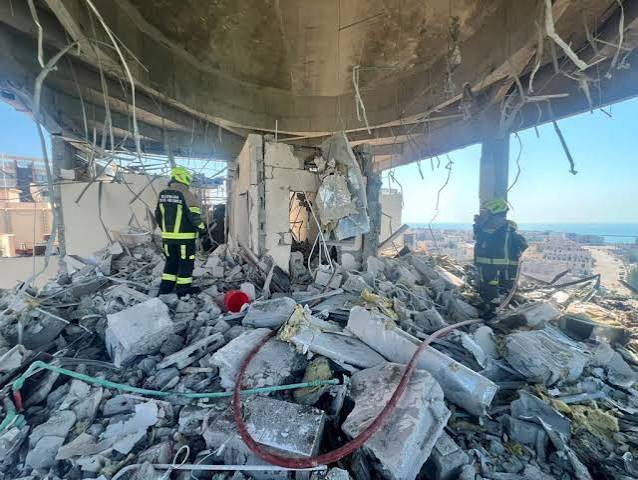
Iranian forces reportedly targeted air defence systems, drone facilities and missile-launch platforms at Ali Al Salem Air Base in Kuwait early Wednesday, according to Iranian state media.
Kuwait’s military said its air defences intercepted drone attacks. No immediate details about damage or casualties were released. Kuwait’s Foreign Ministry condemned the repeated attacks, warning that they threatened the country’s security and stability.
The base has previously sustained repeated attacks during the conflict, with significant damage reported to aircraft hangars, warehouses and other facilities.
FRESH ATTACKS REPORTED IN BAHRAIN
Bahrain also faced multiple attacks early Wednesday. The country’s Interior Ministry issued emergency alerts urging residents to take shelter before subsequently announcing an all-clear.
Bahrain’s military said it had intercepted several incoming attacks but did not immediately disclose details of damage or casualties.
Bahrain hosts the US Navy’s Fifth Fleet, making it a strategically important location amid the escalating confrontation between Washington and Tehran.
🇺🇸 US-IRAN CONFRONTATION INTENSIFIES
The latest developments followed a US fighter jet strike on an Iranian Revolutionary Guard missile-launch site on Qeshm Island in the Strait of Hormuz on Tuesday. Washington said its action was in retaliation for an Iranian attack on an American radar installation in Bahrain.
Iran has described its recent operations against US facilities as retaliation for American drone surveillance and attacks on Iranian communications infrastructure.
US President Donald Trump has reportedly sent mixed signals about Washington’s next move, while additional military deployments, including another aircraft carrier and thousands of troops, have heightened regional tensions.
🛢️ STRAIT OF HORMUZ UNDER PRESSURE
The confrontation is also threatening one of the world’s most important maritime energy corridors. Despite US naval escorts helping restore oil shipments toward pre-conflict levels, attacks on vessels attempting to cross the Strait of Hormuz have continued.
The United Arab Emirates’ state-owned oil company ADNOC reported that one crew member remained missing following an attack on one of its tankers, while 11 others were injured and receiving medical treatment.
Analysts warn that continued attacks on shipping and military facilities could increase economic pressure on both sides and raise the risk of a wider regional war.
🇾🇪 HOUTHIS TARGET RIYADH
Meanwhile, Saudi Arabian air defences reportedly intercepted and destroyed two cruise missiles launched by Iran-backed Houthi rebels in Yemen toward Riyadh.
The reported interception followed major coalition airstrikes against Houthi-controlled areas in Yemen. The Houthis said the previous day’s strikes killed at least 17 people, while the Saudi-led coalition said it had targeted 60 military objectives to weaken the group’s missile and drone capabilities.
Developments around the strategically important Bab el-Mandeb Strait have added another layer of uncertainty for international trade and global energy supplies.
🌍 DIPLOMATIC SOLUTION OR FURTHER ESCALATION?
Regional security analysts warn that the accumulation of military incidents across multiple fronts increases the risk of miscalculation. Iran appears to be using pressure on US facilities and commercial shipping to raise the military and economic costs of the continuing blockade.
The situation leaves Washington facing a difficult choice: a limited response could invite further attacks, while a stronger military campaign could intensify the conflict.
A negotiated settlement or a change in the US blockade policy could offer a path toward de-escalation, but the latest attacks underscore how fragile the regional security situation has become.
Truth Prevail — Bringing You the Headlines That Matter!