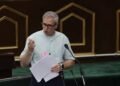


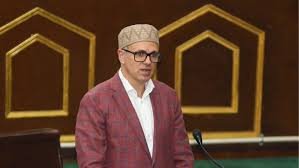
Jammu, February 6, 2026 : Jammu and Kashmir Chief Minister Omar Abdullah on Friday presented a ₹1.27 lakh crore Budget for 2026–27 in the Legislative Assembly, describing it as a roadmap for sustainable growth, social harmony and long-term economic prosperity in the Union Territory.
Holding the finance portfolio, Abdullah said the Budget is aimed at transforming Jammu and Kashmir into a modern, progressive and economically vibrant region through investment, innovation and participatory governance.
The Chief Minister estimated total gross receipts and expenditure at ₹1,27,767 crore, which includes ₹14,000 crore as provision for ways and means advances and overdraft. Excluding this, the net Budget size stands at ₹1,13,767 crore.
Of the total outlay, ₹80,640 crore has been earmarked for revenue expenditure, while ₹33,127 crore is allocated for capital expenditure. Revenue receipts are projected at ₹90,018 crore, with capital receipts estimated at ₹23,749 crore. Jammu and Kashmir’s own tax and non-tax revenues are expected to be ₹31,800 crore, while central assistance is pegged at ₹42,752 crore, along with ₹13,400 crore under centrally sponsored schemes.
On fiscal indicators, Abdullah said the tax-to-GDP ratio is projected at 6.6 per cent in 2026–27, compared to 7.5 per cent in the previous year. The fiscal deficit, which stood at 2.98 per cent in 2025–26, is estimated at 3.69 per cent for 2026–27.
The Chief Minister projected the GDP at ₹3.15 lakh crore for 2026–27, indicating a growth rate of around 9.5 per cent, building on the estimated ₹2.88 lakh crore GDP in 2025–26.
Calling the Budget a “fiscal compass,” Abdullah said it was prepared after wide consultations with elected representatives, industry leaders and stakeholders to ensure a people-centric approach. He acknowledged that geopolitical tensions, the Pahalgam terror attack, and devastating floods in parts of Jammu had impacted tourism, agriculture, horticulture and handicrafts, leading to job losses and financial stress.
Highlighting constraints, he said nearly 60 per cent of expenditure goes towards salaries, pensions and debt servicing, while own revenues meet only about 25 per cent of budgetary needs. He added that austerity measures are being enforced for the third consecutive year and debt sustainability is being strengthened.
The Chief Minister also acknowledged the Centre’s support, noting that J&K has been brought under the Special Assistance to States for Capital Investment scheme, with funds to be used for infrastructure, hydropower projects and disaster mitigation works.
Key Welfare & Development Measures
-
Full fee waivers for economically weaker students from Class 9 to college
-
Six free LPG cylinders annually for eligible households
-
Monthly support for orphan children
-
Scholarships for tribal students
-
Free government transport for persons with disabilities
-
Crop insurance for apple, saffron, mango and litchi
-
Expansion of storage facilities and promotion of micro & sprinkler irrigation
-
Medicinal plant cultivation and livestock genetic improvement labs in every district
-
Push for ODF-Plus status in rural areas
-
JK e-Pathshala DTH channels for Classes 1–12
-
Modernisation of anganwadi centres and indoor sports facilities in government schools
-
Priority hiring of local youth in subsidised industries
Urging collective effort, Abdullah said, “Together, we will turn obstacles into stepping stones and aspirations into achievements,” calling upon all members of the House to work jointly for a strong and flourishing Jammu and Kashmir.