


New Delhi, January 27, 2026 : The adverse health impacts caused by emissions from the global plastics system could more than double by 2040 compared to 2016 levels if current production and consumption trends continue, according to a new study published in The Lancet Planetary Health journal.
The study warns that emissions generated throughout the lifecycle of plastics — including greenhouse gases, air-polluting particles and toxic chemicals released during production, use and disposal — pose a growing and serious threat to human health worldwide. Researchers cautioned that global plastic production may not peak until beyond 2100, further intensifying environmental and health burdens.
Conducted by researchers from the London School of Hygiene and Tropical Medicine along with institutes in France, the study highlights that while plastic pollution is increasingly recognised as a public health concern, the full scale of its health impacts is only beginning to be quantified.
For the first time at a global level, the research estimates health impacts of plastics using disability-adjusted life years (DALYs), a metric that captures the combined burden of illness, disability and premature death. The assessment covers the entire plastics lifecycle — from raw material extraction and polymer production to recycling, waste dumping, open burning and environmental leakage.
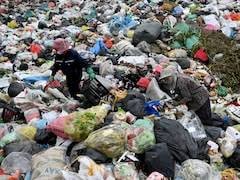
The researchers found that emissions across the plastics lifecycle contribute significantly to global warming, air pollution, toxicity-related cancers and non-communicable diseases. The greatest health harms were linked to primary (virgin) plastic production and open burning of plastic waste.
Under a business-as-usual scenario for plastics entering the oceans, the study estimates that health impacts linked to the global plastics system would more than double between 2016 and 2040.
The study also flagged a major challenge in regulating plastics — the lack of transparency around their chemical composition. Researchers said non-disclosure of chemicals used in plastics severely limits accurate lifecycle assessments and weakens policy responses.
To mitigate health risks, the framework proposed by the study strongly recommends a deep reduction in the production of virgin plastics, especially for non-essential uses. It calls for a globally coordinated policy approach that addresses plastics from production to disposal rather than focusing only on waste management.
The authors stressed that a full lifecycle approach is crucial to protecting human health and supporting sustainability across environmental, economic and public health systems. The findings are particularly relevant as more than 175 countries are currently negotiating a Global Plastics Treaty aimed at curbing plastic pollution worldwide.
The researchers concluded that effective regulation, reduced plastic production and stronger international cooperation are essential to prevent a looming public health crisis linked to plastics.