

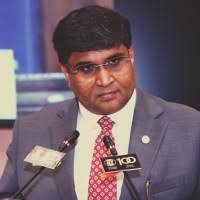
Jammu, February 1, 2026 : Chairman of the Indian Chamber of Commerce and Industries (ICCI), Jammu and Kashmir, Rahul Sahai on Sunday described the Union Budget 2026–27 as progressive and sustainable from a national perspective, but said it fell short of the expectations of Jammu and Kashmir as a conflict-affected region.

Addressing reporters in Jammu, Sahai said the budget reflects a strong emphasis on sustainable infrastructure development and appears well-balanced for the country as a whole. However, he expressed disappointment over the absence of region-specific measures tailored to the unique economic challenges faced by Jammu and Kashmir.
“Overall, it is a progressive and sustainable budget for the country. But from a region-specific point of view, it does not meet our expectations, particularly for industries in Jammu and Kashmir, which is a conflict zone,” Sahai said.
He noted that increased public capital expenditure and a continued infrastructure push remain among the biggest positives of the budget. Sahai welcomed the enhanced allocation for infrastructure, especially initiatives related to Dedicated Freight Corridors, National Waterways, Urban Economic Regions, and the development of Tier-2 and Tier-3 cities, calling them important drivers of long-term economic growth.
Highlighting support for small businesses, Sahai appreciated the announcement of a ₹10,000 crore SME Growth Fund and measures to strengthen the Trade Receivables Discounting System (TReDS), which he said indicate the government’s intent to improve access to finance for MSMEs.
“TReDS helps MSMEs through bill discounting. Although awareness about it is still limited, a serious effort is visible to strengthen MSMEs and improve funding availability,” he said.
Sahai also acknowledged the government’s focus on domestic manufacturing and strategic sectors, including the revival of 200 legacy industrial clusters, promotion of electronic component manufacturing, textile chemicals, and advanced manufacturing, stating that the commitment in these areas is clearly evident.
However, he underlined that industries in Jammu and Kashmir had expected greater financial and policy support, particularly for the MSME sector, which forms the backbone of the region’s economy.
“Our biggest expectation was that Jammu and Kashmir should receive additional funding and targeted support, especially to strengthen MSMEs,” Sahai said.
He pointed out that there appears to be no specific provision for existing MSMEs and manufacturing units in Jammu and Kashmir, adding that there is no visible region-specific credit support or interest subvention framework in the budget.
“So far, there does not appear to be any special package for the manufacturing industry already operating in Jammu and Kashmir. This is a concern,” he said.
Emphasising the need for a differentiated approach, Sahai stressed that border and post-conflict regions like Jammu and Kashmir require customised policy instruments, as local industries are often the first to be affected by security-related disruptions.
“Everyone is aware of the unique challenges faced by Jammu and Kashmir. In such situations, the local industry and businesses suffer the earliest and the most. This demands a policy approach different from that adopted for other states,” he said.
Sahai concluded by stating that while the budget takes several positive steps at the national level, it lacks a targeted and special economic framework for Jammu and Kashmir.