

Jammu, March 9, 2026 : Minister for Health and Medical Education, Social Welfare and Education Sakina Itoo on Monday directed officials to enforce stricter quality checks and continuous monitoring of drug supplies in government hospitals while reviewing the functioning of Jammu and Kashmir Medical Supplies Corporation Limited (JKMSCL).
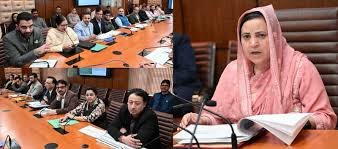
Chairing a high-level review meeting at the Civil Secretariat in Jammu, the minister emphasised the need for greater accountability in procurement and supply of medicines and medical equipment across Jammu and Kashmir, stressing that patient safety remains the government’s top priority.
Addressing officers, Sakina Itoo highlighted the crucial role played by Jammu and Kashmir Medical Supplies Corporation Limited in the public healthcare delivery system by ensuring timely availability of medicines, surgical consumables and medical equipment in government health institutions.
“Any compromise in quality, transparency or efficiency will not be tolerated, as it directly affects patient safety and the credibility of the public health system,” she said.
The minister instructed the Managing Director of JKMSCL to tighten quality control protocols at every stage — from procurement and laboratory testing to storage and final distribution.
She also directed that only certified and standard-compliant medicines and equipment should reach government hospitals and warned that negligence in quality verification would invite strict action.
To strengthen oversight, the minister called for regular quality audits, enhanced laboratory testing and strict scrutiny of vendors to ensure that suppliers comply fully with prescribed standards and contractual obligations.
While reviewing procurement procedures, supply chain management, inventory status and vendor performance, Sakina Itoo directed JKMSCL to take action against firms delaying the supply of essential medicines and medical equipment and sought a detailed report on actions taken against underperforming vendors since 2021.
She also stressed the timely availability of life-saving drugs, particularly cancer medicines, and instructed medical superintendents and hospital administrators to submit requirements according to established protocols followed by leading medical institutions.
Highlighting challenges faced by hospitals in remote and rural areas, the minister directed JKMSCL to improve supply chain coordination and maintain buffer stocks of essential medicines and equipment to prevent shortages.
She further asked the corporation to strengthen grievance redressal mechanisms and ensure quick responses to complaints from healthcare institutions regarding supply delays or quality concerns.
Reaffirming the government’s commitment to improving healthcare services, the minister said that accessibility, affordability and quality of medicines and medical equipment remain key priorities of the government led by Omar Abdullah.
During the meeting, Managing Director of JKMSCL Tariq Hussain Ganie presented a detailed overview of the corporation’s functioning. He informed that 3,390 medicine samples were tested during 2024–25, of which 32 were declared Not of Standard Quality (NoSQ), while in 2025–26, 65 samples out of 2,806 tested were found NoSQ, with reports of 361 samples still pending.
He also briefed the minister about 3,478 active rate contracts for procurement of machinery, hospital furniture, drugs, vaccines and medical instruments, and the functioning of the Drug and Vaccine Distribution Management System (DVDMS) portal used by health institutions across the Union Territory.
The meeting was attended by several senior officials including Commissioner Secretary Health & Medical Education M Raju, MD NHM Akriti Sagar, Director Sher-i-Kashmir Institute of Medical Sciences Prof. M Ashraf Ganie, principals of government medical colleges, medical superintendents and other healthcare administrators, who participated either in person or via video conferencing.