

Srinagar, September 8, 2025 : A comprehensive field study conducted by the Kashmir-based NGO Save Youth Save Future Foundation (SYSFF) has challenged the long-standing narrative of “mass civilian graves” in North Kashmir. The landmark study titled “Unraveling the Truth: A Critical Study of Unmarked and Unidentified Graves in Kashmir Valley” concluded that over 90% of the 4,056 unmarked graves documented across four districts of Jammu & Kashmir belong to foreign and local terrorists.

Study Background and Objectives
The study began in 2018 and was completed in 2024, aimed at providing evidence-based insights into the unmarked grave phenomenon. The researchers—led by Wajahat Farooq Bhat, Zahid Sultan, Irshad Ahmed Bhat, Anika Nazir, Muddasir Ahmed Dar, and Shabir Ahmed—set out to document, verify, and analyze the graves across the politically sensitive regions of Baramulla, Kupwara, Bandipora in North Kashmir, and Ganderbal in Central Kashmir.
Rather than relying on anecdotal or unverified claims, the research employed a rigorous methodology including:
-
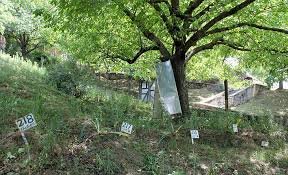
GPS tagging of grave sites
-
Photographic documentation
-
Oral testimonies from local clerics, gravediggers, residents, and families
-
Analysis of official security and government records
This methodical approach was designed to ensure transparency and factual accuracy.
Key Findings
-
Total Graves Documented:
The research documented 4,056 unmarked graves across the targeted districts. -
Breakdown of Grave Ownership:
-
Foreign Militants:
Approximately 2,493 graves (61.5%) were confirmed to belong to foreign terrorists who were killed in counter-insurgency operations. Many of these militants were deliberately without identification, reflecting strategies to maintain plausible deniability by Pakistan’s Inter-Services Intelligence (ISI). -
Local Kashmiri Militants:
Around 1,208 graves (29.8%) were attributed to local Kashmiri militants who died in encounters with Indian security forces. Identification in these cases was primarily through oral testimonies and family acknowledgments. -
Civilian Graves:
Only 9 graves (0.2%) were confirmed as civilian. This figure significantly undermines prior claims of widespread civilian mass graves. -
Historical Graves:
The study also documented 70 graves of tribal invaders who died during the 1947 Kashmir war, reflecting the historical depth of conflict-related burials in the region.
-
-
276 Graves Require Further Forensic Investigation:
The study identified 276 genuinely unmarked graves that could not be clearly attributed and require modern DNA testing and forensic analysis to resolve outstanding questions and address humanitarian concerns.
Key Insights and Implications
-
The study directly challenges claims by some advocacy groups and international organizations alleging systematic extrajudicial killings and civilian mass graves in Kashmir.
-
Researchers emphasize the need for systematic verification of claims before drawing political conclusions or making international policy decisions.
-
Wajahat Farooq Bhat stated:
“For once, we decided to find the truth by ourselves. Our findings contradict the narrative of widespread civilian mass graves, and reveal that the accusations of systematic killings and anonymous mass burials lack empirical foundation.” -
The report underscores the role of Pakistan’s ISI and military establishment in redirecting resources post-Soviet withdrawal from Afghanistan in 1989 to fuel insurgency in Kashmir. This period saw a significant influx of well-trained foreign militants, sophisticated weaponry, and radical ideologies into the region, fundamentally altering the Kashmir conflict.
Humanitarian Aspect and Pakistan’s Responsibility
The report calls upon the international community and the Pakistani state to:
-
Acknowledge the presence of its citizens among the foreign militants buried in Kashmir.
-
Facilitate family visits to these graves in line with international humanitarian norms.
The SYSFF study strongly argues that the systematic denial and abandonment of these individuals by Pakistan represents a significant humanitarian failure, which continues to prolong suffering for both Kashmiri families who maintain these graves and Pakistani families left in the dark about their relatives’ fates.
Conclusion
The “Unraveling the Truth” report is positioned as a well-researched, field-based study that disputes politically motivated narratives of mass civilian graves in Kashmir. It emphasizes empirical data over speculation, offering a significant contribution to the discourse surrounding the Kashmir conflict. The researchers urge:
-
Comprehensive forensic analysis of the remaining ambiguous graves.
-
Fact-based policy decisions by the international community.
-
Greater accountability from all parties involved in the region’s conflict dynamics.