


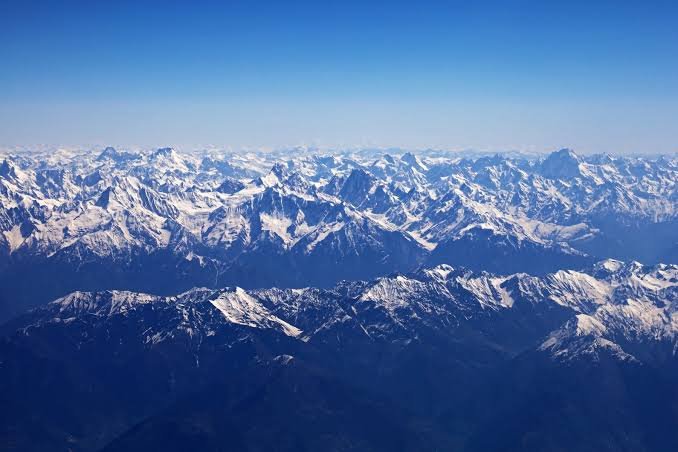
New Delhi, July 15, 2026 : A new scientific study has revealed that snowfall across parts of the Himalayas may have been significantly underestimated for years, with researchers finding that previous analyses missed nearly 37% of the total seasonal snowfall over the Lake Hampta region in Himachal Pradesh during a single winter.

The study, conducted by researchers from the British Antarctic Survey, the UK Met Office, and the Indian Institute of Technology (IIT) Kharagpur, offers improved estimates of snowfall across the west-central Himalayas, potentially reshaping scientific understanding of the region’s water resources and climate.
Published in the journal Monthly Weather Review, the research addresses one of the biggest challenges in mountain science—accurately measuring snowfall in rugged, high-altitude terrain.
Innovative Method Using High-Altitude Lakes
Instead of relying solely on conventional weather instruments, the researchers deployed commercially available water-pressure sensors in three high-altitude lakes:
- Lake Ghepan (Western Himalayas)
- Lake Hampta (Himachal Pradesh)
- Lake Mugu (Nepal)
These frozen lakes function as natural pressure sensors, enabling scientists to measure snowfall across vast lake surfaces far more accurately than traditional point-based instruments.
According to Siddharth Gumber, a mountain climate scientist with the British Antarctic Survey and one of the study’s authors, the technique is based on the Archimedes principle of displacement, allowing the sensors to directly measure the mass of accumulating snow through changes in water pressure.
“Unlike conventional instruments, these sensors monitor the entire lake surface—covering thousands to billions of square metres—to accurately capture both the timing and intensity of snowfall,” Gumber explained.
More Accurate Snowfall Estimates
The researchers found that the new model successfully reproduces both when snowfall occurs and how much snow accumulates, while also performing particularly well in detecting extreme snowfall events.
According to the study, previous Himalayan snowfall analyses underestimated seasonal snowfall by 37% over the Lake Hampta area, highlighting the need for improved monitoring techniques across mountain regions.
The authors noted that the model can be effectively used to generate long-term snowfall records, improving future climate and hydrological assessments.
Why It Matters
Snowfall in the Himalayas is a critical source of freshwater, feeding rivers that support millions of people across South Asia. Accurate snowfall measurements are essential for predicting:
- Seasonal snowmelt
- River water availability
- Water resource management
- Flood and drought forecasting
- Climate change impacts
Researchers say better snowfall data will help governments, policymakers, and local communities prepare for future water shortages, particularly as climate change alters precipitation patterns in the Himalayan region.
Gumber emphasized that while mountain communities are already witnessing increasing water stress, there remains considerable uncertainty about how much water the Himalayas will continue to provide in the coming decades.
“Good measurements of snowfall are now more important than ever for predicting the future of water resources, which until now have been lacking,” he said.
The findings are expected to contribute significantly to improving climate models and strengthening long-term water security planning across the Himalayan region.