

ADDIS ABABA, Ethiopia — October 1, 2026:
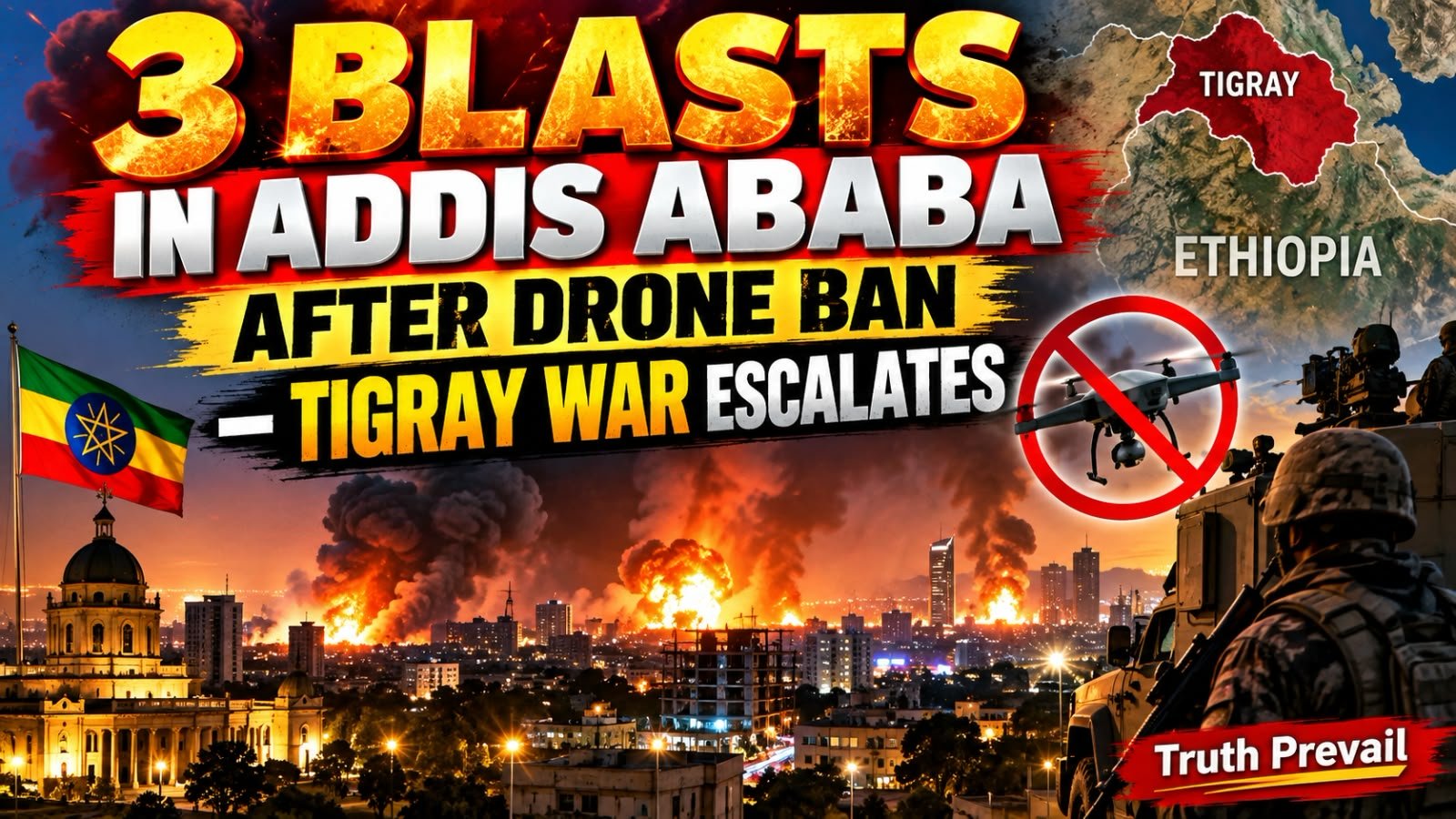
A series of blasts were heard across Ethiopia’s capital, Addis Ababa, hours after authorities imposed a ban on drone flights over the city and surrounding areas, as fighting continued to intensify in the country’s northern Tigray region.

An Ethiopian intelligence service official, who was not authorised to speak publicly, confirmed that three blasts were heard at three different locations in Addis Ababa overnight. The official did not provide details about the cause of the explosions or whether there were casualties or damage.
A diplomatic source, speaking anonymously for security reasons, said a blast was heard at around 7 p.m. near the defence headquarters, followed by a siren. Residents living close to the defence headquarters also reported hearing another explosion near a factory after midnight.
At this stage, it remains unclear whether the explosions were caused by an attack, military activity or training exercises. The reports of possible drone strikes have not been independently verified.
Drone Flights Banned
The explosions came only hours after Ethiopia’s National Intelligence and Security Service imposed a ban on drone flights over Addis Ababa and surrounding areas amid heightened security concerns.
The timing of the drone restrictions and subsequent explosions has raised concerns that the conflict in northern Ethiopia could have security implications beyond the Tigray battlefield.
An opposition alliance source told Reuters that the alliance had carried out drone strikes in Addis Ababa, including against military facilities. That claim has not been independently verified.
Fighting Intensifies in Tigray
The developments in Addis Ababa come as fighting between Ethiopian federal forces and armed opposition groups has intensified across northern Ethiopia.
The conflict has particularly affected Tigray, where the Tigray People’s Liberation Front (TPLF) and allied groups have been engaged in renewed fighting with federal forces. The escalation follows the collapse of the relative calm established by the 2022 Pretoria peace agreement.
Recent fighting has involved areas of Tigray as well as neighbouring Afar and Amhara regions. Federal forces and their allies have reported territorial gains, while opposition forces have also claimed advances.
Civilians Face Growing Hardship
The renewed conflict is creating severe difficulties for civilians already affected by the previous Tigray war.
People living in displacement camps have reported hearing gunfire, heavy artillery and drones in areas close to their settlements. Residents in and around Mekelle have also reported disruptions to communications, banking and other essential services.
The disruption of banking services has created serious cash shortages, affecting businesses and ordinary families. Merchants say they are struggling to sell goods, while rising fuel prices and shortages are increasing the pressure on households.
One merchant in Mekelle said his available stock might not last more than a month because customers were unable to access sufficient cash.
A taxi driver, speaking anonymously because of security concerns, said fuel prices had doubled on the black market and described the conflict as making everyday life extremely difficult.
Humanitarian Concerns Grow
The renewed fighting is also increasing fears of another major humanitarian crisis in northern Ethiopia.
Humanitarian organisations have reported large numbers of wounded people and new displacement in conflict-affected areas. Recent reports indicate that communications remain disrupted in parts of Tigray, making it difficult to obtain reliable information about developments on the ground.
The United Nations has called for de-escalation and dialogue as fighting continues and political tensions deepen.
For residents of Addis Ababa, the overnight explosions have added a new layer of uncertainty, while the government’s drone restrictions underline the heightened security situation.
For now, the precise cause of the blasts, the extent of any damage and whether they were connected to the wider conflict remain unclear.