

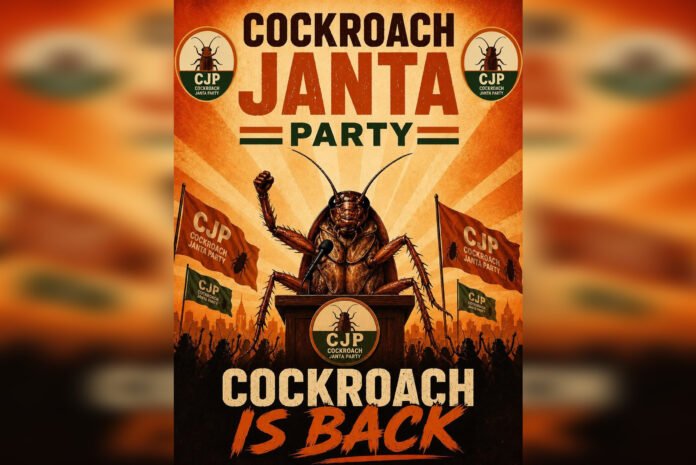
NEW DELHI, May 21, 2026 : The X account of the viral satirical platform Cockroach Janata Party (CJP) was withheld in India on Thursday, days after the digital movement gained massive traction across social media platforms through political satire, memes and youth-centric commentary.

Soon after the restriction, the platform’s founder Abhijeet Dipke announced the launch of a new X handle titled “Cockroach Is Back”, which rapidly began attracting followers online.
“This was expected since there were attempts to hack the account yesterday. But this is a self-goal by the government,” Dipke said while reacting to the action.
According to Dipke, the original Cockroach Janata Party account had crossed nearly 2 lakh followers before becoming inaccessible in India. Within a short period after launch, the new handle reportedly gathered thousands of followers.
The satirical platform emerged shortly after remarks made by Chief Justice of India Surya Kant during a court hearing on May 15, where the terms “cockroaches” and “parasites” became the centre of public debate and online discussion.
The CJI later clarified that his observations had been misquoted and were specifically directed at individuals entering the legal profession through “fake and bogus degrees.”
What initially started as a meme-driven satire page quickly evolved into a broader digital movement discussing issues such as unemployment, examination paper leaks, education and governance through humour, graphics and online campaigns.
The platform’s Instagram account, however, remained active despite the X restriction and reportedly continued witnessing rapid growth in followers.
Dipke alleged that attempts were also being made to target the platform’s Instagram presence and stated that the team would pursue legal remedies regarding the withholding of the X account.
The rise of Cockroach Janata Party also attracted attention from political leaders, activists and social media users, with several public figures engaging with or commenting on the movement online.
Observers say the development reflects the growing role of meme culture, satire and digital dissent in shaping political conversations among younger audiences in India.