


Jammu, June 15, 2026 : The sowing season for the world-renowned Jammu Basmati paddy has commenced across the border belts of Jammu Division, with cultivation expected to cover nearly 63,000 hectares in the districts of Jammu, Samba, and Kathua, officials said on Monday.

Recognized globally for its distinctive aroma, superior grain quality, and exceptional cooking characteristics, Jammu Basmati remains one of the Union Territory’s most valuable agricultural commodities and a major source of livelihood for thousands of farming families.
Paddy Transplantation Underway Despite Heatwave
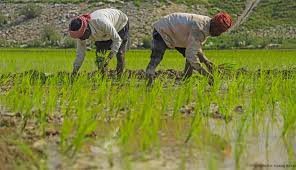
Amid intense summer temperatures, scores of agricultural labourers have begun transplanting paddy seedlings in waterlogged fields across Gajansoo, Marh, RS Pura, Arnia, and Bishnah areas located along the Indo-Pak border.
Despite prevailing heatwave conditions, farming activities are progressing steadily as cultivators prepare for another productive season.
“We are happy that the paddy sowing season has begun. Despite the prevailing heatwave conditions, transplantation work is progressing at a good pace,” said Dheeraj, a farm labourer engaged in the cultivation process.
Basmati Remains a Backbone of Jammu’s Agricultural Economy
Director Agriculture Jammu Anil Gupta said the sowing season has begun in the traditional Basmati-growing belts and that the Agriculture Department is making continuous efforts to further expand cultivation.
“Basmati is a major crop in Jammu Division, particularly in Jammu, Samba, and Kathua districts. It is cultivated over nearly 63,000 hectares and we are making continuous efforts to promote and expand its cultivation,” Gupta said.
According to official estimates, the region produces around 20 lakh quintals of Basmati rice annually, making it one of the most significant agricultural products of Jammu and Kashmir.
Of the total production:
• Nearly 16 lakh quintals are consumed within the domestic market.
• Around 4 to 5 lakh quintals are marketed outside the region and exported to international destinations.
GI Tag Strengthens Global Recognition
A major milestone for Jammu Basmati came in 2016, when the highly aromatic rice grown in the RS Pura belt received the prestigious Geographical Indication (GI) Tag.
The GI status has provided Jammu Basmati with a unique identity and significantly enhanced its reputation and market value in both domestic and international markets.
“The GI tag recognises the special qualities of Jammu Basmati linked to its geographical origin and has helped establish its reputation across the world,” Gupta said.
Popular Varieties in High Demand
Officials said farmers across the region are cultivating several popular and commercially successful varieties of Basmati, including:
• Basmati-370
• Basmati-564
• Pusa Basmati-1121
• Pusa Basmati-1718
• Jammu Basmati-123
These varieties continue to enjoy strong demand among consumers due to their aroma, grain length, cooking quality, and export potential.
RS Pura Basmati: Pride of Jammu Agriculture
Among all varieties, RS Pura Basmati remains one of Jammu’s most prized agricultural products. Known for its extra-long slender grains, rich fragrance, and premium cooking quality, it has carved a distinct niche in both national and international markets.
Agriculture experts attribute the exceptional quality of RS Pura Basmati to the region’s fertile alluvial soil, favourable agro-climatic conditions, and traditional farming practices that have been preserved over generations.
The Basmati grown in RS Pura and Bishnah is especially sought after for its superior aroma and texture, making it one of the most recognized rice varieties produced in the Union Territory.
Government Promoting Basmati Cultivation
The Agriculture Department is actively promoting Basmati cultivation through various government schemes and farmer-support initiatives aimed at increasing productivity, enhancing farmers’ incomes, and boosting agricultural exports.
Officials believe that continued investment in quality cultivation practices, branding, and export promotion will further strengthen Jammu’s position as a leading producer of premium Basmati rice.
Key Highlights
• Basmati paddy sowing season has begun across Jammu Division.
• Crop cultivation is expected to cover nearly 63,000 hectares in Jammu, Samba, and Kathua districts.
• Annual Basmati production in the region stands at around 20 lakh quintals.
• Jammu Basmati received a GI Tag in 2016, enhancing its global recognition.
• Popular varieties include Basmati-370, Basmati-564, Pusa-1121, Pusa-1718, and Jammu Basmati-123.
• RS Pura Basmati is renowned for its aroma, long grains, and premium quality.
• Agriculture Department is promoting cultivation to increase farmers’ income and exports.
• Thousands of farming families depend on Basmati cultivation for their livelihood.