

NEW DELHI, August 12, 2026 : The inquiry report into allegations against former Allahabad High Court judge Justice Yashwant Varma was tabled in both Houses of Parliament on Wednesday, bringing the findings of the high-profile judicial accountability case into the parliamentary record.

The two-volume report, along with oral and documentary evidence collected during the inquiry, was laid before the Lok Sabha and Rajya Sabha by the respective Secretaries General. The three-member Judges Inquiry Committee had submitted its report to Lok Sabha Speaker Om Birla in May 2026.
Panel Finds All Three Charges Proved
The parliamentary inquiry committee has held all three charges against Justice Yashwant Varma proved.
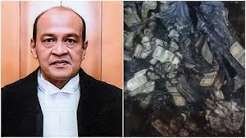
The first charge related to the discovery of a substantial quantity of unexplained ₹500 currency notes in a storeroom at his official residence at 30 Tughlaq Crescent, New Delhi. The committee concluded that Justice Varma failed to provide a satisfactory explanation regarding the presence, source or ownership of the cash.
The second charge concerned the handling and preservation of evidence following the discovery. According to the report, the storeroom was disturbed before it could be properly sealed and inspected, affecting the evidentiary condition of the site. The subsequent non-availability of the currency notes also remained unexplained.
The committee, however, specifically stated that its finding on the second charge was not based on proof that Justice Varma personally removed the currency. Instead, it focused on the failure to preserve material evidence, the disturbance of the premises and the resulting loss of evidence.
The third charge related to the explanations offered by Justice Varma during the inquiry. The committee found his explanations evasive and unsatisfactory when assessed against witness statements and documentary and electronic evidence.
Controversy Began After 2025 Residence Fire
The case dates back to the night of March 14, 2025, when a fire broke out at Justice Varma’s official residence in New Delhi. Firefighters responding to the blaze reportedly discovered burnt and partially burnt currency notes in a storeroom.
Justice Varma denied that the cash belonged to him or his family. He also raised the possibility that the currency may have been planted as part of a conspiracy against him. The parliamentary committee noted that no supporting evidence was produced for these claims.
An earlier in-house inquiry constituted under then Chief Justice of India Sanjiv Khanna had also found adverse material against Justice Varma, including that he had active or tacit control over the storeroom where the cash was discovered.
From Judicial Inquiry to Parliamentary Proceedings
The controversy subsequently moved into Parliament. In July 2025, separate removal motions were supported by the requisite number of Members of Parliament. Lok Sabha Speaker Om Birla then constituted a three-member Judges Inquiry Committee under the Judges (Inquiry) Act, 1968.
The committee was headed by Supreme Court judge Justice Aravind Kumar, with Justice Shree Chandrashekhar and senior advocate B.V. Acharya as members, according to reports on the proceedings.
The committee examined documentary and electronic material and recorded oral evidence before submitting its findings to the Lok Sabha Speaker in May 2026.
Resignation Does Not Erase Parliamentary Record
Justice Yashwant Varma resigned from the Allahabad High Court in April 2026, after removal proceedings had already begun. His resignation made the immediate question of removal from judicial office effectively infructuous, but the inquiry continued and its findings have now formally entered the parliamentary record.
The tabling of the report therefore marks an important development in one of India’s most closely watched judicial accountability cases. While the parliamentary removal process may no longer have a practical effect on Justice Varma’s judicial office, the committee’s findings are now officially part of the records of Parliament.
The report’s central conclusion is clear: all three charges—unexplained currency at the official residence, failure to preserve material evidence, and evasive or unsatisfactory explanations—were held proved by the inquiry committee.