


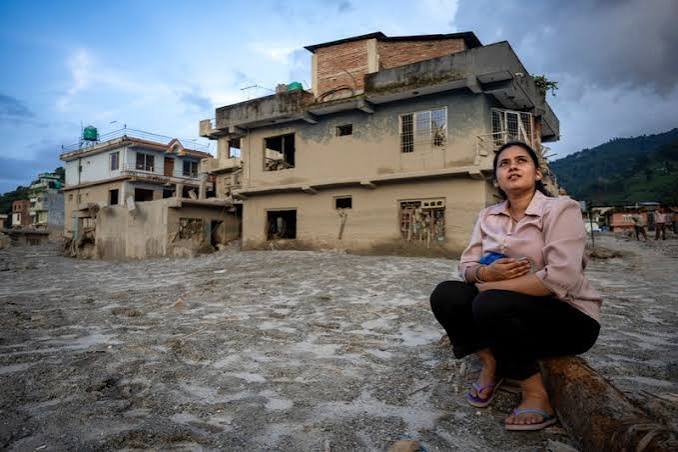
KATHMANDU, SEPTEMBER 13, 2026 ; Nepal’s devastating Rasuwa-Bhotekoshi flash floods have left behind an estimated USD 2.7 billion in damage and economic losses, while the country is expected to require around USD 4.7 billion for recovery and reconstruction, according to a government-led assessment.
The Rapid Damage and Needs Assessment (RDNA), released by Nepal’s government on Saturday, estimates physical damage at USD 1.81 billion and economic losses at USD 883.32 million. The larger recovery figure includes not only rebuilding damaged infrastructure but also measures aimed at reducing future disaster risks and strengthening resilience.
The assessment, led by Nepal’s National Disaster Risk Reduction and Management Authority, covers Rasuwa, Nuwakot, Dhading, Gorkha and Chitwan districts. Officials used administrative records, satellite imagery, drone surveys, geospatial information and census data to assess the scale of destruction.
Around 1,400 Killed, Over 5,000 Missing
The flash floods were triggered by an ice-rock avalanche in the high Himalayas near the Nepal-Tibet border on August 26. The disaster devastated communities across northern and central Nepal, with around 1,400 people reported killed and more than 5,000 still missing.
The powerful floodwaters travelled downstream through the Bhotekoshi River, sweeping away homes, vehicles, roads and bridges and causing extensive damage to hydropower infrastructure.
Energy Sector Among Worst Hit
The energy sector alone suffered estimated physical damage of USD 889.21 million, alongside USD 107.91 million in economic losses.
The disaster is also estimated to have caused an annual hydropower generation loss of approximately 2,520 GWh. However, the RDNA cautions that generation baselines, outage periods and other assumptions require further verification.
Roads and Bridges Devastated
Infrastructure accounts for 65.47% of the total recovery needs, highlighting the scale of the rebuilding challenge.
The assessment recorded 69 km of damaged roads, including 55 km of the Betrawati-Rasuwagadhi section classified as completely damaged and another 14 km classified as partially damaged.
Road recovery needs have been estimated at USD 364.28 million, covering debris removal, reopening routes, temporary diversions, alternative-route maintenance and emergency slope and riverbank protection.
The floods also affected 68 trail bridges, with a combined length of approximately 10,671 metres, while 37 motorable bridges were completely damaged.
$625 Million Provision for Disaster Risk Reduction
The RDNA has allocated an estimated USD 625.52 million for disaster-risk reduction measures. This is a recovery provision rather than an additional damage estimate.
The amount includes USD 2.31 million for a multi-hazard early-warning system and USD 623.21 million for longer-term disaster-resilience works.
Assessment Still Subject to Verification
The Nepal government has stressed that the RDNA remains an evolving evidence base. Several inventories, engineering assessments and cost estimates require additional verification and refinement.
The report therefore makes clear that the USD 4.7 billion figure is a planning and assessment estimate, not a final audited cost or confirmed government expenditure commitment.
The scale of the assessment underscores the enormous task facing Nepal as it works to restore critical infrastructure, rebuild affected communities and strengthen resilience against future Himalayan disasters.