

NEW DELHI, SEPTEMBER 16, 2026 ; Supreme Court Refuses to Reconstitute Panel Probing Alleged Police Excesses During CJP Protest

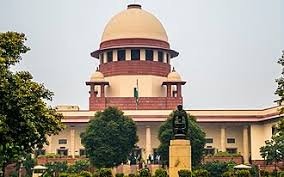
The Supreme Court has declined to reconstitute the five-member High-Powered Enquiry Committee (HPEC) appointed to examine allegations of police excesses against student protesters during the Cockroach Janta Party (CJP)-led protest march in Delhi.
A bench comprising Chief Justice of India Surya Kant and Justices Joymalya Bagchi and V. Mohana said the objections raised against the composition of the committee were based on “conjecture and preconceived notions”, particularly as they were raised even before the committee had commenced its inquiry.
In an order dated September 10, uploaded online on September 15, the bench said the HPEC had been constituted to assist the court with the highest standards of fairness, transparency and a dispassionate approach.
The court made it clear that the committee was not intended to support or advance the cause of either side in the proceedings.
HPEC Asked to Examine Key Allegations
The Supreme Court directed the committee to proceed with its inquiry into several issues arising from the protests, including allegations concerning:
- Use of pellet guns against protesters
- Targeted violence and alleged harassment of female protesters
- Alleged excessive use of force
- Violence involving protesters and security personnel
- Destruction of property by either side
The court also addressed concerns regarding witnesses who may be vulnerable or reluctant to appear before the committee.
It asked the HPEC to ensure adequate protection for such witnesses and maintain strict confidentiality regarding their identities. The court further suggested creation of a separate online portal through which vulnerable witnesses and other stakeholders could submit documents, statements and evidence.
Lawyers Raise Conflict-of-Interest Concern
During the proceedings, advocate Prashant Bhushan, representing one of the petitioners seeking reconstitution of the HPEC, argued that one of the committee members, a former DGP of a northeastern state, could face a conflict of interest because of his alleged proximity to a senior functionary who might come under the committee’s scrutiny.
Senior Advocate Gopal Sankaranarayanan also supported the concern.
Solicitor General Tushar Mehta opposed the submissions and urged the Supreme Court to disregard the allegations.
The court, however, declined to alter the composition of the committee at this stage.
Monika Gusain to Assist Supreme Court
The bench directed Senior Advocate Monika Gusain, assisted by advocate C. Solomon, to assist the court as representatives of the HPEC and function as an independent arbiter between the parties.
The Supreme Court also asked the committee to appoint a member secretary at the earliest to provide logistical and secretarial support for the inquiry.
Composition of the High-Powered Committee
The HPEC is headed by former Supreme Court judge Justice R. Subhash Reddy.
Its other members are:
- Former Punjab and Haryana High Court Chief Justice Ravi Shankar Jha
- Former Delhi High Court judge Shalinder Kaur
- Former CBI Director Rishi Kumar Shukla
- Retired Meghalaya DGP L. R. Bishnoi
The Supreme Court said the committee’s composition took into account the individual expertise and experience of its members, along with the diversity of the panel.
The court expressed confidence that the committee’s recommendations would assist it in making a comprehensive assessment of the issues before it.
Background to the Protests
The CJP-led protest march towards Parliament witnessed clashes between protesters and security personnel. Security forces used lathis and tear gas shells to disperse crowds during the confrontation.
The agitation had begun at Jantar Mantar on June 20. According to the case background, the protest was called off on July 25 following the resignation of then Union Education Minister Dharmendra Pradhan and the government’s acceptance of other demands raised by the CJP.
The Supreme Court’s latest order keeps the existing HPEC intact and allows it to proceed with its inquiry while putting additional safeguards in place for vulnerable witnesses and the submission of evidence.