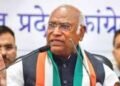


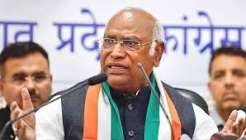
NEW DELHI, OCTOBER 10, 2026 : Congress president Mallikarjun Kharge on Saturday criticised the Narendra Modi-led central government over the detention of protesters by Delhi Police, accusing the government of restricting democratic freedoms and describing India as having been turned from the “Mother of Democracy” into a “Muzzled Democracy”.

Kharge made the remarks in a post on social media platform X as protesters attempted to reach Jantar Mantar for a proposed demonstration by the Cockroach Janta Party (CJP) against Chief Election Commissioner Gyanesh Kumar.
The Congress chief alleged that people from different sections of society—including students, young people, lawyers, journalists, social activists, farmers’ union leaders and digital content creators—were being detained for questioning the government.
Kharge Condemns Detentions
In his statement, Kharge accused the BJP and the Rashtriya Swayamsevak Sangh (RSS) of displaying what he described as cowardice through the handling of protesters.
He argued that detentions, arrests, imprisonment and the use of force would not prevent people from raising their concerns.
Referring to India’s freedom struggle, the Congress president said young people had historically played an important role in shaping the country’s future. He maintained that citizens should be able to exercise their democratic rights without fear.
Kharge also said the Congress, together with opposition parties, would continue to challenge the government’s actions and defend democratic institutions, the Constitution and the fundamental rights of citizens.
His remarks reflected the Congress leadership’s criticism of the police action and the restrictions imposed ahead of the proposed demonstration.
Over 500 Protesters Detained, According to Sources
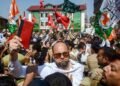
According to the report, Delhi Police detained more than 500 protesters on Saturday as they attempted to reach Jantar Mantar for the proposed CJP demonstration.
Sources said the detentions took place at various locations across the New Delhi area. Police were also using drones to monitor the movement of people attempting to reach the protest venue.
The national capital was placed under heightened security, with police maintaining a strict vigil to prevent any breach of peace.
The reported detentions became a major point of political contention, prompting criticism from opposition leaders who questioned whether the restrictions were compatible with democratic freedoms.
The report did not provide a detailed breakdown of the detainees’ identities, the legal grounds for each detention or how many people were subsequently released.
Police Deny Permission for CJP Demonstration
Delhi Police had denied the CJP permission to hold its proposed demonstration at Jantar Mantar, citing security considerations and procedural requirements.
The party had called the protest against Chief Election Commissioner Gyanesh Kumar over allegations of voter-list manipulation during the Special Intensive Revision (SIR) of electoral rolls and changes concerning Form 6, which is used for voter registration.
The CJP’s proposed demonstration was intended to highlight its concerns about electoral procedures and seek accountability from the Election Commission.
The allegations concerning voter-list manipulation remain claims raised by the party and require examination of the relevant evidence and responses from the authorities.
The denial of permission and the reported detentions intensified the dispute between the organisers and the authorities over the proposed protest.
Electoral Transparency at the Centre of the Dispute
The controversy comes amid a wider political debate over electoral roll revision, the functioning of the Election Commission and public confidence in India’s electoral processes.
The Special Intensive Revision is a process intended to review and update electoral rolls. Form 6 is used by eligible citizens to apply for inclusion in the voter list.
The CJP has alleged irregularities in these processes, while opposition leaders have called for greater transparency and accountability.
A complete assessment of the allegations would require scrutiny of specific cases, relevant electoral records and official explanations from the Election Commission.
Debate Over Democratic Rights and Public Order
The incident has renewed debate over the balance between citizens’ rights to peaceful assembly and the responsibility of law-enforcement authorities to maintain public order.
Kharge and other opposition leaders have criticised the restrictions, arguing that peaceful protesters should be allowed to raise questions about public institutions and electoral procedures.
Delhi Police, according to the report, cited security considerations and procedural requirements when denying permission for the demonstration.
The legal basis for the reported detentions, the specific restrictions imposed and the subsequent status of those detained remain important facts for a fuller understanding of the incident.
Political Reactions and Possible Further Developments
Kharge’s statement adds to the opposition’s criticism of the government’s handling of the proposed CJP protest. His comments also broadened the debate beyond the immediate demonstration to include freedom of expression, institutional accountability and the protection of constitutional rights.
The issue is likely to remain a subject of political discussion as opposition parties seek clarification over the police action and press their demands concerning electoral transparency.
Further developments will depend on official explanations from Delhi Police, the status of the detained protesters and any response from the Election Commission regarding the allegations raised by the CJP.
Key Details
- Date: October 10, 2026
- Location: New Delhi, India
- Congress president: Mallikarjun Kharge
- Main controversy: Police action ahead of a proposed CJP protest
- Reported detentions: More than 500 protesters, according to sources cited in the report
- Proposed protest venue: Jantar Mantar
- Police position: Permission denied on security and procedural grounds
- Main issue raised by CJP: Alleged irregularities in electoral roll revision and Form 6
- Kharge’s demand: Protection of democracy, constitutional rights and freedom of expression
The incident has brought the relationship between public protest, police restrictions and electoral accountability into focus. While opposition leaders have criticised the reported detentions, further official clarification is needed to establish the full circumstances of the police action.