


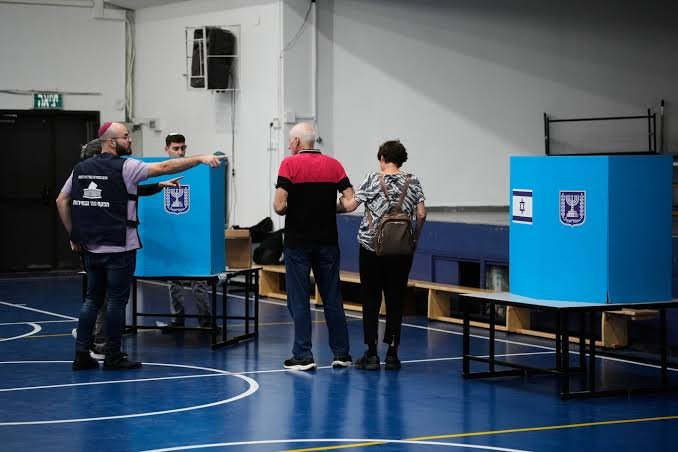
JERUSALEM | October 27, 2026 : Israel is voting in a pivotal national election that could reshape its political leadership, its approach to national security and the future direction of the country after years of war, deep social divisions and mounting international criticism.

Prime Minister Benjamin Netanyahu, Israel’s longest-serving premier, is facing a challenge from an array of opposition parties, with former military chief Gadi Eisenkot emerging as his principal rival, according to the report.
With more than seven million people eligible to vote, the election has become a crucial test of public confidence in Netanyahu’s leadership following the Hamas-led attack of October 7, 2023, and the devastating war in Gaza that followed.
At stake is not just who governs Israel, but what kind of country Israelis want to build in the years ahead.
🗳️ A Tight Race With No Guaranteed Majority
Opinion polls have suggested a closely contested election, but Israel’s fragmented parliamentary system makes the final outcome difficult to predict.
No single party has ever secured an outright parliamentary majority in Israel. As a result, the next government will likely depend on complicated negotiations between political parties seeking to assemble a governing coalition.
Netanyahu’s religious and ultranationalist allies are attempting to retain power, while a collection of opposition parties is seeking to replace them.
Even if one political camp performs strongly, it may still struggle to secure enough parliamentary support to govern.
The result could therefore trigger weeks of coalition negotiations before Israel knows who will lead its next government.
⚖️ Netanyahu vs Eisenkot: Two Competing Visions
The election is also unfolding against the backdrop of Netanyahu’s ongoing corruption trial, controversy over the government’s handling of the hostage crisis and arguments about the independence of Israel’s judiciary.
For his critics, the vote is an opportunity to demand political accountability. For his supporters, it is a choice about security, leadership and national identity.
🕯️ October 7 Still Shapes the National Mood
This election is Israel’s first national vote since the Hamas-led attack on October 7, 2023, which killed people in Israel, involved the abduction of hostages and triggered the war in Gaza.
The attack and its aftermath remain central to the national debate over security, responsibility and the government’s response.
In Tel Aviv, families of people killed during the October 7 attack and some former hostages held a moment of silence.
“Remember all those whose voices are no more,” said Yona Adam, whose daughter, Mapal Adam, was killed.
Eisenkot visited communities attacked on October 7, using the visit to criticise the government’s handling of the crisis.
“If someone in the government had a shred of responsibility, they would start the morning here in the Gaza envelope,” he said, according to the report.
Eisenkot has also experienced personal loss in the conflict: his son and two nephews were killed in Gaza.
For many voters, the election is inseparable from the question of whether Israel’s political leadership has delivered the security and accountability the public expects.
🌍 International Isolation and the Gaza War
Israel’s conduct of the war in Gaza and the situation in the occupied West Bank have drawn growing international criticism.
According to the report, public support for Israel among Americans has fallen, while some European and other international partners have imposed sanctions on Israel.
Netanyahu’s opponents argue that the country’s international standing has suffered and that a change in leadership could help rebuild relationships with allies.
His supporters, meanwhile, contend that Israel faces serious security threats and needs a leader with experience navigating conflict and international pressure.
The election therefore carries implications beyond Israel’s borders, affecting relations with the United States, European countries and other regional and global partners.
🛡️ Iran and Regional Security Remain in Focus
Security concerns extend beyond Gaza.
Tensions with Iran remain a major issue, with Netanyahu warning before the vote that Tehran would face “a devastating blow” if it attacked Israel.
The threat underscores the continuing regional risks facing whichever government emerges from the election.
For voters, the challenge is weighing national security against questions about the costs of prolonged conflict, the future of Israel’s foreign relations and the prospects for greater regional stability.
🏛️ Religion, Democracy and Military Service
Beneath the immediate contest for power lies a broader debate about Israel’s national character.
The country remains divided over the influence of religious and ultranationalist parties, the role of secular and liberal values, and the independence of the judiciary.
Another major issue is the exemption of many ultra-Orthodox Jewish men from compulsory military service—a longstanding source of public anger, particularly during a period when the military has faced sustained wartime demands.
Parties aligned with Eisenkot have pledged to pursue greater ultra-Orthodox enlistment and strengthen judicial independence.
“The present government is driving the country into the ground,” voter Angela Bengur said in Jerusalem.
In Jaffa, voter Nisso Shitrit framed the military-service dispute as a question of fairness and shared responsibility: “It’s about who serves and who evades service — who takes an active part in building this country and who doesn’t.”
These arguments reflect a wider struggle over how security obligations, religious identity, democratic institutions and civic duties should be balanced.
🗳️ Arab Parties Could Hold the Balance of Power
Arab-led political parties may become pivotal if neither major political bloc secures enough support to form a government independently.
Mansour Abbas, head of the Islamist Ra’am party, said while voting that he expected the election to bring a change of government. He also expressed hope that turnout in Arab communities would exceed 70%.
Arab citizens make up approximately 20% of Israel’s population, according to the report.
However, whether Arab-led parties can influence coalition formation will depend on the willingness of other political groups to cooperate with them.
Far-right National Security Minister Itamar Ben-Gvir warned that a government involving Abbas would emerge if Netanyahu and his allies failed to win. His remarks illustrate the ideological divisions shaping coalition politics.
📊 Early Turnout and a New Generation of Voters
Initial figures from Israel’s Central Elections Committee indicated that almost 17% of eligible voters had cast ballots during the first three hours of voting.
Around 330,000 young Israelis are eligible to vote for the first time, many coming of age under the shadow of military service and prolonged regional conflict.
Their participation could add another dimension to the election, particularly on questions of security, national service, economic pressures and the future of Israeli society.
🔎 What Happens Next?
The final result will determine more than whether Netanyahu remains prime minister. It will also influence Israel’s approach to the war’s aftermath, relations with international partners, military-service obligations and the balance between religious-nationalist and liberal-secular political forces.
Even a strong electoral performance may not guarantee an immediate government if coalition negotiations become complicated.
The central question is whether Israeli voters will give Netanyahu another mandate or choose a new political direction after years of conflict and division.
Whatever the outcome, the next government will face enormous challenges: addressing the trauma of October 7, confronting unresolved security threats, restoring public trust and deciding how Israel should balance its security needs with democratic accountability and international responsibilities.
Source: Report dated October 27, 2026. Political assessments and statements are attributed to the report and the individuals quoted; election outcomes and coalition arrangements remain uncertain.