

Gratitude and Support: Many elders and community members express respect, gratitude, and pride in the Indian Army, highlighting civil-military outreach, peace-building efforts, and positive interactions in daily life.

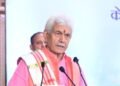
-Events such as community “Elders Parliament” forums organized by local units and engagement initiatives often showcase instances of mutual appreciation.
* Regional and Community Divides: Public sentiment also changes across geographic lines; for example, residents in the Jammu division generally report a high degree of trust and support for the army, whereas perceptions inside the Kashmir Valley are more complex and polarized.
-Perception of the Army: The perception of the Indian Army varies by region and community within Kashmir. Residents of Jammu and Kashmir
The story at hand:
•
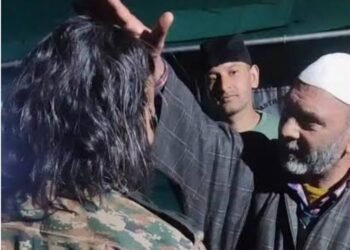
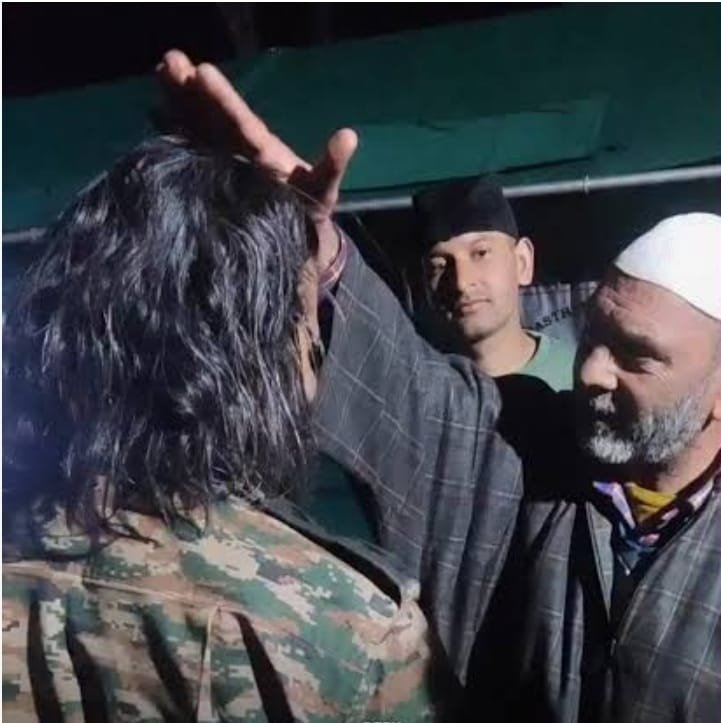
The bond between the people of # Jammm & Kashmir and the #IndianArmy #shines through in #moments like these, an #elder #speaking from the #heart about genuine service and ending in a #warm #embrace with a #soldier.
Pride in the Valley’s people and our troops who serve with dedication
–
-The bond between the people of Kashmir and the Indian Army shines through in moments like these, an elder speaking from the heart about genuine service and ending in a warm embrace with a soldier. Pride in the Valley’s people and our troops who serve with dedication. Jai Hind!
-He relationship between the Kashmiri people and the Indian Army is rooted in the events of 1947–1948 and has evolved through decades of defense, counter-insurgency, and community-building programs.
-1. Origins (1947–1948 War)
* The Tribal Invasion: Following the accession of Jammu and Kashmir to India, tribal raiders backed by Pakistan invaded the Valley in October 1947.
* Early Resistance: Local Kashmiri militias and peace brigades organized by Sheikh Abdullah’s National Conference initially resisted the raiders.
* Deployment: The Indian Army was airlifted into Srinagar to protect the region, establishing the first direct military defense of the population.
2. Evolving Dynamics and Insurgency (1990s)
* Rise of Militancy: The onset of cross-border terrorism and local insurgency in the late 1980s and 1990s created severe security challenges, leading to a heavy military presence and operations under counter-terrorism frameworks.
* Complex Perceptions: While the army has acted as a security bulwark against external aggression, counterinsurgency operations, security drills, and the application of special powers have at times caused friction and alienation among segments of the local population.
3. Humanitarian and Development Initiatives
* Operation Sadbhavana (Goodwill Mission): Launched formally in 1998, this initiative focuses on winning local trust through civil-military action. Key projects include:
* Education: Operating dozens of Army Goodwill Schools and funding scholarship programs like the North Kashmir Education Fest.
* Youth Coaching: Running Super 50 and Kashmir Super 30 programs to help local youth prepare for competitive exams like JEE, NEET, and the NDA.
• Healthcare & Infrastructure: Hosting free medical camps in remote border areas and building roads, bridges, and water supply projects.
* Women’s Empowerment: Establishing vocational training centers across the region.
* Local Integration: The integration is further reinforced through regiments like the Jammu and Kashmir Rifles, where local youth serve directly within the Indian Armed Forces.
Would you like to explore a specific phase of this history, such as Operation Sadbhavana projects or
– Indian Army and Kashmir
-Relationship: Civilians and Indian Army in Jammu and Kashmir (J&K) bound by mutual trust despite counter-terrorism restrictions an…
-1947
-The 1947 tribal invasion and the subsequent deployment of the Indian Army reshaped the history of Jammu and Kashmir, laying the groundwork for a complex and evolving relationship between local residents and the armed forces.
-The 1947 Tribal Invasion
* The Incursion: On October 22, 1947, Pakistan-backed Pashtun tribal militias (Lashkars) invaded Jammu and Kashmir, moving through Muzaffarabad and Baramulla.
* The Impact: The advance brought widespread looting, arson, and violence, deeply disrupting the region’s inclusive social fabric (Kashmiriyat) and displacing many residents.
* Accession and Intervention: To save the state, Maharaja Hari Singh signed the Instrument of Accession to India on October 26, 1947. The Indian Army landed in Srinagar on October 27, 1947, halting the raiders’ advance.
-The Bond and Evolving Relationship with the Indian Army
* Historical Defense: In 1947, many local Kashmiri volunteers—including civilian militias and political workers alongside Sheikh Abdullah’s National Conference—cooperated with the incoming Indian troops to protect Srinagar and push back the tribal raiders.
* Modern Military Integration: Local participation of youth from the region in the armed forces remains active. For instance, recruitment drives like the Agniveer scheme at the Jammu and Kashmir Light Infantry (JAKLI) center in Srinagar have seen strong local turnout, with hundreds of Kashmiri youth joining the ranks.
* Complex Dynamics: The relationship between the civilian population and the military has also been shaped by decades of counter-insurgency operations, security measures, and differing political views within the valley, balancing localized community engagement with ongoing security challenges.
-The Accession Day:
Accession Day is observed annually on October 26 across Jammu and Kashmir to commemorate the signing of the Instrument of Accession by Maharaja Hari Singh in 1947.
-Activities: Government offices and educational institutions remain closed, while public events feature patriotic gatherings, flag-hoisting ceremonies, and school assemblies.
-Historical Context: The day marks when the princely state of Jammu and Kashmir formally joined the Dominion of India following tribal incursions from Pakistan.
-Accession Day is important because it marks the historic moment on October 26, 1947, when Maharaja Hari Singh signed the Instrument of Accession, legally merging the princely state of Jammu and Kashmir into the Dominion of India.
* Legal Integration: The Instrument of Accession established the constitutional and legal basis for Jammu and Kashmir to become part of India during the chaotic aftermath of the Partition of British India.
* Military Defense: Facing a severe security crisis caused by tribal incursions from across the border, the Maharaja’s appeal for help led to the acceptance of the accession by Governor-General Lord Mountbatten on October 27, 1947, paving the way for the Indian Army to airlift troops and defend Srinagar.
* National Sovereignty and Unity: The day symbolizes the political unity, territorial integrity, and democratic incorporation of the region into the Indian Union.
* Official Recognition: Celebrated widely across the region with flag hoisting, cultural programs, and public events, it was officially declared a public holiday in Jammu and Kashmir starting in 2020.
Would you like to know more about the historical timeline of October 1947 or how Accession Day is celebrated locally in Jammu?
1965 The people of Kashmir rejected Pakistan’s covert Operation Gibraltar during the 1965 Indo-Pakistani War, choosing instead to alert Indian forces to the presence of infiltrators rather than joining a local uprising
-Key Aspects of the Relationship and War
* The Miscalculation: In August 1965, Pakistan sent thousands of disguised soldiers across the Line of Control, expecting the Muslim-majority population in Kashmir to rise up against the Indian government.
* The Local Response: Instead of supporting the infiltrators, local residents in areas like Gulmarg and Rajouri tipped off the Indian Army and helped capture several Pakistani combatants.
* Language and Culture: The infiltrating forces—drawn largely from Pakistan and Azad Kashmir—did not speak the local Kashmiri language or share deep alignment with the community’s immediate social structures, leading to a complete lack of ground support.
* Political Context: Many Kashmiris at the time felt their democratic and secular framework offered better protection for their political autonomy than a conflict-driven or theocratic alternative.
-In the 1965 Indo-Pakistani War, the term Razakars referred to civilian volunteers and irregular paramilitary fighters recruited by Pakistan to infiltrate Indian- Jammu and Kashmir.
-They served as a core component of Operation Gibraltar, Pakistan’s covert military strategy launched in August 1965.
-Their Role in the 1965 War:
* The Strategy: The word Razakar translates to “volunteer” or “helper” in Persian and Urdu. Pakistan recruited these volunteers and mujahideen primarily from Pakistani-administered Kashmir.
* Infiltration: Pakistan trained these irregular forces alongside regular army personnel and grouped them into covert columns. Disguised as local Kashmiri civilians, they crossed the Ceasefire Line (now the Line of Control) into the Kashmir Valley.
* The Objectives: Their primary mission was to carry out guerrilla warfare, sabotage Indian communications, destroy infrastructure (like bridges and highways), and incite a massive, indigenous Muslim uprising against Indian rule. Pakistan hoped this local rebellion would provide a casus belli (justification) to step in and seize Kashmir internationally.
* The Outcome: The operation failed. Instead of supporting the infiltrators, local Kashmiri residents did not revolt and instead reported the presence of the disguised forces to the Indian military. This triggered a swift Indian counter-offensive, which ultimately escalated into the full-scale Indo-Pakistani War of 1965.
(Note: While the word “Razakars” is also highly infamous for referring to the pro-Nizam militia during Hyderabad’s 1948 integration, and the pro-Pakistani collaborator forces during the 1971 Bangladesh Liberation War, in the distinct context of the 1965 war, it specifically denotes the irregular guerrilla volunteers utilized in Operation Gibraltar.)
-1971
-The 1971 Indo-Pakistani War directly impacted Jammu and Kashmir when Pakistan launched air strikes on airfields in Srinagar and Awantipur, drawing the region into the western theater of the conflict
Key Aspects of the 1971 War in Kashmir
* Western Theater Attacks: On December 3, 1971, the Pakistan Air Force targeted Indian airfields including Srinagar and Awantipur, leading to direct ground and air skirmishes along the border and cease-fire line in Jammu and Kashmir.
* The Simla Agreement: Following the war and the creation of Bangladesh, India and Pakistan signed the Simla Agreement in July 1972. This accord converted the old cease-fire line in Jammu and Kashmir into the Line of Control (LoC) and established a commitment to resolve differences bilaterally.
* Strategic Shift: India entered the 1971 post-war negotiations from a position of strength, seeking to transform the Kashmir issue into a strictly bilateral matter without third-party or foreign intervention.
* Local Sentiment: The population in Jammu and Kashmir experienced the immediate security, economic, and geopolitical fallout of repeated wars (1947, 1965, and 1971), which deepened the region’s complex political landscape regarding national identity, autonomy, and the broader India-Pakistan relationship.
Would you like to know more about the Simla Agreement or how the Line of Control (LoC) was established in 1972?
-Why Pakistan lost East Pakistan?
-Pakistan lost East Pakistan (which became Bangladesh) in 1971 due to a combination of severe political and economic discrimination, a brutal military crackdown, geographical isolation, and the decisive military intervention of India alongside the Bengali guerrilla force, the Mukti Bahini……….. Maheen!
* Denial of Democracy: In the 1970 Pakistani general elections, Sheikh Mujibur Rahman’s Awami League—based in East Pakistan—won a clear majority. The West Pakistani military-political establishment refused to transfer power or honor the election results.
* Systemic Neglect: For decades, East Pakistan suffered from political marginalization, cultural suppression (such as forcing Urdu), and economic exploitation where its valuable jute exports funded West Pakistan while receiving minimal development in return.
* Cyclone Bhola (1970): The West Pakistani government’s slow and inadequate response to a catastrophic cyclone that killed hundreds of thousands of people in East Pakistan deepened popular anger and a desire for complete autonomy.
-Military Crackdown and Atrocities
* Operation Searchlight: On March 25, 1971, the Pakistani military launched a brutal crackdown in East Pakistan, killing students, intellectuals, and civilians, which triggered a massive refugee crisis of nearly 10 million Bengalis fleeing into India.
* Hostile Population: The military’s campaign of terror alienated the local population completely, driving thousands of Bengalis to join the Mukti Bahini, leaving the Pakistan Army fighting a deeply unpopular war without a political solution.
-Strategic and Geographical Disadvantage
* Geographical Isolation: East and West Pakistan were separated by over 1,000 miles of Indian territory, making troop reinforcement, resupply, and communication extremely difficult once conflict broke out.
* Spread-Out Strategy: As noted by Rediff, the Pakistan Army mistakenly assumed India would only launch a limited campaign and pinned its forces thinly across a massive 2,500-mile border, allowing the Mukti Bahini and Indian forces to break through.
-Indian Intervention and Surrender
* Involvement of India: Following the refugee influx and preemptive airstrikes by Pakistan on December 3, 1971, India entered the war directly.
* Rapid Collapse: The Indian military and Mukti Bahini achieved air and naval supremacy, severed supply and communication lines, and encircled Dhaka within 13 days.
* Historic Surrender: On December 16, 1971, Pakistani General A.A.K. Niazi signed the Instrument of Surrender in Dhaka alongside over 90,000 Pakistani troops, sealing the creation of independent Bangladesh.
-The defeat in detail Op Sindoor:
-Operation Sindoor (May 7–10, 2025) resulted in a decisive military defeat for Pakistan, though both nations engaged in a sharp post-conflict battle over public perception.
-Key Military Details of Pakistan’s Defeat
* Trigger: Launched by India on May 7, 2025, in retaliation for a terrorist attack in Pahalgam that killed 26 civilians.
* Precision Strikes: The Indian Air Force (IAF) executed deep-penetration and standoff strikes across a 1,200 km front and 200 km in depth, targeting nine high-value terror and infrastructure sites in Pakistan and Pakistan-administered Azad Kashmir, followed by heavy blows to Pakistani airbases (including Nur Khan, Murid, Bholari, Jacobabad, and Rahim Yar Khan).
* Air and Radar Losses: Pakistan suffered extensive hardware losses, including F-16, JF-17, and C-130J aircraft, a Saab-2000 AEW&C system, Chinese/US tracking and fire control radars, and drones. Financial estimates place Pakistan’s total material and infrastructure damages at roughly $1.5 billion compared to India’s $407.75 million.
* Surrender and Ceasefire: After Indian air strikes overwhelmed multiple Pakistani airfields and naval/ground postures escalated the pressure, Pakistan conceded defeat and offered a ceasefire via DGMO hotlines on May 10, 2025.
-The Narrative and Strategic Aftermath
* The Information War: While India held the clear upper hand militarily, analysis by groups like the South Asia Monitor and the Vivekananda International Foundation noted that Pakistan’s Inter-Services Public Relations (ISPR) aggressively shaped early international media narratives to project a different picture.
* Official Evaluation: Indian defense leadership—including statements shared via the Press Information Bureau—characterized the outcome not just as a tactical failure for Pakistan, but as a severe blow to its military morale and regional deterrence posture.
Would you like to explore the specific air defense systems used during the engagement or how joint military operations are being updated following the conflict?
-Finally coming to the end of the story
The relationship between the people of Kashmir and the Indian Army is a multi-layered bond shaped by security challenges, humanitarian outreach, and grassroots civil-military engagement…
-But there are many aspects to it, for example:
-Core Dimensions of the Bond
* Security and Counter-Terrorism: The Indian Army has been deployed in the region since 1947 to defend the valley against cross-border terrorism, proxy conflicts, and security threats, aiming to maintain regional stability.
* Operation Sadbhavana (Goodwill Mission): Launched in 1998, this initiative focuses on improving daily life in Jammu and Kashmir through Indian Army in Kashmir community development:
* Establishing Army Goodwill Schools and vocational training centers.
* Running free medical and health camps in remote areas.
* Building local infrastructure such as roads, bridges, and water supply projects.
* Disaster Relief and Support: The Army provides immediate, spontaneous assistance during natural disasters, floods, and harsh winter challenges in the mountainous terrain, often sharing the same hardships as local residents.
* Local Economy and Employment: Civilians contribute to military logistics as porters, transport providers (Civil Hired Transport), and suppliers, creating shared economic ties.
* People-to-People Outreach: Regular interactions—such as Awaam Milan programs, youth sports festivals, and Chinar 9 Jawan Clubs—foster daily contact between troops and local communities.
Would you like to explore a specific aspect of this relationship, such as Operation Sadbhavana projects, the role of the Jammu and Kashmir Rifles, or youth engagement programs in the Valley?…
-By M S Nazki