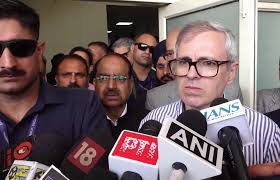



Katra/Jammu, March 5 : Former Jammu and Kashmir Chief Minister and National Conference President Farooq Abdullah on Thursday strongly condemned the recent US-Israel strikes on Iran, saying that no country has the right to impose its will or control over another sovereign nation.
Speaking to reporters in Katra, Abdullah described the attack as “wrong and unfortunate,” stressing that Iran is an independent country and military aggression against it violates the principles of sovereignty and international norms. He also criticized the pattern of intervention by powerful nations in other countries’ affairs, citing similar actions against Venezuela in the past.
Abdullah said such actions could have serious global repercussions, warning that the escalating conflict in West Asia may spiral into a much larger confrontation.
“It may lead to something bigger, and in the end it can start a Third World War. We do not know about it,” he cautioned, urging world leaders to act responsibly and de-escalate tensions.
The senior leader also emphasized that the Government of India must clearly state its stand on the unfolding crisis between Iran and Israel. According to him, it is the responsibility of New Delhi to communicate its position on such a major international conflict that could impact global stability.
Referring to the public reaction, Abdullah acknowledged that anger and grief are visible among sections of the Muslim community, especially after reports of the killing of Iran’s Supreme Leader Ali Khamenei in the strikes. However, he appealed for calm and stressed that any demonstrations should remain peaceful and within the bounds of law.
The remarks come amid protests in several parts of the Kashmir Valley, where people have held demonstrations condemning the attacks and mourning the death of the Iranian leader. Authorities have been closely monitoring the situation as tensions across the Middle East continue to rise.
Analysts warn that the conflict—sparked by coordinated US-Israeli military action against Iranian targets—could have far-reaching geopolitical and economic consequences worldwide if the escalation continues.