


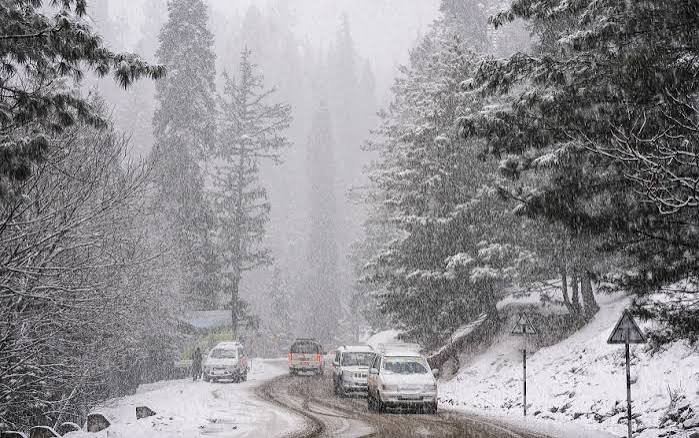
Chandigarh, July 16, 2026 : A landmark scientific study has revealed that several high-altitude regions of Jammu and Kashmir, including the renowned tourist destinations Pahalgam and Gulmarg, have experienced nearly 1°C of warming over the past two decades. The findings raise serious concerns about the accelerating impacts of climate change on the fragile Himalayan ecosystem and its long-term consequences for glaciers, water resources, biodiversity and millions of people dependent on mountain-fed rivers.
The study, conducted by researchers from the Indian Institute of Technology (IIT) Kharagpur and the India Meteorological Department (IMD), was published in Nature’s Scientific Reports earlier this month. Researchers analyzed long-term surface temperature records using ground observations and reanalysis datasets spanning 1980 to 2024, providing one of the most comprehensive assessments of temperature trends across Jammu and Kashmir.

Significant Rise in Mountain Temperatures
The research found that warming across Jammu and Kashmir has not been uniform. While lower-elevation areas such as Jammu recorded relatively weak or statistically insignificant warming trends, mid- and high-altitude regions experienced much faster temperature increases.
Among the key findings:
- Pahalgam and Gulmarg have warmed by nearly 1°C over the last 20 years.
- Bhaderwah recorded one of the strongest increases in annual mean temperature.
- Minimum temperatures (night-time temperatures) are increasing particularly rapidly in several mid- to high-elevation locations.
- Temperature increases are more pronounced during specific seasons, indicating stronger warming at higher elevations.
Scientists warn that these changes are not merely local weather fluctuations but clear evidence of a long-term climate trend affecting the western Himalayas.
Why Jammu & Kashmir Is Especially Vulnerable
Jammu and Kashmir is among South Asia’s most climate-sensitive mountain regions. Its unique geography includes:
- Steep elevation gradients.
- Extensive snow cover and glaciers.
- Rivers fed primarily by snowmelt and glacial melt.
- Mountain ecosystems that are highly sensitive to even small temperature changes.
Because millions of people downstream depend on Himalayan rivers for drinking water, irrigation and hydropower, changes in mountain temperatures could have widespread socio-economic consequences.
Evidence of Elevation-Dependent Warming (EDW)
One of the most important conclusions of the study is the confirmation of Elevation-Dependent Warming (EDW).
EDW refers to the phenomenon where higher elevations warm faster than surrounding lowland regions. Scientists have increasingly observed this pattern in mountain systems across the world, and the new study confirms that the western Himalayas are experiencing the same trend.
The researchers identified clear spatial and seasonal differences, with warming intensifying at higher altitudes during particular seasons.
Why Are Higher Mountains Warming Faster?
Researchers identified several interconnected factors responsible for enhanced warming in mountainous regions.
1. Snow-Albedo Feedback
The strongest driver is the snow-albedo effect.
Fresh snow reflects a significant portion of incoming solar radiation. However, as temperatures rise:
- Snow melts earlier.
- Darker ground becomes exposed.
- Dark surfaces absorb much more solar energy.
- Additional heat accelerates further warming and snowmelt.
This creates a self-reinforcing cycle.
2. Water Vapour and Cloud Changes
Higher elevations naturally contain less atmospheric water vapour.
Changes in water vapour and cloud cover alter how radiation is absorbed and emitted, contributing to stronger daytime warming at high altitudes.
3. Black Carbon and Aerosols
Particles such as black carbon, produced through fossil fuel combustion and biomass burning, also play a major role.
These particles:
- Warm the atmosphere.
- Settle on snow and ice.
- Darken glacier surfaces.
- Increase solar heat absorption.
- Accelerate glacier and snow melt.
4. Land Use and Vegetation Changes
Deforestation and changing land use alter how the Earth’s surface exchanges heat and moisture with the atmosphere.
Depending on local conditions, these changes may either intensify or reduce elevation-dependent warming.
5. Glacier and Hydrological Feedback
Glacier retreat, changing river systems, altered soil moisture and ecosystem shifts further modify local climate conditions, reinforcing warming through complex feedback mechanisms.
Growing Risks for the Himalayas
Scientists caution that continued warming could have far-reaching impacts, including:
- Accelerated glacier retreat.
- Reduced long-term freshwater availability.
- Increased risk of glacial lake outburst floods (GLOFs).
- Changes in snowfall patterns.
- Shifts in biodiversity and mountain ecosystems.
- Greater uncertainty for agriculture and hydropower.
- Increased vulnerability of downstream communities dependent on Himalayan rivers.
Why This Research Matters
Researchers note that elevation-dependent warming in Jammu and Kashmir had not previously been studied in sufficient detail. By filling this important knowledge gap, the study provides critical scientific evidence that can help policymakers develop climate adaptation strategies for the western Himalayas.
Understanding where warming is occurring fastest is essential for improving water resource planning, disaster preparedness, glacier monitoring and long-term climate resilience.
As climate change continues to reshape mountain environments worldwide, the findings underscore the urgent need for stronger conservation measures and climate adaptation efforts to protect one of the world’s most ecologically significant and strategically important mountain regions.
Source: Scientific study by researchers from IIT Kharagpur and the India Meteorological Department (IMD), published in Nature Scientific Reports (July 2026).