


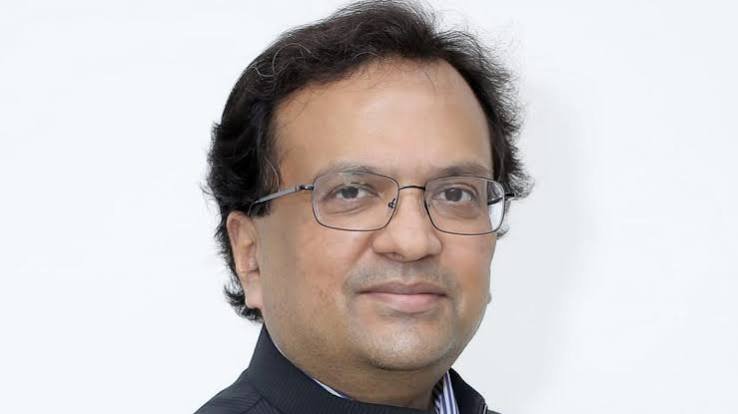
HYDERABAD, OCTOBER 17, 2026 : Union Home Secretary Govind Mohan has said India’s conventional internal security landscape has changed irrevocably, with emerging threats such as cybercrime, deepfake videos, narcotics trafficking and illegal immigration presenting new challenges for law enforcement agencies.

Addressing the passing-out parade of the 78th Regular Recruit (RR) batch of Indian Police Service (IPS) officers at the Sardar Vallabhbhai National Police Academy (SVPNPA) in Hyderabad on Saturday, Mohan urged the newly graduated officers to prepare for a rapidly evolving security environment.
He also conveyed the message of Union Home Minister Amit Shah, who emphasised a zero-tolerance approach to terrorism, time-bound action and stronger intelligence coordination.
Smart Borders and Modern Security Systems
In his message, Shah highlighted the important role young IPS officers must play in securing India’s borders through the Centre’s Smart Border Initiative.
The initiative involves modern surveillance techniques, digital systems, integrated monitoring and improved coordination among security agencies.
Shah also stressed the need to dismantle drug trafficking networks, strengthen cooperation between agencies and adopt technology-driven investigations.
He reiterated the goal of achieving a Nasha-Mukt Bharat—a drug-free India—through effective enforcement and greater public awareness. Mohan said the Union Home Minister had publicly set a three-year target for making the country free of narcotics.
Deepfakes and Social Media Pose New Challenges
Mohan warned that technological developments and the growing influence of social media were creating a new dimension of law-and-order challenges.
He pointed to fake messages, deepfake videos and manipulated digital content that can create false perceptions, trigger unnecessary mobilisation and potentially lead to public disorder.
The Home Secretary urged young officers to develop creative, lawful and effective responses to these challenges, stressing that police forces must keep pace with rapidly changing technology.
He also highlighted the growing importance of artificial intelligence in policing. According to Mohan, the Centre has established a network of young IPS officers working to use AI to modernise law enforcement.
Cybercrime Becoming Accessible to Low-Skilled Criminals
Cybercrime, Mohan said, has become easier for less-skilled offenders to carry out because of the widespread use of mule bank accounts and fake SIM cards.
Criminals can use such tools to conceal their identities, move illicit funds and complicate investigations.
He cited examples of criminal activities being arranged through the dark web and threats being made using virtual private networks (VPNs) that obscure the caller’s apparent location.
Mohan emphasised that technology must advance alongside law enforcement capabilities, allowing investigators to identify offenders, trace digital evidence and respond effectively to increasingly sophisticated crimes.
Although central institutions play a significant role in tackling cyber threats, he said the primary response must come from state and Union Territory police forces, which are often closest to the incidents and victims.
Home Secretary Says Militant Naxalism Has Largely Ended
Reflecting on changes in India’s security environment, Mohan said militant Naxalism had largely ended and insurgency in the Northeast had declined to very low levels.
He argued that violence in certain parts of the Northeast was now driven primarily by ethnic conflict rather than conventional insurgency.
Mohan attributed the integration of many former insurgent groups into the mainstream to a series of ceasefire arrangements and tripartite agreements.
He also said homegrown terrorism had largely come to an end, while foreign-inspired terrorism was no longer visible across most parts of the country, apart from a few remaining areas.
His remarks highlighted the shift in security priorities from longstanding armed movements towards more complex and technology-enabled threats.
Tackling Drug Trafficking and Illegal Immigration
The Home Secretary identified narcotics trafficking and illegal immigration as continuing challenges requiring coordinated enforcement and better information-sharing.
He called for stronger action against drug networks and greater public participation in efforts to prevent substance abuse.
He also discussed the need to identify illegal immigrants, address radicalisation and respond to activities that distort markets.
Referring to India’s civilisational principle of Vasudhaiva Kutumbakam—the world is one family—Mohan said the country’s resources must primarily serve the rights and interests of its citizens.
Technology Must Keep Pace With Law Enforcement
Mohan’s address underlined the growing importance of digital capabilities in modern policing. From deepfakes and online misinformation to concealed financial transactions and anonymous threats, emerging technologies are creating challenges that conventional investigative methods may not adequately address.
The emphasis on AI, digital investigation, intelligence coordination and technology-based policing signals a push to equip the next generation of police leaders for an increasingly complex security environment.
The central message to the graduating IPS officers was clear: India’s security priorities are evolving, and effective policing will require modern technology, inter-agency cooperation, lawful action and the ability to respond quickly to emerging threats.