

KABUL, November 9, 2026 : A painstaking conservation and archaeological excavation project is bringing Afghanistan’s rich and turbulent past back into focus, as experts work to preserve the historic Bala Hissar fortress overlooking the old city of Kabul.

The centuries-old citadel, which has endured invasions, military conflicts, political upheavals and prolonged neglect, is gradually revealing extraordinary archaeological treasures dating back more than 2,000 years. The discoveries are shedding new light on Afghanistan’s ancient settlements, religious traditions, royal architecture and strategic importance as a crossroads between the Indian subcontinent and Central Asia.
The Aga Khan Trust for Culture (AKTC) is leading an extensive conservation initiative aimed at stabilising the deteriorating fortress and transforming the historic site into a public archaeological park featuring landscaped gardens, restaurants and a museum.
Remarkable Discoveries Beneath the Fortress
Excavations conducted across five separate trenches have uncovered a remarkable collection of historical artefacts and architectural remains. These include ancient coins, fragments of Buddhist statues, glazed Islamic ceramics, oil lamps, pottery and the remains of palaces, monasteries and residential structures.
Among the most striking discoveries are remnants of a Mughal-era palace featuring murals, a throne-like structure and a star-shaped pool carved into the rock near the hilltop.
Archaeologist Babak Rafiei-Alavi described the findings as far more extensive than initially anticipated, comparing the gradual emergence of the archaeological remains to a submarine rising from the ocean.
One excavation trench has already reached approximately 11 metres in depth, with further layers of history still waiting to be explored.
Researchers believe the discoveries could substantially expand understanding of the successive civilisations that occupied the site and contributed to Kabul’s historical development.
A Strategic Stronghold Through the Centuries
Bala Hissar, meaning “High Fort” in Dari, occupies a commanding position on an outcrop of the Kuh-e-Sher Darwaza mountain ridge overlooking Kabul’s old city.
Its elevated location provided a natural defensive advantage, allowing those who controlled the fortress to monitor important approaches to the capital.
Beyond its military significance, the site served as a religious settlement, political centre, palace complex, arsenal, administrative headquarters, prison and military garrison.
According to Aga Khan Cultural Services Project Manager Mustafa Nouri, Bala Hissar formed part of a wider network of settlements along historic trade routes linking the Indian subcontinent with Central Asia and territories beyond.
Over the centuries, the fortress witnessed successive periods of Afghan history, from ancient settlements and Buddhist religious activity to the Mughal era, the Anglo-Afghan wars, the Soviet invasion, civil conflict and the US-led military presence.
Its strategic importance remained central throughout these periods, with control of the fortress often closely linked to control of Kabul itself.
Centuries of Destruction Leave Deep Scars
Despite its historical significance, Bala Hissar has suffered repeated destruction and reconstruction.
One of the most devastating episodes occurred in 1879, when British troops destroyed substantial portions of the complex following the killing of British envoy Sir Louis Cavagnari and members of his entourage.
More recent conflicts and decades of neglect have further damaged the site. Sections of the defensive walls have collapsed, while abandoned military equipment, including rusting Soviet-era tanks and weapons left behind after the US withdrawal in 2021, remain scattered across parts of the fortress.
Archaeologists have also raised concerns about damage caused by military activity. According to Rafiei-Alavi, parts of the site were levelled by US forces in 2008, destroying important archaeological layers.
These accumulated losses have made the conservation project particularly challenging, requiring experts to balance structural restoration with the protection of fragile archaeological evidence.
Major Conservation Initiative Underway Since 2018
Planning for the AKTC-led conservation programme began in 2017, with work commencing the following year.
Initial activities included detailed surveys, historical documentation, ground-penetrating radar investigations and three-dimensional laser scanning. Emergency stabilisation measures were subsequently introduced to prevent further deterioration of the fortress walls and towers.
The French Archaeological Delegation in Afghanistan initially participated in excavations, but its work was interrupted after the Taliban returned to power in 2021. The AKTC continued its operations, carrying out its most extensive work since 2022.
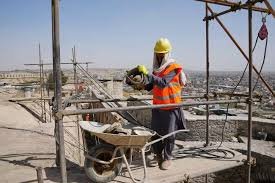
Restoration teams are rebuilding damaged sections of defensive walls using locally sourced stone. New construction is being kept distinguishable from the original masonry, in accordance with established conservation principles.
Metal reinforcements have also been installed to stabilise an exterior tower that had developed a major split and faced the risk of collapse.
The project is expected to continue for decades because of the enormous size of the site, the complexity of its conservation needs and the wealth of archaeological material still buried beneath its surface.
An additional component involves training Afghan archaeology students, helping develop local expertise in heritage conservation and archaeological research.
Taliban Authorities Pledge to Protect Afghanistan’s Heritage
Afghanistan’s current authorities have expressed support for preserving historical monuments and cultural artefacts, presenting heritage conservation as an important responsibility towards future generations.
The issue carries particular historical significance because the Taliban’s previous period in power, from 1996 to 2001, included the destruction of the monumental sixth-century Buddha statues in Bamiyan and damage to collections at the National Museum of Afghanistan.
Ministry of Information and Culture spokesperson Khubaib Ghufran said the government recognised the importance of protecting ancient sites and viewed the remains of past civilisations as valuable sources of knowledge and historical understanding.
He said priority was being given to monuments facing serious threats, including Bala Hissar, to ensure that Afghanistan’s cultural legacy could be preserved for future generations.
The long-term success of the initiative will depend on sustained conservation work, archaeological research, adequate resources and continued protection of the historic site.
A Living Chronicle of Afghanistan’s Past
The restoration of Bala Hissar represents more than the repair of an ancient fortress. It offers an opportunity to recover evidence of the many cultures, religions, rulers and communities that shaped Afghanistan over two millennia.
From Buddhist monasteries and Mughal palace remains to historic fortifications scarred by modern warfare, every archaeological layer contributes to a broader understanding of the region’s complex past.
If the conservation programme succeeds, Bala Hissar could eventually become a major public heritage destination, combining archaeological research, education and cultural tourism while preserving one of Kabul’s most significant historical landmarks.
As excavations continue, the fortress remains a powerful reminder that even after centuries of conflict and destruction, the buried stories of Afghanistan’s past are still waiting to be rediscovered.
TRUTH PREVAIL | Bringing You the Headlines That Matter!