

NEW DELHI, November 9, 2026 : A year after the deadly explosion near Delhi’s historic Red Fort claimed 15 lives, the pain of the tragedy continues to haunt survivors and bereaved families. While the national capital lit up with festive decorations and celebrated Diwali, some homes remained shrouded in grief, reflecting the devastating human cost of the November 10, 2025, blast.

For families who lost loved ones and survivors still struggling with severe injuries, the anniversary is not simply a reminder of a tragic incident. It marks a year of interrupted lives, financial hardship, emotional trauma and dreams that remain painfully unfulfilled.
Among those continuing to endure the consequences is Ankush Sharma, a 27-year-old jewellery trader who was seriously injured in the explosion.
Ankush Sharma: A Year of Pain, Surgeries and Uncertainty
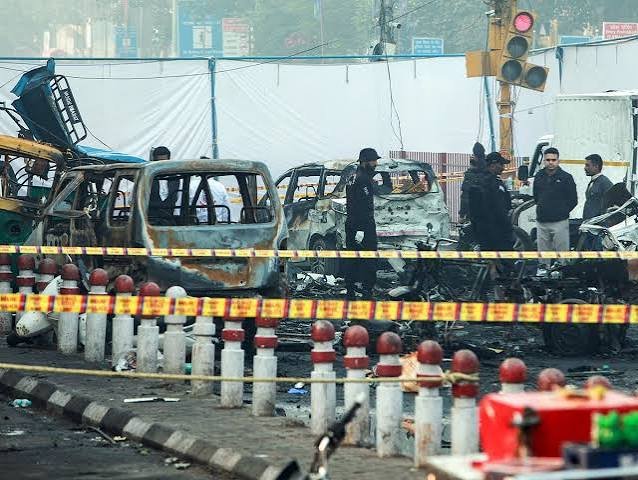
Ankush was visiting the Gauri Shankar Temple in Chandni Chowk when a Hyundai i20 car exploded near Gate No. 1 of the Red Fort Metro Station on the evening of November 10, 2025.
The vehicle, according to the report, was packed with ammonium nitrate and RDX. The explosion killed 15 people and left numerous others injured.
Ankush suffered devastating injuries, losing sight in one eye and experiencing hearing loss in one ear. Nearly 50 per cent of his body was affected, and his recovery has remained slow and difficult.
Although he can now walk short distances, he remains largely confined to his home, with two to three additional surgeries still pending.
The physical injuries have been accompanied by psychological trauma. The sound of firecrackers and the sight of flames frighten him, bringing back memories of the explosion.
His family, too, continues to struggle with the emotional consequences of watching a young man’s life change so drastically.
“His condition has improved only slightly. He cannot go outside or resume his earlier life,” family relative Pradeep Rathore said, describing the distress faced by the household.
At just 27, Ankush remains unmarried, and his professional life has come to a standstill.
A Silent Diwali in a Neighbourhood Full of Lights
For Ankush’s family, Diwali brought little reason to celebrate this year.
While neighbouring homes glowed with decorative lights and traditional diyas, their house remained dark. The family chose not to celebrate the festival, still struggling to come to terms with the physical and emotional damage caused by the blast.
The absence of festive lights became a poignant reflection of a family whose everyday life continues to revolve around recovery, medical treatment and uncertainty.
A year after the explosion, the wounds remain visible not only in Ankush’s injuries but also in the emotional exhaustion of those caring for him.
Toman’s Death Leaves a Family Trapped in Financial Crisis
For another family, the explosion took away its only regular source of income.
Toman, a young man in his early twenties from Shamli in Uttar Pradesh, worked at a cosmetics store in Chandni Chowk. He was the sole breadwinner for a family already facing serious medical difficulties.
His elder brother was bedridden because of health complications, making Toman’s earnings essential to the household’s survival, his uncle Muhammad Zunaid told PTI.
After Toman’s death, the family faced further medical challenges. His elder brother underwent a kidney transplant, with their father donating the kidney. However, the family’s difficulties did not end with the operation.
According to Zunaid, Toman’s father has struggled to recover from the surgery, while his elder brother suffered another spinal injury following the transplant.
With mounting medical expenses and no dependable source of income, the family has fallen into debt and now relies largely on financial assistance from relatives.
“Since Toman’s death, things have only gone downhill,” Zunaid said, describing how the family has struggled to cope with successive hardships.
For the family, the loss was not only emotional. It removed the person on whom they depended for their daily needs, leaving them facing an uncertain future.
A Three-Year-Old Child Growing Up Without His Father
The blast also destroyed a young family’s future, leaving a small child to grow up without his father.
Amar Kataria, a 35-year-old pharmaceutical businessman who worked in Bhagirath Palace in Chandni Chowk, was among those killed in the explosion.
In the months following his death, his three-year-old son gradually stopped turning towards the door whenever he heard a sound, no longer expecting his father to return.
His wife, Kriti, has struggled to cope with the loss and has rarely stepped outside the house, according to family relative Swadesh Sethi.
The family has not celebrated festivals since the tragedy. Amar’s parents have also been deeply affected by the death of their son, while Kriti has reportedly struggled to find employment after becoming a widow.
The circumstances of Amar’s death made the tragedy even more distressing. His body was charred beyond recognition, and relatives identified him through tattoos bearing the words “Mom, my first love, Dad, my strength” and “Kriti”.
Those personal inscriptions, once expressions of love and family bonds, became crucial in identifying a man whose life was abruptly cut short.
A year later, his absence continues to shape the lives of his wife, young son and parents.
The Invisible Scars of the Red Fort Explosion
The experiences of Ankush, Toman’s family and the Katarias reveal how the consequences of a deadly explosion extend far beyond the immediate destruction.
For survivors, recovery may involve repeated surgeries, disability, emotional distress and the difficult process of rebuilding a life that no longer resembles the one they knew.
For bereaved families, the loss can mean the disappearance of emotional support, financial security and the person around whom everyday life was organised.
Children face the prospect of growing up with memories of a parent they lost too early, while parents, spouses and siblings must find ways to continue amid grief and uncertainty.
The trauma is often less visible than physical injuries, but it can remain deeply embedded in daily life, affecting relationships, livelihoods and the ability to participate in ordinary celebrations.
November 10: A Date That Divided Lives Into Before and After
As the first anniversary of the November 10, 2025, blast approaches, the affected families continue to live with consequences that cannot be measured solely through casualty figures or property damage.
For Ankush, the future remains tied to medical treatment and an uncertain recovery. For Toman’s family, it means confronting debt, medical expenses and the loss of its primary breadwinner. For the Katarias, it means raising a young child without his father and learning to live with an absence that cannot be filled.
While Delhi celebrates another Diwali, these families are still trying to rebuild lives interrupted by tragedy.
Their stories serve as a solemn reminder that the impact of a terror attack does not end when the flames are extinguished or the headlines fade. For those left behind, the struggle for recovery, stability and peace of mind can continue long after the incident itself.
TRUTH PREVAIL | Bringing You the Headlines That Matter!