


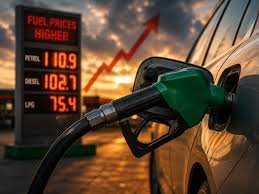
New Delhi, May 15, 2026 : Petrol and diesel prices were increased by ₹3 per litre each across the country on Friday, marking the first fuel price hike in more than four years as state-owned oil companies grapple with mounting losses triggered by soaring global crude oil prices.
The increase comes just 16 days after Assembly elections concluded in Assam, Kerala, Tamil Nadu and West Bengal. Fuel prices had remained unchanged during the election period despite a steep rise in international crude prices caused by escalating tensions in West Asia.
Following the latest revision, petrol in New Delhi now costs ₹97.77 per litre, up from ₹94.77, while diesel prices rose to ₹90.67 per litre.
In Mumbai, petrol prices climbed to ₹106.68 per litre and diesel to ₹93.14. In Kolkata, petrol now costs ₹108.74 and diesel ₹95.13 per litre, while in Chennai, petrol prices increased to ₹103.67 and diesel to ₹95.25 per litre.
Fuel prices had largely remained frozen since April 2022, except for a ₹2 per litre reduction announced in March 2024 ahead of the Lok Sabha elections.
The latest hike comes amid massive losses suffered by state-owned fuel retailers including Indian Oil Corporation, Bharat Petroleum Corporation Limited and Hindustan Petroleum Corporation Limited.
According to industry estimates, oil marketing companies were losing nearly ₹14 per litre on petrol, ₹42 per litre on diesel and around ₹674 per LPG cylinder before the latest revision.
Earlier this week, Union Petroleum Minister Hardeep Singh Puri stated that the three state-run fuel retailers were collectively losing nearly ₹1,000 crore every day due to elevated global crude prices.
Global energy prices surged sharply after the US-Israel attack on Iran on February 28 and subsequent retaliation by Tehran disrupted movement through the Strait of Hormuz, a crucial maritime route through which nearly one-fifth of the world’s oil and gas supply passes.
Crude oil prices, which were hovering around USD 70-72 per barrel before the conflict, surged beyond USD 120 per barrel at the peak of the crisis. Although prices have eased slightly in recent weeks, they continue to remain elevated in the range of USD 104-110 per barrel.
The Centre had earlier attempted to cushion consumers by reducing excise duty on petrol and diesel by ₹10 per litre on March 27. However, sustained high crude prices continued to put pressure on oil companies.
Private fuel retailers had already revised their rates upward earlier this year. Nayara Energy increased petrol prices by ₹5 and diesel by ₹3 per litre in March, while Shell raised petrol prices by ₹7.41 and diesel by ₹25 per litre from April 1.
The price increase is expected to have an impact on inflation, particularly through higher transportation, logistics and input costs across sectors. India’s retail inflation stood at 3.48 percent in April 2026, while wholesale inflation touched a 42-month high of 8.3 percent, driven largely by rising fuel and energy prices.
Prime Minister Narendra Modi recently urged citizens to reduce fuel consumption by opting for public transport and work-from-home practices to help lower the country’s oil import burden and conserve foreign exchange reserves.