

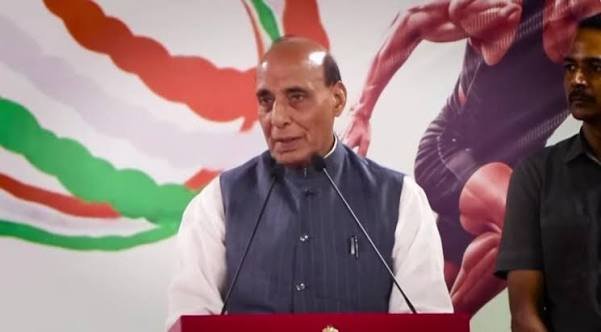
LUCKNOW, November 13, 2026 : Defence Minister Rajnath Singh on Friday called for the “spiritualisation of politics”, asserting that political leadership should be guided by ethics, public interest and a sense of duty rather than merely the pursuit of power and electoral victories.

Addressing a gathering at the inauguration of Divya Sanskriti Bhawan in Lucknow, Singh said winning or losing elections should never compromise a leader’s commitment to doing what is right.
“Elections may be won or lost, but I will do what is right and nothing else,” he said.
The event marked 90 years since the establishment of the Brahma Kumaris and 72 years of its spiritual services in Lucknow.
Ethics Must Guide Political Leadership
Singh said politics should serve a broader purpose by providing direction to society and shaping the nation’s future, rather than being confined to winning elections and remaining in office.
“Politics can achieve its real purpose only when ethics and spiritual consciousness are associated with it. I call this the spiritualisation of politics,” he said.
Clarifying his vision, the Defence Minister emphasised that spiritualisation did not mean associating politics with any particular religion, sect or practice. Instead, it meant grounding public life in universal principles such as integrity, responsibility and duty.
Citing the Ramayana and the Mahabharata, he said India’s traditional wisdom highlights a ruler’s responsibility towards the welfare of the people.
Economic Progress Must Be Matched by Inner Growth
Highlighting India’s progress in economic development, space exploration and artificial intelligence, Singh questioned whether external achievements were being accompanied by sufficient attention to inner well-being and personal character.
“We must think whether, while conquering the outside world, we are losing the battle within,” he said.
He also referred to the growing recognition of meditation and mindful living, noting their potential benefits in managing stress and supporting mental and physical well-being.
According to Singh, spiritual growth and economic development are not contradictory. Rather, inner stability can encourage responsible behaviour, strengthen social relationships and discourage corruption.
“A person who is internally stable does not take decisions in anger. A person filled with self-respect never insults others. A person who understands contentment does not move towards corruption,” he said.
“Countries are not run merely by laws. They are run by character,” he added.
Vision of Developed India Goes Beyond Economic Growth
Singh said the vision of a developed India should extend beyond economic indicators to include honest citizens, strong family values, social harmony, respect for women, discipline among young people and a commitment to national duty.
He highlighted the role of the Brahma Kumaris in promoting spiritual awareness, women’s leadership and campaigns against substance abuse.
The minister stressed that social trust and harmony depend not only on laws and institutions but also on the values citizens practise in everyday life.
Leaders Must Think Beyond the Next Election
Calling on political leaders to adopt a long-term perspective, Singh said their focus should be on improving the future of the next generation rather than concentrating exclusively on the next election.
He also urged young people to prioritise character-building alongside career development and to use technology responsibly.
“Use technology, but do not let technology dominate you. Gather information, but do not lose your wisdom. Connect with the world, but remain connected to your roots,” he said.
Rajnath Singh Reaffirms His Bond With Lucknow
Earlier, Singh spoke about his deep personal and political connection with Lucknow, which he represents in Parliament. He said he had decided not to cancel his participation in the programme despite being unwell.
“My ties with Lucknow are well known. My roots are connected to this city. Wherever I go, my mind keeps returning here,” he said.
The message: Rajnath Singh’s address placed ethics, character and public welfare at the centre of political leadership, arguing that genuine progress requires not only economic strength but also moral responsibility and social harmony.
TRUTH PREVAIL — Stay Updated. Stay Informed.