

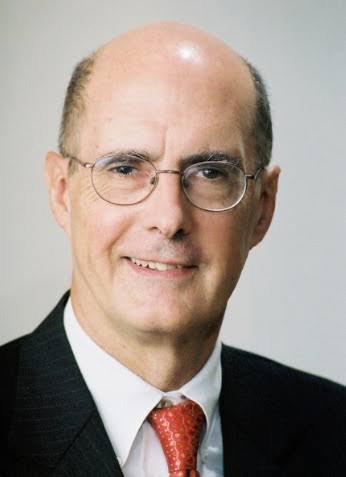
WASHINGTON, November 27, 2026: Strobe Talbott, the former US Deputy Secretary of State who played a pivotal role in rebuilding India-US relations following India’s 1998 Pokhran-II nuclear tests, has died at the age of 80.

Talbott passed away at his home in East Hampton, New York, on Thursday following a prolonged illness, according to his son, Devin Talbott. His death marks the loss of a prominent diplomat and strategic thinker who helped reshape relations between two of the world’s largest democracies during a crucial period in international affairs.
A Key Architect of India-US Diplomatic Rapprochement
Talbott played a central role alongside former Indian External Affairs Minister Jaswant Singh in bringing New Delhi and Washington back to the negotiating table after India’s nuclear tests in May 1998 triggered US sanctions and strained bilateral relations.
India conducted five nuclear tests on May 11 and May 13, 1998. The tests prompted strong international reactions, with Washington imposing sanctions on New Delhi under its non-proliferation framework.
Against this backdrop, Talbott and Singh embarked on an intensive diplomatic engagement aimed at narrowing differences over nuclear policy, regional security and the future of bilateral relations.
Over approximately two and a half years, the two leaders held 14 meetings across seven countries on three continents. Their sustained dialogue helped rebuild mutual understanding and laid the groundwork for a significant transformation in India-US relations.
Clinton’s Historic India Visit in 2000
The Talbott-Singh dialogue contributed to the diplomatic momentum that culminated in US President Bill Clinton’s visit to India in March 2000. It was the first visit by a sitting American president to India in 22 years and became an important milestone in the relationship between the two countries.
The visit helped move bilateral ties beyond the tensions surrounding India’s nuclear programme and opened the way for greater engagement on strategic, economic and political issues.
The diplomatic groundwork established during this period also contributed to the longer-term rapprochement that eventually enabled India and the United States to pursue civil nuclear cooperation, culminating in the landmark civil nuclear agreement announced in 2005 and formalised in subsequent years.
Five US Benchmarks and India’s Diplomatic Position
During the negotiations, Talbott pressed India on five key issues associated with Washington’s nuclear non-proliferation objectives:
- Signing the Comprehensive Nuclear-Test-Ban Treaty (CTBT).
- Halting the production of fissile material for nuclear weapons.
- Exercising restraint in deploying missiles and nuclear warheads.
- Strengthening export controls to prevent the proliferation of sensitive technologies.
- Resuming dialogue with Pakistan.
Talbott sought a defined timeline for achieving substantive progress. Singh, however, pursued India’s interests while maintaining the diplomatic engagement and avoiding a breakdown in talks.
The negotiations reflected a fundamental difference in approach: Washington sought stronger commitments on nuclear restraint, while New Delhi aimed to preserve its strategic autonomy and resist pressure to reverse its nuclear policy.
In his book Engaging India: Diplomacy, Democracy and the Bomb, Talbott reflected on the resilience of India’s negotiating position and acknowledged Singh’s effectiveness in the dialogue.
Talbott wrote that Singh came closer to achieving his objectives than he did to achieving his own, an assessment that underscored the Indian minister’s negotiating skills during one of the most consequential diplomatic engagements between the two countries.
From Journalism to the Highest Levels of US Diplomacy
Born in Dayton, Ohio, in 1946, Talbott initially built his career in journalism. He worked for Time magazine, covering Soviet-American relations and serving in senior editorial roles, including Washington bureau chief and foreign-affairs columnist.
His experience reporting on the Cold War and relations between Washington and Moscow helped shape his understanding of international diplomacy.
Talbott joined the US State Department in 1994 and subsequently became Deputy Secretary of State under President Bill Clinton. In that role, he helped formulate the administration’s approach to Russia and other former Soviet republics following the collapse of the Soviet Union.
His diplomatic responsibilities extended beyond South Asia, placing him at the centre of major discussions concerning post-Cold War security, nuclear proliferation and relations with emerging strategic partners.
Brookings Presidency and Policy Leadership
After leaving government service, Talbott became president of the Brookings Institution in 2002, leading the prominent Washington-based public policy research organisation until 2017.
During his tenure, he also chaired the US State Department’s Foreign Affairs Policy Board, continuing to contribute to discussions on American foreign policy and international affairs.
His work across journalism, government and policy research gave him a distinctive perspective on the intersection of diplomacy, strategic security and democratic governance.
A Lasting Legacy in India-US Relations
Talbott’s role in the post-Pokhran diplomatic process remains an important chapter in the history of India-US relations. His sustained engagement with Jaswant Singh helped both sides move beyond a period of sanctions and strategic mistrust towards a more pragmatic relationship.
Although major disagreements over nuclear policy remained, the dialogue demonstrated that persistent diplomacy could create space for cooperation even when national interests and strategic priorities diverged.
The subsequent expansion of India-US cooperation in defence, technology, trade and civilian nuclear energy built on a broader process of rapprochement to which Talbott and Singh made significant contributions.
Strobe Talbott will be remembered as a diplomat who helped turn a period of confrontation into an opportunity for dialogue, laying important foundations for the evolving strategic partnership between India and the United States.
Truth Prevail — Bringing You the Headlines That Matter!