

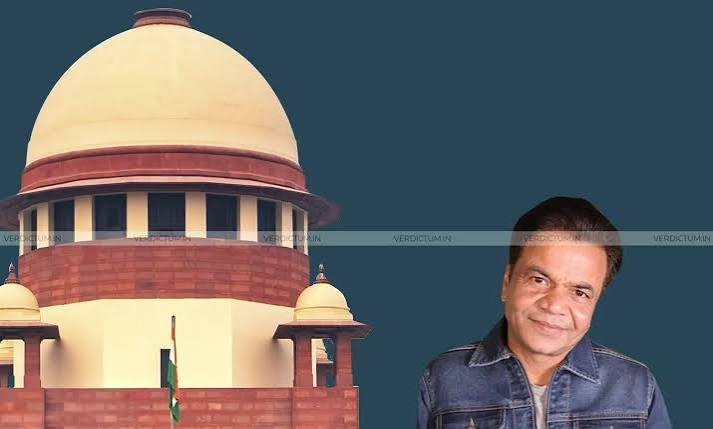
New Delhi, October 21, 2026 : The Supreme Court has appointed former Delhi High Court judge Justice Najmi Waziri as the sole mediator to facilitate an amicable settlement in the cheque-dishonour dispute involving Bollywood actor Rajpal Yadav and M/s Murli Projects Pvt Ltd.

A bench comprising Chief Justice of India Surya Kant and Justice Joymalya Bagchi said mediation could help resolve the dispute, taking into account the issues raised by both parties. The appointment was made in an order dated October 15.
Dispute Linked to Actor’s Directorial Debut
The dispute originates from a financial arrangement dating back to 2010, when Yadav reportedly received ₹5 crore from Murli Projects to finance his directorial debut, Ata Pata Laapata.
According to the complainant, an agreement reached in 2012 required Yadav, his wife and their company to repay approximately ₹11 crore, including interest. The firm further alleged that seven cheques of ₹1.05 crore each, tendered in 2013 towards settlement of the financial liability, were dishonoured.
The matter subsequently resulted in multiple cheque-bounce cases and criminal convictions against the actor and his wife.
Supreme Court Takes Note of ₹2 Crore Deposit
During the proceedings, Yadav’s counsel informed the apex court that the actor had deposited ₹2 crore with the Supreme Court registry in compliance with an earlier direction.
The actor’s legal team also urged the court to hear on merits his challenge to the conviction and three-month prison sentence imposed in the seven cheque-dishonour cases.
The Supreme Court directed both parties to contact Justice Waziri and arrange a date for their appearance. The mediator may require the parties to attend either in person or online, while his fee will be fixed in consultation with them.
The court further directed that the matter be listed after the mediation report is received.
Passport Release Permitted With Conditions
In a related direction, the Supreme Court asked the trial court to release Yadav’s passport so he could continue his professional commitments, subject to conditions imposed by the trial court.
The actor may travel abroad only after complying with those conditions and must inform the trial court upon returning to India.
The directions are intended to allow his professional activities to continue while the legal dispute proceeds.
Background: Delhi High Court Upheld Conviction
On July 10, the Delhi High Court upheld Yadav’s conviction in multiple cheque-bounce cases and imposed a sentence of three months’ imprisonment. It also declined to condone an “extraordinary” delay of 1,894 days in filing petitions challenging the convictions.
The High Court directed the actor to pay more than ₹1 crore to the complainant in each of the seven cases, while clarifying that approximately ₹2 crore already paid would be adjusted against the liability. It kept the sentence in abeyance for two months to allow him time to approach the appellate court.
Yadav’s wife, Radha Rajpal Yadav, was also directed to pay a fine of approximately ₹5.5 lakh in each case, with a provision for three months’ simple imprisonment in default of payment.
The High Court’s decision arose from revision petitions challenging a 2019 sessions court ruling that had upheld convictions originally recorded by a magistrate in April 2018. The actor’s original six-month sentence had subsequently been reduced to three months.
Mediation Could Open Path to Settlement
The Supreme Court’s decision to appoint a mediator creates an opportunity for both sides to explore a negotiated resolution. However, the appointment does not itself set aside the convictions or conclude the cheque-dishonour proceedings. The next steps will depend on the mediation outcome and further judicial directions.