


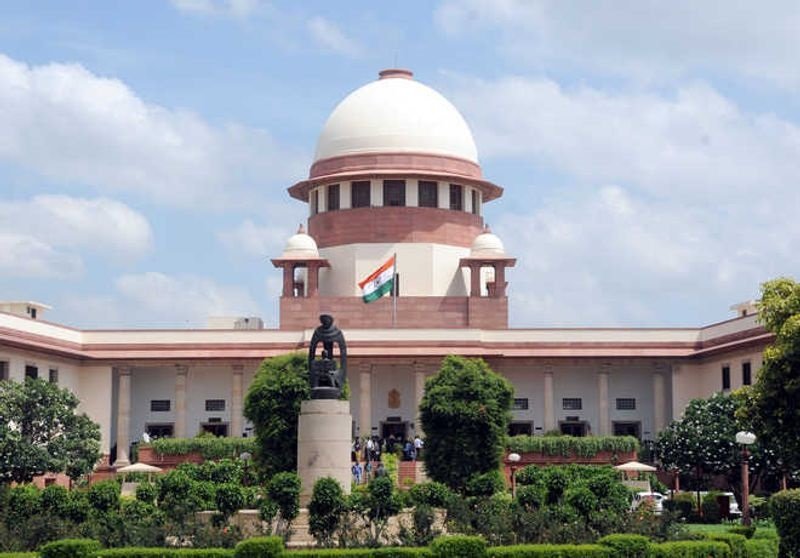
New Delhi, October 19, 2026 : The Supreme Court of India has dismissed a Public Interest Litigation (PIL) seeking the establishment of an independent, multidisciplinary expert committee to assess systemic and digital vulnerabilities in the country’s public examination framework. The court observed that the Union Government had already constituted a High-Powered Task Force to examine the issue, making further judicial intervention unnecessary at this stage.

A bench comprising Chief Justice of India Surya Kant and Justice Joymalya Bagchi rejected the petition filed by Deen Dayal Saini. The plea sought a comprehensive review of examination security systems to address concerns surrounding paper leaks, examination malpractice, digital vulnerabilities and operational inefficiencies.
The court noted that the petitioner had acknowledged the existence of the government-appointed task force but had not availed himself of the opportunity to submit suggestions to it.
SUPREME COURT POINTS TO EXISTING GOVERNMENT INITIATIVE
During the hearing, the bench observed that the Ministry of Personnel, Public Grievances and Pensions had already constituted a High-Powered Task Force and invited suggestions by September 13, 2026.
The court highlighted that the petitioner had not participated in this consultation process, despite having an opportunity to present his proposals before the designated authority.
In its order, the bench stated that the issue had already been taken cognisance of by the competent authority and concluded that there was no sufficient basis to entertain the writ petition.
The court accordingly dismissed the PIL.
The decision does not amount to a judicial finding that India’s examination systems are free from vulnerabilities. Rather, the bench’s stated reason for refusing to entertain the petition was that the government had already initiated a process to examine the matter.
PIL PROPOSED A SECURE DIGITAL EXAMINATION MODEL
One of the key demands in the petition was the constitution of an independent committee to examine a proposed “permanent secure digital examination infrastructure hybrid hub-and-spoke model.”
According to the plea, the proposed system would establish a centralised and heavily secured technological framework for conducting public examinations.
The model was presented as a way to strengthen examination security, reduce opportunities for malpractice and improve the efficiency of examination operations.
The petition sought an independent assessment of the proposed architecture to determine its suitability for addressing weaknesses in the existing public examination framework.
WHY EXAMINATION SECURITY MATTERS
Public examinations play a crucial role in recruitment to government services, admissions to educational institutions and selection for various professional opportunities. Any compromise in examination integrity can undermine public confidence, disadvantage honest candidates and raise questions about the fairness of selection procedures.
Digital systems can help improve efficiency, standardisation and monitoring. However, they also require strong safeguards against cyberattacks, unauthorised access, data breaches, manipulation and technical failures.
A robust examination-security framework may require multiple layers of protection, including:
- Secure question-paper management: Preventing unauthorised access, leaks and premature circulation of examination material.
- Digital and cybersecurity safeguards: Protecting examination platforms, candidate records and confidential data against cyber threats.
- Transparent administration: Establishing clear responsibilities, audit trails and accountability at every stage of the examination process.
- Reliable infrastructure: Ensuring that digital examinations can operate securely and consistently across different locations.
- Effective grievance redressal: Providing candidates with transparent procedures to report irregularities and seek remedies.
These are broader considerations relevant to the debate over examination security; the Supreme Court’s order did not itself prescribe or approve any particular technical model.
WHAT THE COURT’S DECISION MEANS
The dismissal means that the court declined to issue the requested directions for an independent expert committee through this particular PIL. The government-appointed High-Powered Task Force remains the existing mechanism identified by the bench for addressing the matter.
The petitioner had sought a separate and independent evaluation of the proposed examination infrastructure. However, the court considered the existing government process and the petitioner’s failure to submit suggestions through it sufficient reasons not to entertain the plea.
The order therefore places attention on the task force’s examination of the issue and the government’s ongoing efforts to consider vulnerabilities in public examinations.
THE ROAD AHEAD
The effectiveness of any examination-security reform will ultimately depend on the safeguards adopted, the quality of implementation and the ability of authorities to prevent and respond to irregularities.
The government-appointed task force provides an established channel for examining proposals and recommendations. Its work may prove important in determining how examination systems can be strengthened against paper leaks, digital threats and administrative failures.
CONCLUSION: The Supreme Court has dismissed the PIL seeking an independent committee to evaluate vulnerabilities in public examinations, citing the Centre’s existing High-Powered Task Force and the petitioner’s failure to submit suggestions to it. The ruling leaves the government-led examination-security review as the existing avenue for addressing concerns about the integrity, reliability and security of public examinations.