


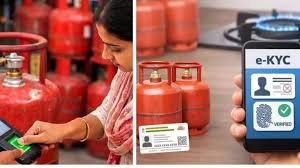
SRINAGAR, May 21, 2026 : LPG consumers across the Kashmir Valley are facing growing difficulties in securing gas cylinder refills following the implementation of mandatory e-KYC verification for LPG connections.

Gas distributors in several areas are witnessing heavy rushes of consumers attempting to complete the verification process, while many residents have raised concerns regarding smartphone access, privacy issues and technical bottlenecks linked to the new system.
Consumers said the mandatory self-eKYC process requires downloading mobile applications and granting multiple permissions, which has created privacy-related concerns among users.
“I have an LPG connection and now have to complete mandatory e-KYC through mobile apps. These applications seek several permissions on phones, which raises privacy concerns,” said Yawar Ahmad, a consumer from Srinagar.
Several women consumers, especially beneficiaries under the Ujjwala scheme, highlighted the lack of smartphone access as a major hurdle.
“I cannot afford a smartphone, so how will I complete self-eKYC?” asked Shazia, a homemaker and Ujjwala beneficiary.
The rush at distribution centres has also led to long queues and delays, with many consumers struggling to understand the digital process required for refill activation.
Some consumers alleged that the sudden implementation of mandatory e-KYC has caused service disruptions and confusion among customers. A few also linked the urgency of the process to concerns over LPG supply amid the ongoing Middle East crisis.
Meanwhile, several users reported receiving OTP-based delivery confirmation messages despite not sharing any OTP or receiving gas cylinders.
“I received an OTP but did not share it with the distributor. Still, I got a message saying the cylinder was delivered, even though it never arrived,” said another consumer, Mehraj Ahmad.
Distributors, however, clarified that such messages are automatically generated through the system and that refill bookings become valid only after successful completion of e-KYC verification.
The issue has sparked demands for simplified offline verification methods, especially for elderly citizens, rural households and consumers without smartphones.