

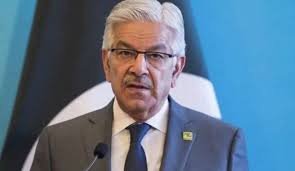
Islamabad, February 27, 2026 : Tensions between Pakistan and Afghanistan escalated dramatically on Friday after Pakistan’s Defence Minister Khawaja Mohammad Asif declared that relations between the two neighbours had entered a state of “open war.”
In a post on X, Asif stated that Pakistan had exercised restraint for months but had now “run out of patience” following what Islamabad described as an Afghan cross-border attack.
“Our patience has now run out. Now it is open war between us,” he wrote.
There was no immediate official response from Afghan authorities to his remarks.
Airstrikes and Retaliation Claims
The statement came hours after Pakistani forces carried out airstrikes targeting locations in Kabul, Kandahar and Paktia province, according to officials from both sides, including Taliban government spokesperson Zabihullah Mujahid.
Pakistan said the strikes were in retaliation for cross-border aggression allegedly launched from Afghan territory.
The escalation follows months of fragile calm after Qatar and Turkiye mediated a ceasefire between the two sides.
Conflicting Casualty Figures
Both governments released sharply differing casualty claims that could not be independently verified.
Afghanistan’s Defence Ministry said 55 Pakistani soldiers were killed, with several allegedly captured alive. It also claimed destruction of 19 Pakistani army posts and two bases. According to Kabul, eight Afghan soldiers were killed and 11 wounded in fighting that lasted roughly four hours.
In contrast, Pakistan’s Information Minister Attaullah Tarar stated that two Pakistani soldiers were killed and three injured.
Meanwhile, Mosharraf Ali Zaidi, spokesperson for Prime Minister Shehbaz Sharif, denied reports of Pakistani soldiers being captured. He claimed at least 133 Afghan fighters were killed and over 200 wounded, with 27 Afghan posts destroyed and nine fighters captured.
Pakistani security officials, speaking anonymously, alleged that some Afghan border posts had raised white flags — typically interpreted as a signal to halt firing — while asserting that Pakistan’s forces continued a “strong retaliatory response” to what they termed “unprovoked aggression.”
Refugee Impact and Regional Fallout
The clashes have also affected civilians. Pakistani authorities said dozens of Afghan refugees waiting at the Torkham border crossing were moved to safer locations following the outbreak of violence.
The latest confrontation comes amid ongoing migration pressures. Since October 2023, Pakistan has intensified its crackdown on undocumented migrants, leading to the return of millions of Afghans. According to the U.N. refugee agency, 2.9 million people returned to Afghanistan last year alone, with nearly 80,000 more returning so far this year.
Growing Regional Uncertainty
In his remarks, Asif also accused the Taliban government of denying basic human rights, including women’s rights, though he did not provide specific evidence.
The sharp escalation raises concerns about wider instability in South Asia, particularly along the volatile border region that has witnessed periodic clashes in recent years.
As of now, diplomatic channels appear strained, and independent verification of battlefield claims remains unavailable.