


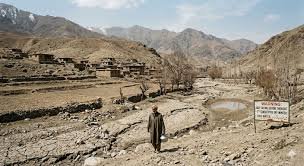
Srinagar, March 5,2026 : Jammu and Kashmir has witnessed its seventh consecutive winter with below-normal rainfall, with precipitation during the core winter months recording a 65% deficit, raising concerns over water availability and snowpack levels in the region.

According to data compiled by independent weather forecaster Faizan Arif, the Union Territory received only 100.6 mm of precipitation against the normal 284.9 mm during the December 2025–February 2026 winter season.
The data shows December 2025 recorded the sharpest shortfall, receiving just 13.0 mm rainfall against a normal of 59.4 mm, reflecting a 78% deficit. January witnessed relatively moderate conditions, with 73.4 mm precipitation compared to the normal 95.1 mm, marking a 23% shortfall, partly due to some activity from Western Disturbance.
However, February proved extremely dry, with only 14.2 mm rainfall against the normal 130.4 mm, reflecting an alarming 89% deficit, making it one of the driest February months in recent years.
District-wise data indicates that Kishtwar recorded the highest rainfall deficit at 90%, followed by Shopian at 82%. Meanwhile, both **Srinagar and Jammu reported around 64% deficit during the winter season.
The analysis further shows that every winter since 2019–20 has ended with below-normal precipitation in the region. The deficit recorded over the past seven winters includes:
-
2019–20: 20% deficit
-
2020–21: 37% deficit
-
2021–22: 8% deficit
-
2022–23: 34% deficit
-
2023–24: 54% deficit
-
2024–25: 45% deficit
-
2025–26: 65% deficit
Before this prolonged dry spell, the winter of 2018–19 had recorded a 36% surplus, indicating a significant shift in precipitation patterns.
Experts warn that the repeated shortfall in winter precipitation is weakening the region’s snowpack generation, which traditionally acts as a natural reservoir supplying meltwater during spring, summer and autumn.
Arif noted that the trend may indicate growing variability in the strength and frequency of Western Disturbances, along with longer dry spells between rainfall events. According to him, seven consecutive deficient winters suggest a sustained shift in seasonal precipitation patterns rather than random climate variability.