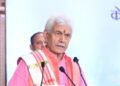


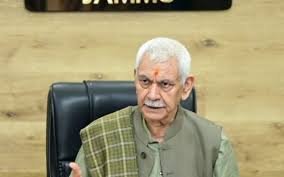
Jammu, March 26, 2026 : In a significant move towards administrative restructuring, Lieutenant Governor Manoj Sinha has recommended the introduction of a Private Member’s Bill in the Jammu and Kashmir Assembly. The Bill, moved by PDP legislator Waheed-ur-Rehman Para, seeks to establish a comprehensive statutory framework for the reorganisation of administrative units across the Union Territory.
The proposed legislation, titled “Jammu and Kashmir Territorial Administrative Reorganization Bill, 2026,” has been cleared for introduction under Section 36(1) of the Jammu and Kashmir Reorganisation Act, 2019. It aims to bring structural clarity and transparency to the creation of new divisions, districts, sub-divisions, and tehsils.
Key Proposals in the Bill
The Bill outlines an ambitious plan to reshape the administrative map of Jammu and Kashmir:
- Creation of New Divisions:
- Chenab Division with headquarters at Doda
- Pir Panjal Division with headquarters at Rajouri
- New Districts in Kashmir Division:
- Tral-Awantipora (Hill District)
- Ashmuqam-Pahalgam (Hill District)
- Beerwah, Sopore, Handwara
- Gurez
- Tangdhar-Karnah (Hill District)
- Norabad (Hill District)
- New Districts in Jammu Division:
- Nowshera, Bhaderwah, Banihal, Thathri
- Akhnoor, Billawar
- Kotranka, Mendhar (Hill Districts)
Objective and Governance Impact
The draft legislation emphasizes:
- Addressing challenges posed by difficult terrain and large administrative areas
- Reducing regional imbalances
- Promoting decentralised governance
- Enhancing efficient public service delivery
It also empowers the government to assign districts to Jammu, Kashmir, Chenab, or Pir Panjal divisions through official notifications, based on factors like geographical continuity, administrative feasibility, and socio-cultural cohesion.
Assembly Proceedings
The proposal has been formally submitted to the Assembly Secretariat and is expected to be taken up during the ongoing Budget Session. The session, which resumes on March 27, follows its first phase held from February 2 to 20, during which Chief Minister Omar Abdullah presented the Budget.
- March 30 & April 1: Private Members’ Bills
- March 31 & April 2: Private Members’ Resolutions
- Session Conclusion: April 4, 2026
Significance
If passed, the Bill could mark a major step toward systematic and transparent administrative reorganisation in Jammu and Kashmir, potentially reshaping governance at the grassroots level and improving accessibility for citizens in remote and hilly regions.