

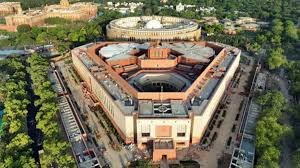
New Delhi, June 17, 2026 : Expressing serious concern over the continued occurrence of examination irregularities across the country, the Parliamentary Standing Committee on Education, Women, Children, Youth and Sports has called upon the Ministry of Education to publish a clear, time-bound roadmap for implementing reforms recommended by a high-level expert panel.

The committee, chaired by Rajya Sabha MP Digvijaya Singh, presented its 381st Action Taken Report on Tuesday to Rajya Sabha Chairman C.P. Radhakrishnan. The report reviews progress on recommendations contained in the committee’s earlier examination of the Department of Higher Education’s Demands for Grants (2025-26).
The committee endorsed Education Minister Dharmendra Pradhan’s earlier observation that significant improvements are still required within the National Testing Agency (NTA). It urged the NTA to accelerate the implementation of recommendations made by the High-Level Committee of Experts (HLCE), chaired by former ISRO Chairman Dr. K. Radhakrishnan.
According to the report, although the government has established a high-powered steering committee to oversee reforms, incidents of examination disruptions and irregularities continue to occur, resulting in cancellations of exams and causing anxiety and uncertainty among lakhs of students.
The parliamentary panel emphasized the need for broader consultations involving students, educational institutions, experts, and other stakeholders to develop a foolproof protocol for conducting nationwide competitive examinations. It stressed that restoring public confidence in the examination system must remain a top priority.
The committee also highlighted concerns regarding firms involved in examination-related services such as paper setting, administration, and evaluation. It observed that companies blacklisted by one state government or agency often continue to secure contracts elsewhere due to the absence of a centralized database.
To address this issue, the panel recommended the creation of a nationwide registry of blacklisted firms, enabling greater transparency and preventing such entities from participating in examination processes across different states and organizations.
In its response, the Department of Higher Education clarified that the NTA does not outsource its core functions, including question paper preparation and answer evaluation. The department stated that the agency maintains records of penalized vendors and includes mandatory self-disclosure requirements regarding blacklisting during procurement processes.
The committee also revisited the financial position of the NTA. According to the report, the agency generated approximately ₹3,512.98 crore in revenue while spending ₹3,064.77 crore on examination-related activities over the past six years, resulting in a surplus of nearly ₹448 crore.
Members recommended that this surplus be strategically invested in strengthening the NTA’s internal capabilities, reducing dependence on external vendors, enhancing technological infrastructure, and improving monitoring and regulatory mechanisms.
Responding to these observations, the Department of Higher Education stated that the NTA operates as a self-sustaining organization without direct government funding. It explained that surplus funds are generally reserved for preparatory and operational expenses in subsequent years. However, the department acknowledged that any excess funds beyond future budgeting requirements could be utilized to further strengthen the agency’s functioning.
The committee concluded that while several reform measures have been initiated, tangible and timely implementation remains critical to ensuring transparency, credibility, and fairness in India’s competitive examination system.
Source: Parliamentary Standing Committee Report