

New Delhi, August 11, 2026 : India on Tuesday made it clear that the state of peace and tranquillity along the Line of Actual Control (LAC) will have a direct bearing on the broader India-China relationship, stressing that stability along the border remains a matter of “utmost importance.”
The Ministry of External Affairs (MEA) said New Delhi has consistently conveyed to Beijing that developments along the border are closely linked to the overall trajectory of bilateral ties.
Peace Along LAC Remains Top Priority
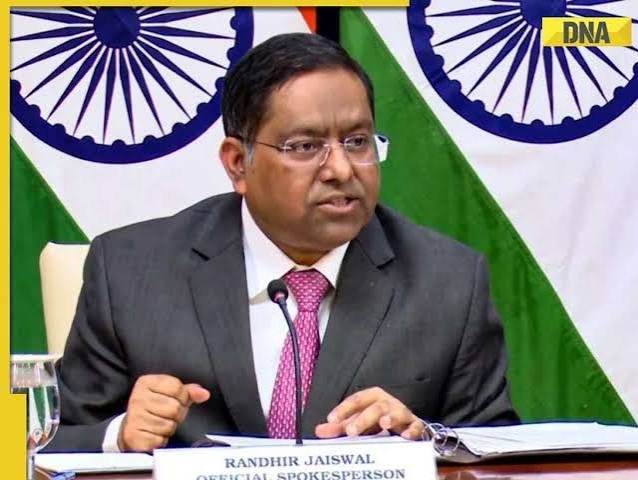
MEA spokesperson Randhir Jaiswal said India considers border-related matters with China extremely serious and reiterated that maintaining peace and tranquillity along the LAC is essential for the development of wider relations.
The position was reiterated during the recent meeting of the Working Mechanism for Consultation and Coordination on India-China Border Affairs (WMCC), held last week.
According to Jaiswal, the two sides held frank discussions and reviewed the situation along the LAC.
India also emphasised the importance of continuing to use established diplomatic and military mechanisms to address outstanding issues and prevent misunderstandings or miscalculations along the disputed frontier.
Diplomatic & Military Channels to Continue
New Delhi said existing mechanisms—including the WMCC, local commander-level meetings and other agreed channels—will continue to be used for managing border issues and maintaining stability.
The renewed emphasis comes as India and China seek to rebuild ties following years of military tensions triggered by the 2020 Galwan Valley clashes and the prolonged military standoff in eastern Ladakh.
India Rejects China’s Arunachal Objection
The MEA also strongly rejected China’s criticism of India’s decision to identify 27 places and geographical features in Arunachal Pradesh by their standard names.
India asserted that Arunachal Pradesh is an “inalienable and integral” part of the country, maintaining that naming disputes cannot alter this reality.
New Delhi’s position remains that attempts to dispute India’s sovereignty over Arunachal Pradesh have no basis and cannot change the state’s status as an integral part of India.
From Border Standoff to Cautious Engagement
India and China have taken several steps over the past two years to stabilise relations after the prolonged military confrontation.
In October 2024, the two countries reached an agreement on disengagement at Depsang and Demchok, the final two major friction points in eastern Ladakh.
Soon after, Prime Minister Narendra Modi and Chinese President Xi Jinping met in Kazan and discussed steps aimed at improving bilateral relations.
In August 2025, Modi travelled to Tianjin, China, for the Shanghai Cooperation Organisation (SCO) summit, where he held talks with Xi.
India has maintained that the relationship should move forward on the basis of mutual trust, mutual respect and mutual sensitivity.
The latest MEA statement underscores New Delhi’s message that lasting peace on the border remains the foundation for meaningful progress in India-China relations.