


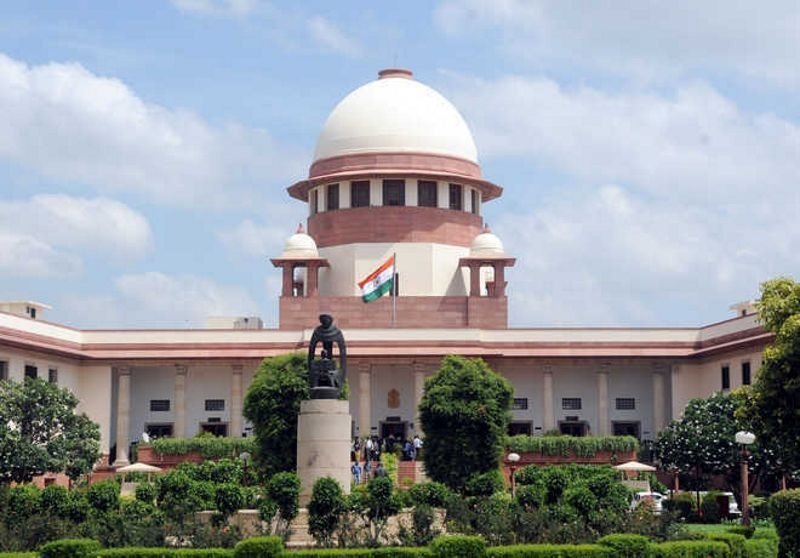
NEW DELHI, August 17, 2026 : The Supreme Court of India on Monday directed that a Public Interest Litigation (PIL) highlighting the alleged lack of functional sanitation facilities for girls in government schools be placed before the bench that had earlier delivered a landmark judgment recognising menstrual health as an integral part of the fundamental right to life and education.

A bench comprising Chief Justice Surya Kant and Justices Joymalya Bagchi and V. Mohana considered the petition filed by Reepak Kansal against the Centre, states and Union Territories.
Over 98,000 Schools Reportedly Lack Functional Girls’ Washrooms
During the hearing, the petitioner’s counsel referred to a NITI Aayog report, claiming that more than 98,000 schools continue to lack functional washroom facilities for girls.
Chief Justice Surya Kant noted that the Supreme Court had already delivered a comprehensive judgment addressing several of the issues raised in the PIL. The counsel said he would first examine the earlier ruling and directions before pressing the present petition further.
The bench subsequently observed that the matter would be appropriately considered by the bench headed by Justice J.B. Pardiwala, which had delivered the earlier judgment.
“The issues raised in the present PIL are very important,” the bench observed while directing that the matter be listed before the Pardiwala-led bench.
Landmark Menstrual Health Judgment
On January 30, 2026, a bench comprising Justices J.B. Pardiwala and R. Mahadevan had recognised the right to dignified menstrual health as part of the constitutional guarantees of the right to life and education.
In a significant ruling focused on gender justice and educational equality, the court issued a series of directions to states and Union Territories concerning sanitation and menstrual hygiene facilities in schools.
The directions covered government, aided and privately managed schools.
Toilets, Water and Menstrual Hygiene Facilities
The Supreme Court had directed schools to ensure the availability of:
- Functional, gender-segregated toilets for students.
- Usable water connections in school washrooms.
- Toilets designed and maintained to provide privacy and accessibility.
- Facilities accessible to children with disabilities.
- Functional handwashing facilities with soap and water.
- Free oxo-biodegradable sanitary napkins for girl students.
- Dedicated menstrual hygiene management corners equipped with essential emergency supplies.
The court emphasised that sanitation and menstrual hygiene are not merely matters of convenience but are closely connected with dignity, equality and meaningful access to education.
‘A Period Should End a Sentence, Not a Girl’s Education’
Justice Pardiwala, while opening the earlier judgment, quoted the widely cited line:
“A period should end a sentence, not a girl’s education.”
The judgment held that the right to life under Article 21 encompasses the right to menstrual health, noting that access to safe, effective and affordable menstrual hygiene measures is essential to a girl’s dignity and her ability to participate fully in education.
The court also linked menstrual health with Article 21A, observing that the constitutional right to education cannot be meaningfully achieved unless children can attend and complete their schooling in conditions that protect their dignity.
SC Keeps Focus on Girls’ Dignity and Education
The latest direction places the new PIL before the bench that has already laid down detailed safeguards concerning menstrual hygiene and sanitation in schools.
The case could therefore provide an opportunity for the Supreme Court to examine whether the earlier directions are being effectively implemented on the ground and whether girls across government schools have access to basic, safe and functional sanitation facilities.