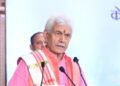


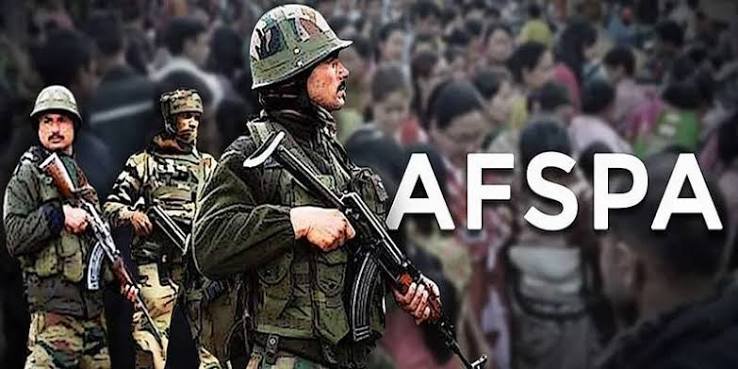
SRINAGAR, June 13, 2026 : Jammu and Kashmir Chief Minister’s Advisor Nasir Aslam Wani on Saturday urged the Central Government to prioritize the withdrawal of the Armed Forces (Special Powers) Act (AFSPA) from Jammu and Kashmir if it decides to revoke the law from any part of the country, asserting that the security situation in the Union Territory has improved considerably over the years.

Speaking to reporters on the sidelines of an event in Srinagar, Wani said there is a growing perception that normalcy has significantly returned to Jammu and Kashmir and that the time is appropriate for the Centre to review the continuation of AFSPA in the region.
“It is our wish and our appeal to the Government of India that if AFSPA is to be revoked anywhere, it should first be withdrawn from Jammu and Kashmir. The situation on the ground has improved substantially, and beginning the process from Jammu and Kashmir would be a positive step,” Wani said.
The Armed Forces (Special Powers) Act has been in force in Jammu and Kashmir since July 1990, after the region was declared a ‘disturbed area’ amid rising militancy and insurgency. The law grants special powers to armed forces operating in notified areas to maintain security and conduct counter-insurgency operations.
Apart from Jammu and Kashmir, AFSPA continues to remain in force in parts of Nagaland, Manipur, Assam, and Arunachal Pradesh, although the Central Government has reduced its coverage in some northeastern states over the past few years following improvements in the security situation.
Responding to questions regarding the restoration of statehood to Jammu and Kashmir, Wani expressed optimism while reiterating confidence in the assurances given by the Central Government.
His remarks come in the backdrop of Chief Minister Omar Abdullah’s recent meeting with Prime Minister Narendra Modi, which has renewed political discussions around the issue of statehood.
“We are hopeful because we trust the promise made by the Central Government. At the time of the electoral process, a three-step roadmap was outlined — first delimitation, then elections, and finally the restoration of statehood,” Wani said.
He pointed out that the first two stages of the process have already been completed, with the delimitation exercise concluded and elections successfully conducted.
“Now we are waiting for the fulfilment of the third commitment, which is the restoration of statehood to Jammu and Kashmir,” he added.
The demand for the restoration of full statehood has remained a key political issue in Jammu and Kashmir since the erstwhile state was reorganized into two Union Territories — Jammu and Kashmir, and Ladakh — following the abrogation of Article 370 in August 2019.
Political observers view Wani’s remarks as a renewed push by the elected government for both greater democratic empowerment and a review of security-related measures in light of the evolving situation in the Union Territory.