

Edmonton, Alberta, Canada,October 19, 2026 : Canada’s national unity faces a significant political test as voters in the oil-rich province of Alberta decide whether to initiate a legal process that could eventually lead to a referendum on independence. The vote has intensified debate over Alberta’s future within Canada, federal energy policies, economic interests and the growing influence of separatist movements.

The vote is not a direct referendum on independence. Instead, Albertans are being asked whether to begin the legal process toward a possible future vote on separating from Canada. Whatever the outcome, the campaign has already brought the question of Alberta’s place in the federation to the forefront of Canadian politics.
The development comes at a sensitive time for Canada, as Prime Minister Mark Carney seeks to strengthen national unity amid trade tensions with the United States, President Donald Trump’s annexation rhetoric and disagreements over the country’s energy future.
MORE THAN 1.35 MILLION VOTERS CAST ADVANCE BALLOTS
Participation ahead of Monday’s vote has been substantial. More than 1.35 million Albertans—approximately 43 per cent of eligible voters—cast advance or special ballots, surpassing the 810,000 early votes recorded during Alberta’s 2023 provincial election.
Polling stations are scheduled to remain open from 9 a.m. to 8 p.m., with results on the independence question expected after voting concludes.
The strong early participation highlights the level of public engagement surrounding the issue. However, high turnout alone does not establish support for separation, and the final result will determine whether the proposed process advances.
Even if the proposal is rejected, separatist campaigners have indicated that they intend to continue advocating for greater provincial autonomy or independence.
MARK CARNEY URGES ALBERTANS TO DEFEND CANADIAN UNITY
Prime Minister Mark Carney has made a direct appeal to Albertans, urging them to treat the vote as a consequential decision about the country’s future.
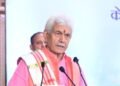
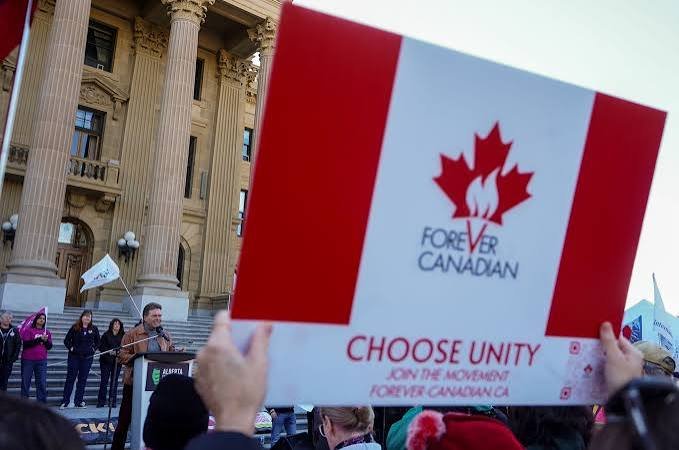
Speaking at a pro-Canada rally in Edmonton on Friday, Carney said: “Vote like Canada’s future depends on it because it does.”
Carney, who grew up in Edmonton, has emerged as a prominent advocate for keeping Alberta within Canada. He warned that the vote was taking place at the “worst possible time” and urged voters not to use it simply as a way to express frustration with the federal government.
His campaign has focused heavily on economic diversification, national sovereignty and reducing Canada’s dependence on the United States.
At rallies in Calgary and Edmonton, Carney received particularly enthusiastic responses when discussing efforts to expand Canada’s international trade relationships. The reaction suggests that Trump’s trade measures and annexation rhetoric have strengthened national solidarity among sections of the Canadian public, including in traditionally conservative Alberta.
ENERGY POLICIES AT THE HEART OF ALBERTA’S DISCONTENT
Alberta is central to Canada’s energy economy and holds the majority of the country’s proven oil reserves. Its petroleum industry is a major contributor to employment, investment, exports and government revenue.
Separatist campaigners argue that federal policies have restricted the province’s economic potential, particularly through disagreements over energy development, environmental regulation and pipeline infrastructure.
They contend that Alberta’s interests are often overlooked in national political decisions because Canada’s population is concentrated in provinces such as Ontario and Quebec. According to this argument, federal parties can form governments without substantial electoral support in Alberta, leaving the province with limited influence over policies affecting its most important industries.
Carney has attempted to address some of these concerns through a more energy-friendly approach, including support for a proposed pipeline to Canada’s Pacific Coast.
The pipeline has also become a point of disagreement. Separatist campaign co-chair Keith Wilson argues that federal restrictions have discouraged private investment and could leave taxpayers bearing the financial burden of the project.
The dispute reflects a broader challenge for Canada: balancing economic growth and energy exports with environmental commitments, regional priorities and national infrastructure planning.
DANIELLE SMITH OPPOSES SEPARATION BUT FACES PRESSURE FROM HER OWN PARTY
Alberta Premier Danielle Smith called the referendum despite opposing independence herself. Her decision reflects pressure from separatist activists within the governing United Conservative Party (UCP), some of whom played a role in the political movement that led to former premier Jason Kenney’s departure in 2022.
Smith has cited polling that placed support for separation at approximately 22 per cent, describing even that level of backing as too high.
She has also acknowledged improved relations with Carney, who has taken steps to ease tensions between Alberta and Ottawa.
Smith said there had been “some real change in the last 18 months,” signalling that negotiations and cooperation with the federal government may offer an alternative to separation.
Former premier Jason Kenney has described Alberta separatism as historically a fringe movement, with independence parties often attracting only a small share of the vote. He has argued that the COVID-19 pandemic helped mobilise activists opposed to public-health restrictions and what they viewed as excessive government authority.
Separatist leaders Jeff Rath and campaign organisers associated with Let Alberta Decide have also linked the movement’s growth to pandemic-era grievances.
US CONTACTS RAISE QUESTIONS ABOUT ALBERTA’S FUTURE
The independence debate has acquired an international dimension following meetings between separatist advocates and US State Department officials in Washington.
Rath and fellow independence supporters reportedly met American officials three times to discuss Alberta’s future. These contacts have drawn criticism from opponents of separation, who warn against replacing disagreements with Ottawa with a new political dependency on Washington.
Wilson has explicitly rejected the idea of Alberta becoming an American state, saying he has no interest in exchanging political authority in Ottawa for authority in Washington.
His position illustrates that support for Alberta independence does not necessarily translate into support for joining the United States.
Nevertheless, the meetings have raised concerns about foreign involvement in a debate over Canada’s constitutional future, particularly amid Trump’s repeated comments about Canada becoming the 51st US state.
FIRST NATIONS’ TREATY RIGHTS COULD BE A MAJOR OBSTACLE
Independence would raise complex constitutional and legal questions, including the rights of Indigenous peoples and the status of treaties signed before Alberta became a province.
Chief Sheldon Sunshine of Sturgeon Lake Cree Nation has argued that Alberta cannot simply leave Canada without the consent of First Nations whose treaty rights and territories would be affected.
Sunshine said his nation would remain part of Canada even if a majority of Albertans voted in favour of independence. He also strongly criticised separatist leaders’ meetings with American officials.
Indigenous treaty rights would be central to any serious separation process. A provincial vote would not, by itself, settle questions about constitutional authority, territorial boundaries, treaty obligations or the rights of First Nations.
The legal and political complexities mean that even a successful vote to begin the process would not automatically make Alberta an independent country.
SEPARATISTS SAY THE CAMPAIGN HAS ALREADY CHANGED POLITICS
Separatist leaders have portrayed the campaign itself as a success, arguing that it has generated unprecedented public discussion about Alberta’s political and economic relationship with the rest of Canada.
Wilson has pointed to voter engagement as evidence that the movement has gained ground. Rath has said that even support from 30 per cent of voters would represent a significant outcome for the separatist cause, despite falling short of a majority.
The campaign could also affect the future of the governing UCP. Rath has called for Smith to be removed as party leader and suggested that political divisions could eventually lead to the formation of a separate pro-independence party.
This means the vote could have consequences beyond the immediate question on the ballot, influencing party politics, provincial policy and negotiations with the federal government.
PRO-CANADA VOTERS WARN AGAINST A PROLONGED SEPARATION FIGHT
Opponents of independence hope Monday’s vote will produce a decisive result and put the debate to rest, rather than trigger a prolonged constitutional dispute similar to Quebec’s historic sovereignty campaigns.
Dave Malka, a 59-year-old Edmonton government worker who attended a pro-Canada rally, criticised the expense of holding what he described as a “referendum on a referendum.” He argued that public money could be directed towards priorities such as healthcare.
Malka also expressed concern that the independence debate was emerging at a time when Canada should be strengthening its unity in response to external pressure.
Jake Graham, a 35-year-old Calgary resident who attended Carney’s rallies wearing Canadian-themed clothing, said he hoped a decisive result would settle the question for the foreseeable future.
Their concerns reflect the broader uncertainty surrounding the vote: even a rejection of the proposal may not end the independence movement, while approval would open a lengthy and complicated legal and political process.
WHAT HAPPENS AFTER THE VOTE?
The outcome will determine whether Alberta moves forward with the proposed process, but it will not immediately determine the province’s ultimate constitutional status.
If voters support beginning the process, the next steps would involve legal and political procedures leading towards a potential future referendum. Any eventual separation would raise major questions about negotiations with the Canadian government, constitutional requirements, economic arrangements, Indigenous treaty rights and Alberta’s future relationships with Canada and the United States.
If voters reject the proposal, the result could strengthen the position of those advocating for Alberta to remain within Canada. However, grievances over energy policy, federal decision-making and provincial autonomy may continue to shape Alberta’s politics.
THE BIGGER PICTURE: Alberta’s vote is about more than independence. It is a test of how Canada manages regional discontent, protects national unity and reconciles competing interests over energy, trade and constitutional rights. Prime Minister Mark Carney faces the challenge of persuading Albertans that their economic future and political voice can be secured within a united Canada.