

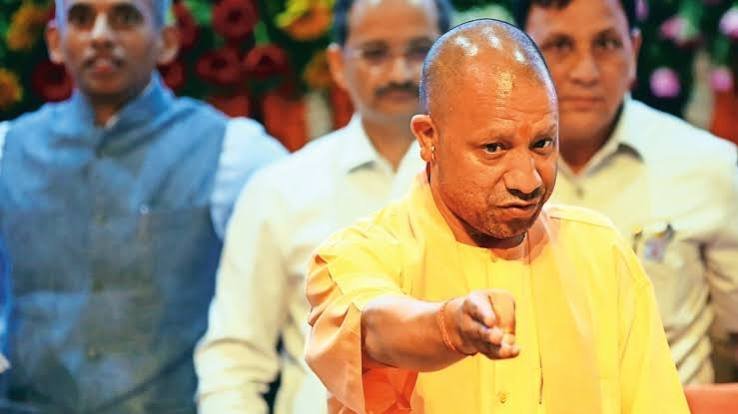
Lucknow, August 16, 2026 : Uttar Pradesh Chief Minister Yogi Adityanath on Sunday paid tribute to former Prime Minister Atal Bihari Vajpayee on his eighth death anniversary, describing his six-decade public life as “undisputed and unblemished” and recalling his lifelong commitment to the principle of “Nation First.”

CM Yogi offered flowers at Vajpayee’s statue at Lok Bhavan in Lucknow and highlighted the former Prime Minister’s enduring contribution to Indian politics, democracy and national security.
‘Nation Always Came First’
Adityanath said Vajpayee remained an undisputed figure in Indian politics and worked throughout his public life with the national interest at the centre of his political philosophy.
From his early days as a public worker to serving as a Member of Parliament, Foreign Minister, Leader of Opposition, national president of the Jana Sangh and BJP, Leader of the House and Prime Minister, Vajpayee consistently placed the country above political considerations, the Chief Minister said.
Yogi recalled that Vajpayee began his public journey with a satyagraha under the leadership of Dr Syama Prasad Mookerjee, protesting the imposition of Article 370 in Jammu and Kashmir.
Standing With the Nation During Difficult Times
The Uttar Pradesh Chief Minister also remembered Vajpayee’s role during the Emergency, saying that he joined the broader movement against the suspension of democratic freedoms.
He further said that during the 1962, 1965 and 1971 wars, Vajpayee, as a responsible parliamentarian, stood with the government and contributed to strengthening national security rather than using the situation for political criticism.
According to Yogi, this demonstrated Vajpayee’s commitment to placing national interest above partisan politics.
Architect of Political Cooperation
Yogi Adityanath highlighted Vajpayee’s political leadership during the period between 1996 and 1998, particularly his efforts to bring different political parties together and establish the National Democratic Alliance (NDA).
He said Vajpayee’s model of political coordination and coalition governance remains relevant even today, with the NDA continuing to govern at the Centre and in several states.
Kargil, Nuclear Power and National Resolve
Remembering Vajpayee’s leadership during the Kargil conflict, Yogi said the former Prime Minister demonstrated firmness and determination in responding to the challenge.
He also highlighted Vajpayee’s role in strengthening India’s strategic capabilities and said that the country established itself as an atomic power under his leadership despite international pressure.
For Yogi, Vajpayee’s leadership combined simplicity and humility with firmness whenever the country’s interests were at stake.
Vajpayee’s Deep Connection With Uttar Pradesh
CM Yogi recalled that Vajpayee first entered Parliament in 1957 from Balrampur in Uttar Pradesh. He later represented the Lucknow parliamentary constituency five times, building a long political association with the state.
From parliamentarian and Leader of Opposition to Prime Minister, Vajpayee left a lasting imprint on Indian public life, Yogi said.
He added that the entire country was remembering and paying tribute to the former Prime Minister on his eighth death anniversary.
Leaders Pay Homage
Deputy Chief Minister Brajesh Pathak, Minister of State for Agriculture Baldev Singh Aulakh, and Lucknow Mayor Sushma Kharwal were also present at the Lok Bhavan tribute ceremony and offered flowers at Vajpayee’s statue.
Vajpayee, widely remembered for his oratory, statesmanship and coalition-building, continues to remain an influential figure in India’s political history.