

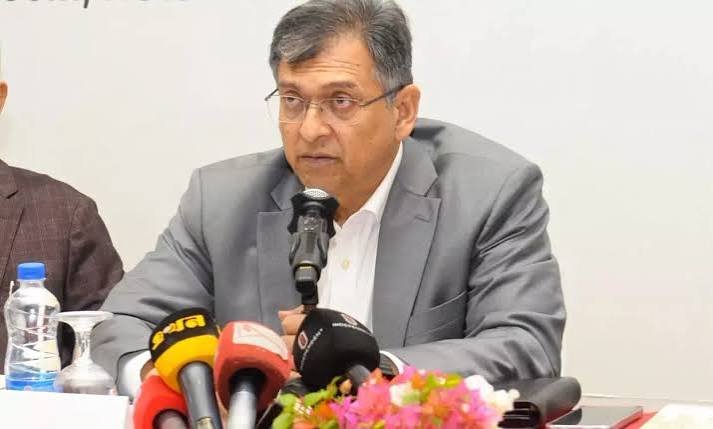
DHAKA, October 12, 2026 : Bangladesh Home Minister Salahuddin Ahmed will skip the first-ever meeting of home ministers of the Bay of Bengal Initiative for Multi-Sectoral Technical and Economic Cooperation (BIMSTEC) in New Delhi, with a delegation led by a senior bureaucrat representing Dhaka amid strained relations between India and Bangladesh.

According to Bangla Tribune, Home Affairs Senior Secretary Manzur Morshed Chowdhury is leading the Bangladeshi delegation at the two-day meeting, which begins on Monday. Senior officials from the home and interior ministries of the member states are participating in the initial discussions, while the home ministers are scheduled to meet on Tuesday.
Although no official reason has been given for Ahmed’s absence in the report, the decision comes against the backdrop of continuing diplomatic tensions between the two neighbouring countries.
BIMSTEC Meeting to Focus on Regional Security
BIMSTEC is a regional grouping comprising Bangladesh, Bhutan, India, Myanmar, Nepal, Sri Lanka and Thailand. The organisation aims to promote economic, technical and regional cooperation among countries bordering the Bay of Bengal and its neighbouring areas.
Bangladesh assumed the BIMSTEC chairmanship in April 2025.
The inaugural meeting of home ministers is intended to strengthen regional security cooperation, improve coordination among law enforcement agencies, enhance intelligence sharing and develop joint strategies to combat terrorism and transnational crime.
According to reports, the meeting will bring together representatives from all seven member states to discuss shared security challenges and explore ways to strengthen cooperation across South and Southeast Asia.
Bhutan’s home minister, Myanmar’s union minister for home affairs, Nepal’s home minister, Sri Lanka’s minister for public security and parliamentary affairs, and Thailand’s deputy secretary-general of the National Security Council are expected to attend Tuesday’s meeting, UNB reported.
Senior Bureaucrat to Lead Bangladesh Delegation
The Bangladeshi delegation, led by Chowdhury, will also include AKM Shahidul Karim, Additional Secretary in the Ministry of Foreign Affairs responsible for SAARC, BIMSTEC and other priority issues, as well as Joint Secretary Rebecca Khan, according to a report by Dhaka Tribune.
The absence of Bangladesh’s home minister means the country will be represented by senior officials during a significant regional security initiative.
However, the reported decision does not, by itself, establish that Dhaka is formally boycotting the meeting or that the minister’s absence is directly linked to a specific diplomatic dispute.
India-Bangladesh Relations Remain Under Strain
Relations between India and Bangladesh have faced considerable challenges following the ouster of the Sheikh Hasina government in August 2024. Hasina subsequently fled to India, and her continued presence there has become one of the major contentious issues between the two countries.
Dhaka has sought her extradition, while New Delhi has maintained that the request is being examined in accordance with applicable law and established legal procedures.
The issue continues to complicate diplomatic engagement between the neighbouring countries, with political developments in Bangladesh influencing bilateral discussions.
Bangladesh PM Also Skipped BRICS Outreach Session
Last month, Bangladesh Prime Minister Tarique Rahman reportedly skipped the outreach session of the BRICS summit in New Delhi despite an invitation from the Indian government. The invitation had been extended in his capacity as BIMSTEC chair.
The latest development involving the home minister’s absence from the BIMSTEC meeting has added to the attention surrounding high-level engagement between the two countries.
Nevertheless, the stated purpose of the BIMSTEC gathering remains regional security cooperation among its seven members.
Hasina Issue Continues to Complicate Diplomatic Engagement
In August, Bangladesh’s foreign ministry reportedly said that the atmosphere for Rahman’s visit had been “vitiated” by Hasina’s virtual press interaction in New Delhi that month.
India, for its part, has said it had no role in the media event concerning Hasina and does not endorse statements made at the forum about the Bangladeshi government.
The disagreement reflects the broader diplomatic sensitivities surrounding Hasina’s presence in India and Dhaka’s demand for her extradition.
Regional Cooperation Amid Bilateral Tensions
The BIMSTEC meeting comes at a time when regional countries are seeking stronger cooperation on security, terrorism, intelligence sharing and transnational crime.
While Bangladesh’s home minister will not attend, the country’s participation through a senior bureaucratic delegation ensures its representation at the gathering.
The key question is whether regional cooperation through BIMSTEC can continue to advance despite the political and diplomatic challenges affecting relations between India and Bangladesh.
The development highlights the delicate balance between regional security cooperation and bilateral political tensions, as New Delhi hosts a major gathering of home ministers from the Bay of Bengal region.