

NEW DELHI | OCTOBER 30, 2026 : Rain delays the INDIA bloc’s planned symbolic protest, but opposition leaders say their campaign over alleged electoral irregularities will continue, with a ‘Chalo Dilli’ march scheduled for November 1.

The INDIA bloc’s planned “public impeachment” of Chief Election Commissioner (CEC) Gyanesh Kumar has been postponed from Friday to Saturday, October 31, following persistent rainfall in the national capital.
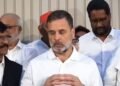
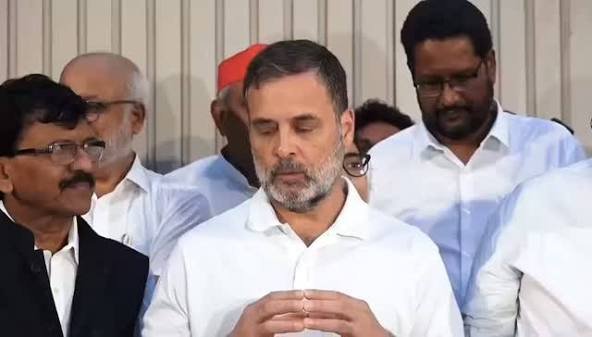
Congress leader and Leader of Opposition in the Lok Sabha Rahul Gandhi announced the rescheduling at a joint press conference outside Congress president Mallikarjun Kharge’s residence at 10, Rajaji Marg, New Delhi.
The opposition said the programme would take place at 2:30 PM on October 31, followed by a “Chalo Dilli” march to Ramlila Maidan on Sunday, November 1.
The planned event is a symbolic political protest, not a formal parliamentary impeachment proceeding. Opposition parties are demanding accountability over alleged irregularities in electoral-roll revisions and what they describe as the undermining of democratic institutions.
🌧️ RAIN FORCES RESCHEDULING, BUT OPPOSITION SAYS CAMPAIGN WILL CONTINUE
Explaining the decision, Rahul Gandhi said opposition leaders had agreed by consensus to postpone the programme because of the rain, particularly to avoid discomfort for senior participants.
He stressed that the same programme would be held the following day.
The decision, according to the Congress leadership, was a practical adjustment rather than a retreat from the opposition’s campaign.
The INDIA bloc is seeking to use the gathering to highlight its concerns about the electoral process, voter rights and the independence of constitutional institutions.
🗣️ RAHUL GANDHI: “THIS IS NOT MULTIPLE PROTESTS. THIS IS ONE PROTEST”
Addressing the media alongside INDIA bloc representatives, Gandhi described the campaign as a collective effort by opposition parties to defend the Constitution and the right to vote.
He alleged that Prime Minister Narendra Modi, Home Minister Amit Shah and the Election Commission leadership were responsible for undermining democratic processes. These were political allegations made by Gandhi and were not independently established by the supplied report.
Gandhi also accused the government of attempting to prevent people from travelling to Delhi to participate in the protests.
He claimed that party workers and ordinary citizens were being stopped and said the turnout at Ramlila Maidan would demonstrate the level of public concern.
Emphasising opposition unity, he said the campaign was open to anyone who wished to participate, whether affiliated with a political party or not.
His central message was that the opposition viewed the protest as a collective defence of the Constitution, democratic principles and the vote as an expression of citizens’ will.
🗳️ ‘VOTE CHORI’ ALLEGATIONS AT THE HEART OF THE DISPUTE
The INDIA bloc’s campaign centres on allegations of irregularities in the Special Intensive Revision (SIR) of electoral rolls.
Congress and other opposition parties have questioned aspects of the voter-list revision process and demanded the resignation of Chief Election Commissioner Gyanesh Kumar.
Opposition leaders allege that irregularities in electoral rolls could affect citizens’ voting rights. They have also raised broader concerns about electronic voting machines and the integrity of electoral processes.
Samajwadi Party MP Dharmendra Yadav alleged that voter lists and electronic voting machines were being manipulated, and argued that recent Uttar Pradesh MLC election results involving teachers and graduates demonstrated political weaknesses for the BJP.
These claims represent the opposition’s position. The supplied report does not provide independent evidence establishing the allegations of electoral manipulation.
The controversy places electoral transparency, voter-list accuracy and public confidence in election administration at the centre of the political confrontation.
🤝 INDIA BLOC LEADERS PROJECT A UNITED FRONT
Trinamool Congress leader Derek O’Brien, speaking at the press conference on behalf of party chief Mamata Banerjee and the AITC, said the alliance was united in the campaign.
He described the movement as extending beyond political parties to include civil society, students, young people, workers and homemakers.
Representatives of several opposition parties attended meetings to discuss preparations for the planned event. Those mentioned in the report included:
- Congress president Mallikarjun Kharge and Rahul Gandhi
- Trinamool Congress leaders Derek O’Brien and Mahua Moitra
- Samajwadi Party MP Dharmendra Yadav
- Shiv Sena (UBT) leader Arvind Sawant
- CPI(M) leader John Brittas
- CPI leader P. Sandosh Kumar
- RJD leader Sanjay Yadav
- RSP leader N. K. Premachandran
- Congress general secretaries Jairam Ramesh and K. C. Venugopal
The meetings were aimed at coordinating the programme and presenting a common opposition position on the “vote chori” issue.
🏛️ HOW THE SYMBOLIC ‘PUBLIC IMPEACHMENT’ IS EXPECTED TO PROCEED
According to sources cited in the report, former Lok Sabha Speaker Meira Kumar is expected to chair the symbolic event.
The proposed programme includes:
- Chair: Former Lok Sabha Speaker Meira Kumar, according to sources cited in the report.
- Motion: Mallikarjun Kharge is expected to move the symbolic motion against the CEC.
- Party representatives: One speaker from each participating party is likely to address the gathering.
- Concluding remarks: Rahul Gandhi is expected to deliver the closing address before the symbolic motion is passed.
The terminology is political and symbolic. The gathering does not itself remove or impeach the Chief Election Commissioner through a constitutional or parliamentary process.
The planned event is intended to amplify opposition demands and draw public attention to concerns about the electoral system.
📢 ‘CHALO DILLI’: NEXT PHASE OF THE OPPOSITION CAMPAIGN
The postponed event will be followed by the ‘Chalo Dilli’ march to Ramlila Maidan on Sunday, November 1.
Jairam Ramesh, Congress general secretary in charge of communications, announced the revised schedule in a post on X, citing incessant rain as the reason for the postponement.
Ramesh also asserted that the political pressure on Gyanesh Kumar was intensifying, accusing him of undermining the Constitution at the direction of the Prime Minister and Home Minister. That statement reflects the Congress party’s allegation, rather than an independently verified finding.
The opposition expects the march to broaden participation beyond party leaders and bring its concerns over voter rights and electoral accountability into public view.
⚖️ A WIDER DEBATE OVER DEMOCRATIC INSTITUTIONS
The confrontation highlights a larger political debate about the independence of election administration, the accuracy of electoral rolls and the accountability of constitutional officeholders.
For the opposition, the proposed protests are a way to demand answers and mobilise public attention around alleged electoral irregularities. The government’s position and any formal response from the Election Commission are not detailed in the supplied report.
The distinction between political allegations and established findings remains important as the dispute unfolds.
Ultimately, confidence in an electoral system depends on transparent procedures, accurate voter lists, credible oversight and public trust in the institutions responsible for conducting elections.
THE ROAD AHEAD: The INDIA bloc has shifted its symbolic “public impeachment” programme to October 31 at 2:30 PM, with the ‘Chalo Dilli’ march planned for November 1. The coming gatherings will test the opposition’s ability to sustain a united campaign around its demands for electoral transparency and accountability.