

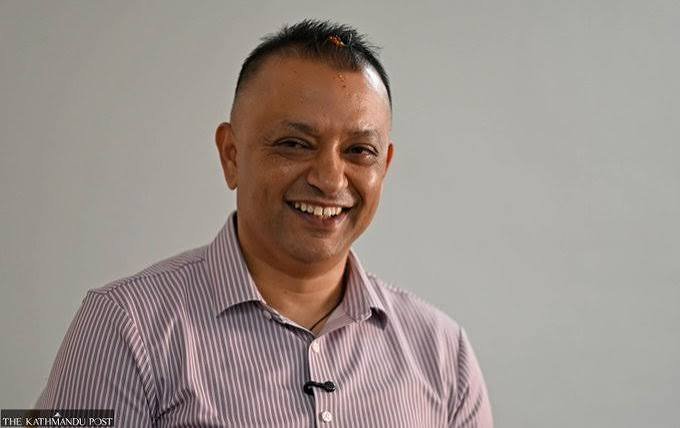
KATHMANDU, OCTOBER 10, 2026 : Gagan Kumar Thapa has been elected president of Nepal’s Nepali Congress, while Bishwa Prakash Sharma has been elected senior vice-president unopposed, marking a leadership transition that places two prominent younger-generation politicians at the helm of the country’s oldest major political party.

Thapa secured the presidency at the party’s 15th General Convention, held on Friday, October 9, 2026, according to the details provided in the election report.
Thapa Wins with 6,584 Votes
Thapa, 50, won the presidential election with 6,584 votes, defeating his rival Shyam Krishna Khadgi, who received 375 votes.
Kishor Singh Rathore, who had also filed a nomination for the top post, withdrew his candidacy before the election concluded.
According to Election Committee Coordinator Prem Bahadur Khadka, a total of 7,013 general convention delegates participated in the voting. Of these, 54 votes were declared invalid.
The reported figures indicate that Thapa secured an overwhelming majority of the valid votes cast, establishing his position as the party’s new president.
Bishwa Prakash Sharma Elected Unopposed
Bishwa Prakash Sharma was elected senior vice-president without opposition, as he was the sole candidate for the position. Pushpa Bhusal was similarly elected unopposed as vice-president for women.
The results place Thapa and Sharma in the party’s top leadership positions, bringing together two politicians whose partnership has previously been highlighted by senior Congress leaders.
The ‘Pair of Oxen’ Political Metaphor
The leadership pairing recalls a remark made in December 2021 by the late Congress leader Pradip Giri ahead of the party’s 14th General Convention.
Giri described Thapa and Sharma as a “pair of oxen” who should work together to move the party forward. He compared their potential partnership to two oxen yoked together to plough a field, urging them to lead the Congress collectively.
At the time, Giri praised their youth, public speaking, qualifications and enthusiasm. Five years later, the metaphor has acquired renewed significance, with Thapa becoming party president and Sharma taking the senior vice-presidential position.
Their leadership partnership will now be closely associated with the party’s organisational direction and political priorities.
232-Member Central Executive Committee
The 15th General Convention is also expected to shape the party’s wider organisational structure. The convention will form a 232-member Central Executive Committee, which will be responsible for supporting the party’s leadership and organisational work.
The new leadership and executive committee will have an important role in determining the party’s internal priorities, organisational coordination and approach to Nepal’s evolving political landscape.
Significance of the Leadership Transition
Thapa’s election and Sharma’s unopposed selection represent a notable development within the Nepali Congress. Their positions at the top of the party bring renewed attention to a leadership partnership that was publicly encouraged by Pradip Giri years earlier.
The immediate focus will be on the formation of the Central Executive Committee and the new leadership’s plans for managing the party’s organisation and political responsibilities.