

SRINAGAR, June 11, 2026 : In a major initiative aimed at promoting modern and sustainable agricultural practices, the Jammu and Kashmir Advisory Board for Development of Kisans, in collaboration with the Directorate of Horticulture Kashmir and Sher-e-Kashmir University of Agricultural Sciences and Technology-Kashmir (SKUAST-K), organised a one-day Training and Awareness Programme for 80 progressive farmers from across the Kashmir Division at SKUAST-K, Shalimar, on Thursday.

The programme focused on enhancing farmers’ knowledge and skills in key areas of agriculture and horticulture, including high-density orchard management, integrated farming systems, waste decomposer awareness, commercial mushroom cultivation, modern agricultural machinery and tools, and post-harvest processing of fruits and vegetables.
Minister for Agriculture Production, Rural Development & Panchayati Raj, Cooperative and Election Departments, Javid Ahmad Dar, flagged off the farmers for the training programme and attended the event as the Chief Guest. MLA Lal Chowk, Ahsan Pardesi, graced the occasion as the Guest of Honour.
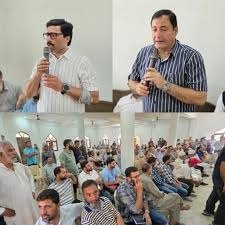
The programme facilitated direct interaction between policymakers and farmers, with Secretary of the Board, Bhumesh Sharma, JKAS, coordinating discussions between the Minister and participating farmers from Srinagar, Budgam, and Ganderbal districts.
Addressing the gathering, the Minister highlighted the vital role of the J&K Advisory Board for Development of Kisans as a common platform where farmers can raise their concerns and interact directly with the government. He stated that the Board comprises experienced and knowledgeable members from the farming community, enabling a better understanding of grassroots challenges and agricultural needs.
Dar emphasized that the Board continuously monitors the implementation of various government welfare schemes to ensure that benefits reach the intended beneficiaries and resources are utilized effectively for farmer development.
He said the awareness programme was designed to educate farmers about various Centrally Sponsored Schemes and encourage the adoption of scientific, sustainable, and income-generating farming practices. According to the Minister, such initiatives serve as valuable platforms for sharing knowledge, exchanging ideas, and facilitating the transfer of modern agricultural technologies to rural communities.
Highlighting the importance of technological advancements in agriculture, Dar said that promoting modern farming techniques, diversification into allied sectors, and strengthening public-private partnerships would significantly boost agricultural productivity and farmers’ income. He reiterated the government’s commitment to empowering farmers and motivating unemployed youth to explore agriculture and allied sectors as viable livelihood opportunities.
While interacting with media persons, the Minister revealed that besides Centrally Sponsored Schemes, 29 agriculture-sector schemes are currently being implemented across Jammu and Kashmir, benefiting thousands of farmers and rural families.
Referring to the growing impact of climate change on agriculture, he stressed the need for farmers to move beyond traditional cropping systems and adopt cash crops, horticulture, and allied agricultural activities to improve resilience and profitability.
Dar further stated that the Agriculture Department is focusing on youth skill development and providing financial support under various government schemes. Reaffirming the administration’s commitment to farmer welfare, he said efforts are being made to deliver services and benefits directly to farmers’ doorsteps.
The event was attended by senior officials from the Agriculture and Horticulture Departments, including Director Agriculture Kashmir Sartaj Ahmad, Chief Agriculture Officer Srinagar Aijaz Ahmad, Chief Horticulture Officer Baramulla Javid Ahmad, Chief Horticulture Officer Srinagar Jyoti Parashad, Chief Horticulture Officer Budgam Shafiqa Khalid, Chief Horticulture Officer Ganderbal Madan Lal, and several technical experts and officers.
The programme concluded with interactive sessions aimed at equipping farmers with practical knowledge and innovative techniques to enhance productivity, sustainability, and income generation in the agricultural sector.