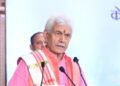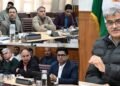


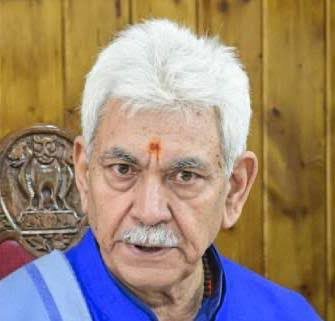
Srinagar, July 14, 2026 : Lieutenant Governor Manoj Sinha on Tuesday chaired a high-level review meeting to assess the proposed Rehabilitation and Socio-Economic Reintegration Scheme for Drug Abuse Victims, 2026, aimed at creating a comprehensive and convergence-based framework for the rehabilitation, recovery and social reintegration of individuals battling substance use disorders across the Union Territory of Jammu and Kashmir.

During the meeting, Commissioner Secretary, Social Welfare Department, Sarmad Hafeez, presented the key features of the proposed scheme, outlining its structured approach to ensuring long-term recovery, livelihood support and social inclusion for recovering individuals.
Three-Phase Rehabilitation Framework
The proposed scheme envisages a three-year rehabilitation cycle comprising:
- Phase I – Treatment and Stabilization: Focused on medical treatment, psychological counselling and preparation of Individual Rehabilitation Plans (IRPs).
- Phase II – Reintegration and Livelihood Activation: Designed to facilitate education, vocational skill development, employment opportunities and family reintegration.
- Phase III – Sustained Monitoring and Social Inclusion: Focused on long-term follow-up, relapse prevention, community support and coordinated interventions by multiple government departments to ensure lasting recovery.
Technology-Driven Monitoring
Officials informed the Lieutenant Governor that a dedicated Rehabilitation Monitoring Portal (RMP) is being developed to enable digital case management, monitoring of Individual Rehabilitation Plans, inter-departmental coordination and real-time tracking of rehabilitation outcomes while maintaining the confidentiality of beneficiaries.
The scheme has been prepared by a Task Force constituted under the Chairmanship of the Principal Secretary, Home Department, following the directions of the Chief Secretary. The Social Welfare Department serves as the nodal department, with representatives from all key stakeholder departments contributing to the development of the framework.
LG Emphasizes Community Participation and Skill Development
Appreciating the collaborative efforts of the Task Force, Lieutenant Governor Manoj Sinha stressed the need for a coordinated, humane and outcome-oriented rehabilitation model that not only supports sustained recovery but also ensures social inclusion and meaningful livelihood opportunities for individuals recovering from drug addiction.
He emphasized that community participation, family support, skill development and continuous monitoring must remain the foundation of the rehabilitation process and directed all concerned departments to ensure seamless inter-departmental coordination for effective implementation.
Highlighting the importance of technology in governance, the Lieutenant Governor also called for transparent monitoring systems and evidence-based decision-making throughout the rehabilitation process.
Pilot Project in Two Worst-Affected Districts
To evaluate the effectiveness of the initiative, the Lieutenant Governor directed that the scheme be launched initially as a pilot project in two of the most affected districts—one each from the Kashmir and Jammu divisions.
He instructed officials to closely monitor the pilot implementation so that valuable lessons and best practices can be incorporated before expanding the scheme across the entire Union Territory.
Focus on Dedicated Officers and Women Volunteers
The Lieutenant Governor further directed departments to identify committed officers to lead rehabilitation efforts with dedication and sincerity. He also called for the identification and training of motivated women volunteers and community groups to actively participate in counselling, rehabilitation and reintegration initiatives.
Emphasizing the importance of community involvement, he observed that successful rehabilitation depends not only on government intervention but also on active public participation.
He also instructed that training and capacity-building programmes for the concerned staff should commence at the earliest to equip rehabilitation teams with specialized skills required for delivering effective services.
The review meeting was attended by Chief Secretary Atal Dulloo, Principal Secretary, Home Department Chandraker Bharti, Principal Secretary to the Lieutenant Governor Dr. Mandeep K. Bhandari, Commissioner Secretary Sarmad Hafeez, and other senior government officials.