

Srinagar, August 27, 2026 : Jammu and Kashmir Chief Minister Omar Abdullah has called for a balanced and integrated healthcare strategy that combines the development of advanced quaternary care with stronger primary and secondary healthcare services across the Union Territory.
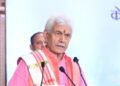
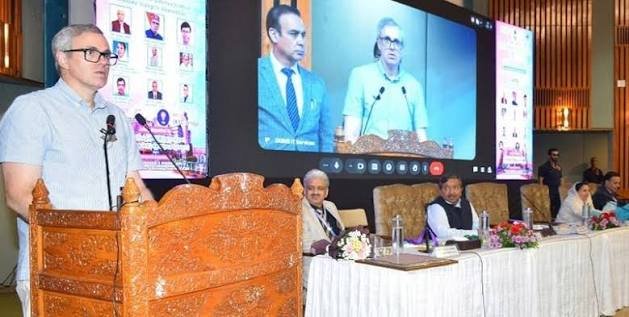
Addressing the valedictory ceremony of the Quaternary Healthcare & Research Summit: 4th J&K Medical Conference-2026 at the Sher-i-Kashmir International Convention Centre (SKICC), the Chief Minister said upgrading tertiary healthcare to the fourth tier would expand J&K’s capacity to provide highly specialised treatment, but must go hand in hand with strengthening healthcare delivery at the grassroots.
The three-day summit, held from August 25 to 27, 2026, was organised by SKIMS, Soura, under the aegis of NITI Aayog, Government of India, in collaboration with AIIMS New Delhi, PGIMER Chandigarh, AIIMS Jammu and AIIMS Awantipora.
The conference was themed “Scaling Tertiary into Quaternary Healthcare: A National Strategy for Advanced Care.”
Strengthen the Foundation First
Omar Abdullah described providing quality healthcare to citizens as one of the government’s fundamental obligations and stressed that medical services must continuously evolve through learning, innovation and research.
While welcoming the concept of quaternary healthcare, he cautioned that simply creating a higher level of specialised care would not, by itself, solve the pressures faced by premier institutions such as SKIMS.
According to the Chief Minister, the major challenge lies in weaknesses at the primary and secondary healthcare levels, which often force tertiary institutions to handle cases that could be treated closer to patients’ homes.
He cited routine procedures, including gallbladder and appendicitis surgeries, as examples of treatments that should ideally be available at lower levels of the healthcare system.
The Chief Minister stressed that strengthening the foundation of the healthcare system is essential for tertiary and quaternary institutions to function effectively.
Quality Healthcare Beyond Jammu and Srinagar
Omar Abdullah also emphasised the need to expand access to quality basic healthcare in rural and remote areas of J&K.
He said the objective was not necessarily to replicate SKIMS-level specialised treatment in every rural facility, but to ensure that citizens outside the two major urban centres of Jammu and Srinagar have access to reliable and good-quality basic healthcare.
A stronger network of primary and secondary healthcare facilities, combined with advanced quaternary services at specialised institutions, would create a more efficient and patient-focused healthcare system across J&K.
SKIMS to Move Towards Quaternary Care
The Chief Minister reiterated the importance of transforming SKIMS into a leading quaternary healthcare institution so that patients from J&K do not have to travel outside the Union Territory for highly specialised treatment.
He recalled that SKIMS was established with the fundamental objective of providing the best possible healthcare to people within J&K and expressed hope that its transition into the fourth tier would further advance that mission.
Omar Abdullah assured that the government would make every possible effort, within J&K’s financial limitations, to provide SKIMS with the infrastructure required for its next phase of development.
Focus on Infrastructure and Human Resources
The Chief Minister identified infrastructure as a key factor in attracting and retaining highly skilled medical professionals.
He expressed confidence in the quality of J&K’s doctors, nurses and paramedical workforce, describing its human resources as highly capable and competitive.
He pointed out that J&K-trained doctors are working across the world, particularly in the Gulf and Middle East, and said limitations in infrastructure and facilities often compel talented professionals to seek opportunities outside the region.
Call for Reverse Brain Drain
Omar Abdullah called for efforts to create an environment capable of encouraging a “reverse brain drain”, allowing medical professionals from J&K working elsewhere to return and contribute to the healthcare system at home.
He stressed that providing world-class infrastructure, facilities and professional opportunities could encourage doctors and other healthcare professionals to come back to J&K.
Such a shift, he said, would strengthen both tertiary and quaternary healthcare and help build a more self-reliant and advanced healthcare ecosystem.
From Recommendations to Action
The Chief Minister also called for the recommendations emerging from the three-day summit to move beyond academic discussions and be translated into practical implementation.
He expressed hope that the conference would lead to sustained cooperation, knowledge-sharing and institutional partnerships between J&K healthcare institutions and premier national institutions.
The participation of AIIMS New Delhi, PGIMER Chandigarh, AIIMS Jammu and AIIMS Awantipora, along with policymakers, clinicians and researchers, was described as an important opportunity to develop a roadmap for advanced healthcare in J&K.
Books Released, Awards Presented
During the ceremony, Omar Abdullah released the book “Platinum Pearls in General Surgery Super Specialities” and the souvenir “SKIMS Journey of Transformation.”
He also presented awards to nine winners in the Quiz Competition, Poster Presentation and Oral Presentation categories.
Minister for Health and Medical Education Sakeena Masood Itoo, MLA Pampore and former Justice Hasnain Masoodi, Additional Chief Secretary to the Chief Minister Dheeraj Gupta, Director SKIMS Prof. Dr. Mohammad Ashraf Ganie, Dean SKIMS Medical College Prof. Dr. Fazlul Q. Parray, and Organizing Co-Chair Prof. Dr. Aejaz Ahsan Baba were among those present.
Former SKIMS directors, faculty members, officers of SKIMS and officials from the Health and Medical Education Department also attended the valedictory ceremony.
Roadmap for Advanced Healthcare
The summit brought together leading medical institutions, clinicians, researchers, policymakers and healthcare professionals to deliberate on advanced medical care, research, institutional collaboration and the transition from tertiary to quaternary healthcare.
The Chief Minister’s message was clear: J&K’s healthcare future requires both world-class specialised treatment at the top and strong, accessible healthcare at the grassroots.
A coordinated approach, backed by infrastructure, skilled professionals, research and institutional partnerships, could help J&K build a healthcare system capable of meeting increasingly complex medical needs while reducing the necessity for patients to seek advanced treatment outside the Union Territory.