

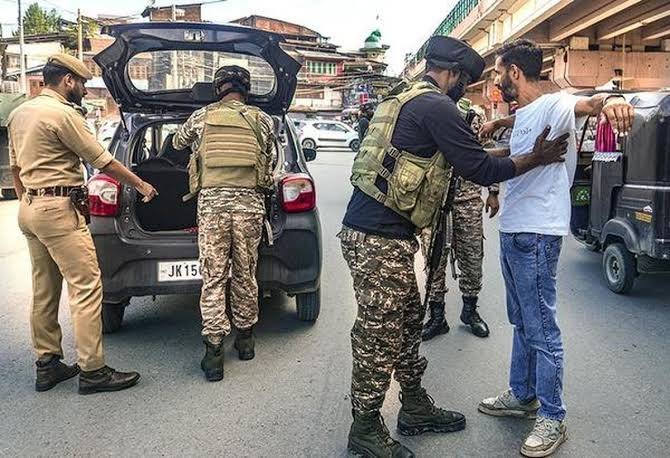
New Delhi | August 10, 2026 : A Parliamentary Standing Committee on Home Affairs has recommended a comprehensive “integrated security and surveillance framework” for major tourist destinations across Jammu and Kashmir, with centralised monitoring facilities and stronger coordination among security and law-enforcement agencies.

The recommendations come against the backdrop of the April 22, 2025 terror attack in Baisaran Valley, Pahalgam, in which 26 people, mostly tourists, were killed.
CCTV & Centralised Monitoring
In its report on Administrative Governance, Socio-Economic Development, Border Security and Internal Security of Jammu and Kashmir, and Border Security Management and Preparedness in Ladakh, the committee recommended comprehensive CCTV coverage at major tourist destinations.
The proposed framework includes:
- Comprehensive CCTV surveillance
- Centralised monitoring facilities
- Regular vulnerability assessments
- Periodic security audits
- Stronger coordination between agencies
- Clearly defined Standard Operating Procedures (SOPs)
The panel recommended that inter-agency SOPs be prescribed and reviewed before every peak tourist season to ensure a coordinated and timely response to security incidents.
Emergency Response at Tourist Hotspots
The committee also recommended dedicated emergency response arrangements at high-footfall tourist destinations.
It called for:
- Dedicated emergency response units
- Adequately equipped ambulances
- Trauma-care facilities
- Clearly identified evacuation routes
- Prominent display of emergency contact numbers
- Safety instructions in multiple languages
These measures, the committee said, are particularly important as tourist numbers in Jammu and Kashmir continue to rise.
The panel noted that security at tourist destinations has a direct impact on the perception of safety, visitor experience and sustained growth of the tourism sector.
Joint Security Audits Before Tourist Season & Amarnath Yatra
The committee further recommended periodic joint security audits and vulnerability assessments, particularly ahead of the tourist season and the Amarnath Yatra, to identify and address emerging security threats.
The panel also appreciated the overall security arrangements and preparedness of the security forces in Jammu and Kashmir.
Committee’s Visit to J&K & Ladakh
The committee conducted a study visit to Jammu, Srinagar, Gulmarg, Sonamarg and Kargil from May 11 to 15, 2026.
During the visit, it assessed security arrangements at Gulmarg, interacted with Jammu and Kashmir Police representatives regarding the law-and-order situation in Sonamarg, and reviewed border security and operational preparedness in Kargil through interactions with representatives of the Indian Army.
Focus on Advanced Security Technology in Ladakh
In Ladakh, the committee expressed satisfaction over the induction of advanced security and military technologies, including:
- Advanced weapon systems
- Unmanned Aerial Systems (UAS)
- Counter-UAS technology
- Modern surveillance equipment
- Specialist mobility platforms
- All-terrain vehicles
The panel recommended sustained investment in integrated intelligence, surveillance and reconnaissance (ISR) capabilities, counter-drone systems, secure communication networks and indigenous high-altitude technologies.
It also urged the Ministry of Defence to ensure their timely procurement, deployment and periodic technological upgradation across strategically important sectors.
Key Takeaway
The Parliamentary panel’s recommendations aim to create a more integrated, technology-driven and coordinated security system at Jammu and Kashmir’s major tourist destinations while strengthening emergency preparedness and response mechanisms.
With tourism continuing to grow in the Union Territory, the committee has stressed that security, rapid emergency response and inter-agency coordination must remain central to protecting visitors and sustaining tourism growth.